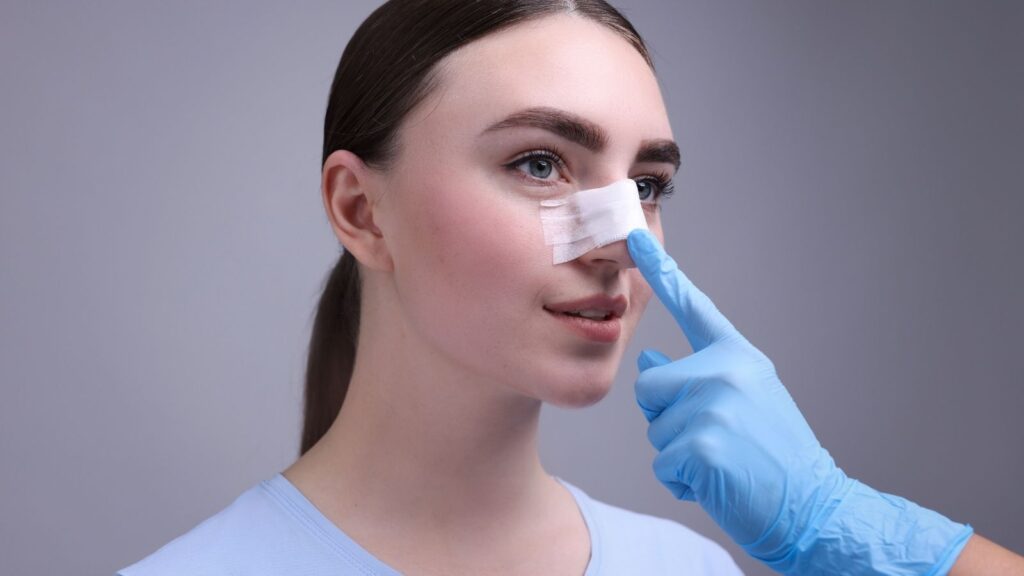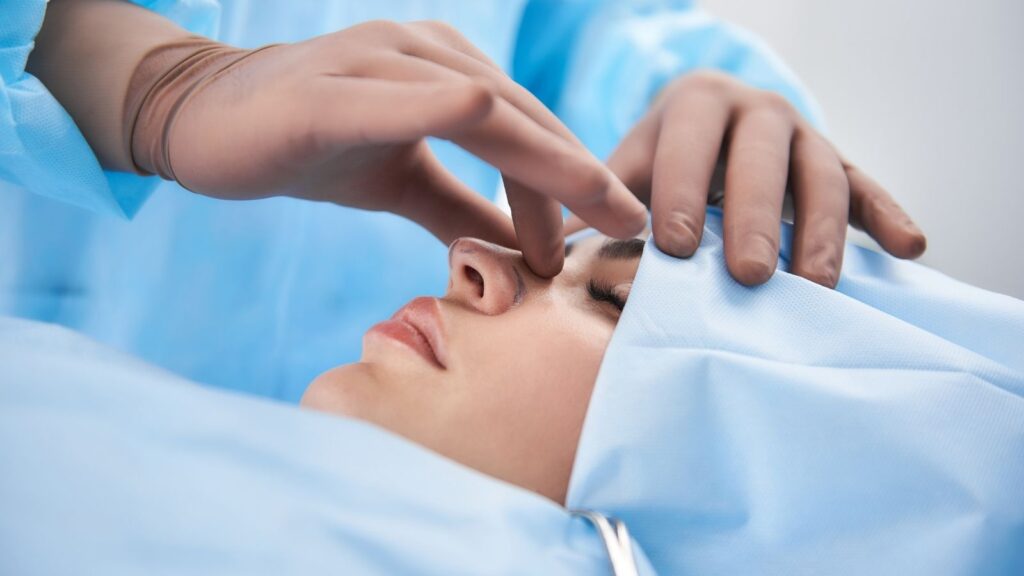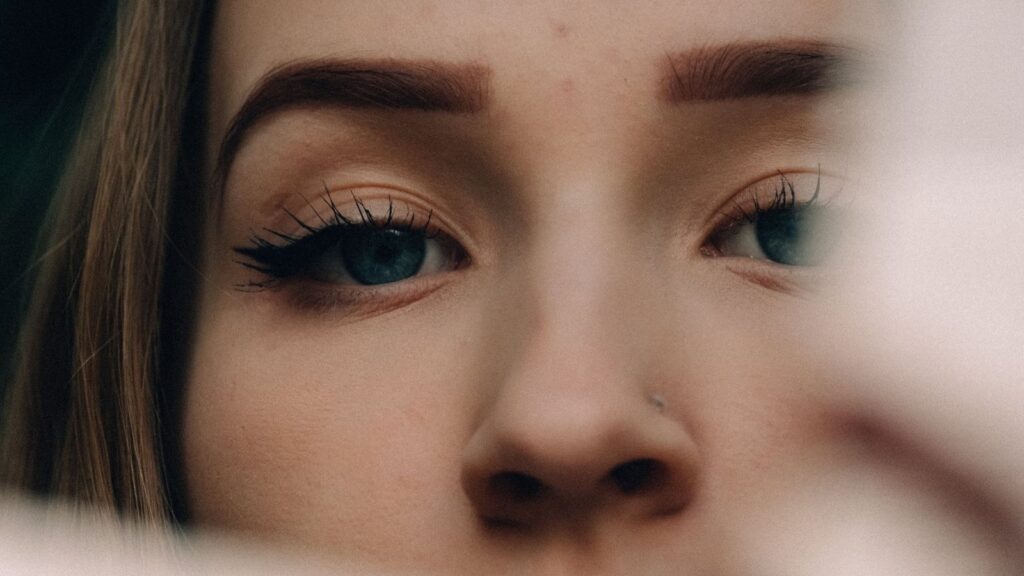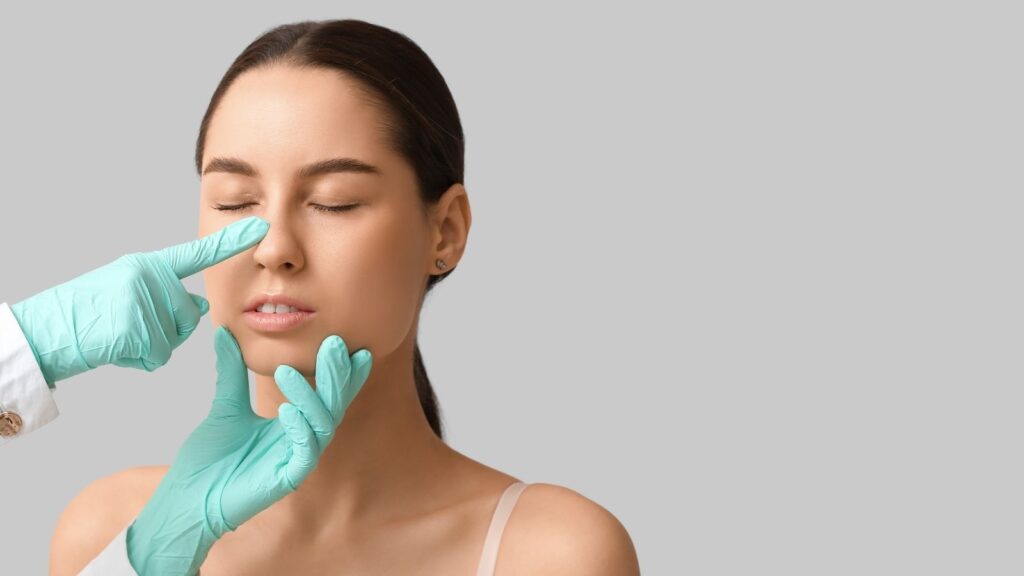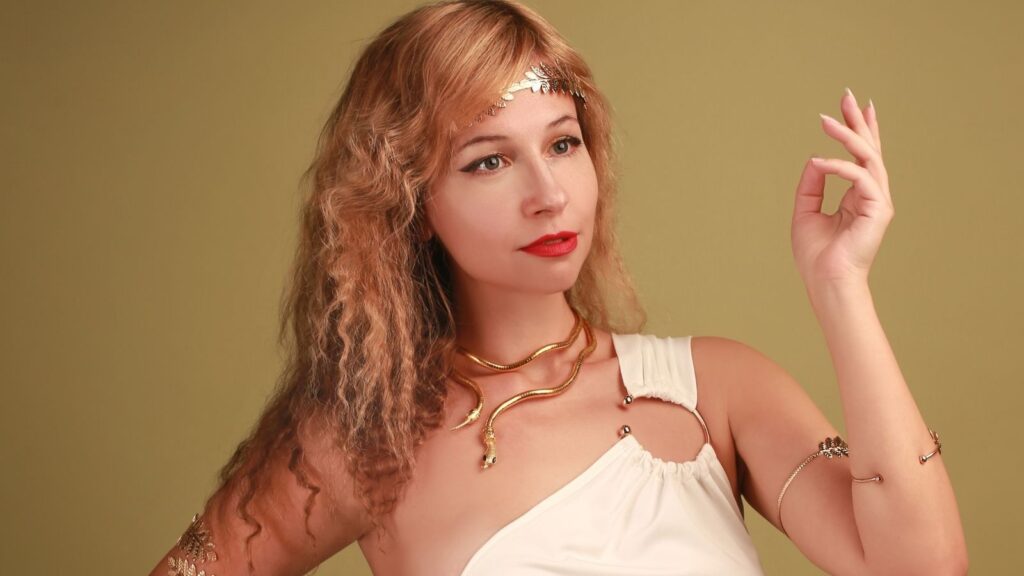
An upturned nose is an aesthetic nose type in which the nasal tip is directed upward. It may occur due to genetic structure or as a result of surgical interventions. It is frequently preferred in aesthetic procedures because it gives the facial profile a youthful and dynamic expression.
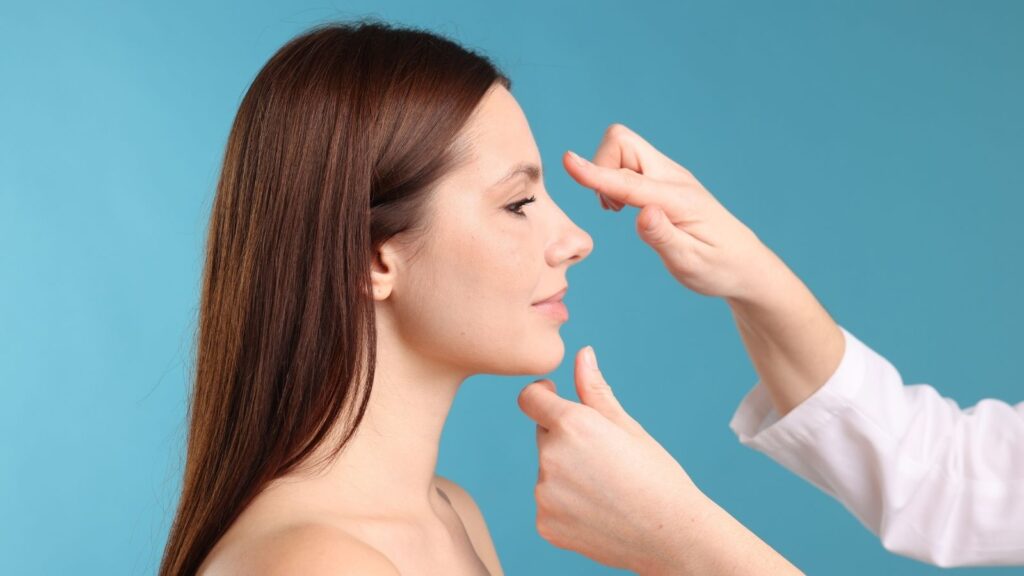
The anatomical features of an upturned nose are defined by the nasal tip being rotated upward at an angle of 100–105 degrees. If this angle is excessive, it may cause the nostrils to become more visible. For a balanced appearance, it is important to plan the angle according to the facial structure.
Upturned nose aesthetics is performed by adjusting the nasal tip projection and harmonizing it with the nasal dorsum. In surgical intervention, the tip cartilages are reshaped; if there is excessive upturning, a lowering procedure can be performed. Natural results are targeted.
While an upturned nose can provide an advantage in terms of aesthetic perception and facial proportions, overly pronounced upturning can create an artificial look. Therefore, detailed evaluation before surgery and a plan that is compatible with facial features are of great importance.
| Things You Should Know | Information |
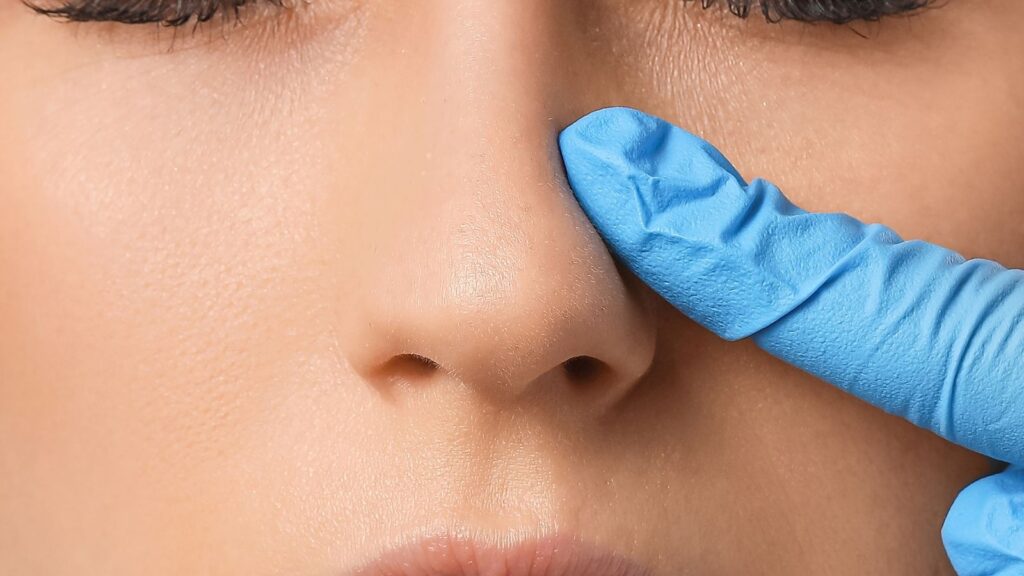
| Definition | An upturned nose is a nose type in which the nasal tip is rotated upward and the nostrils can be clearly visible when viewed from the front. |
| Anatomical Features | The nasal tip angle (nasolabial angle) is generally between 105–115 degrees. A short nose and a straight or slightly concave nasal dorsum are common. |
| Genetic and Racial Factors | In some individuals, an upturned nose naturally occurs due to genetic structure. It is more common in certain ethnic groups, but personal variations are decisive. |
| Aesthetic Evaluation | It is associated by some people with a youthful and attractive appearance. However, excessive upturning can create an unnatural look and may require aesthetic intervention. |
| Common Aesthetic Interventions | With rhinoplasty, the nasal tip angle can be rearranged. If there is excessive upturning, the tip is revised downward; if there is insufficient upturning, the tip is raised. |
| Functional Status | It generally does not directly affect breathing. However, in cases of excessive upturning, the wide visibility of the nostrils may cause discomfort in some patients. |
| Rhinoplasty Process | In upturned nose aesthetics, the tip is typically supported with cartilage grafts and its angle is reconstructed. Surgery can be performed with an open or closed technique. |
| Recovery Process | After an aesthetic intervention, swelling and bruising may last a few weeks. The nasal tip shape settling and becoming permanent occurs within 6–12 months. |
| Psychological Effects | Disproportionate upturning of the nose relative to the face can lead to aesthetic concerns. Psychological satisfaction is generally high after aesthetic surgery. |
| Alternative Interventions | With non-surgical filler applications, the nasal dorsum can be balanced and the nasal tip can be shaped temporarily. However, this method is temporary and provides limited correction. |
What is upturned nose aesthetics and how is a natural look achieved?
In the medical literature, this concept is referred to as “nasal tip rotation.” In its simplest form, it is the angle of your nasal tip in relation to your upper lip. If this angle is narrow, your nose appears droopy and can make you look older or more tired than you are. If the angle is too wide, the unwanted artificial appearance emerges.
The secret to achieving a natural upturned nose lies in evaluating the nose not as an isolated organ, but as a part of the face. Every face has a limit of “upturning” it can carry. The factors that determine this limit are:
- Forehead structure
- Chin tip position
- Cheekbone prominence
- Upper lip length
- Skin thickness
We surgeons perform millimetric calculations before surgery. Our aim is not to point the nose upward, but to move the nasal tip to its ideal position with cartilage supports. Naturalness means that the nose does not “shout” that it has been operated on. If people look at your face and say, “There’s a change in your nose but I can’t tell what it is— you look so much better,” then it means we have achieved the right rotation.
Why is the ideal upturned nose angle different in women and men?
In aesthetic surgery, gender is one of the most fundamental factors that changes our planning. Male and female anatomy, in terms of aesthetic goals, are completely different. An angle that suits a woman can create a very feminine and undesirable look in a man.
In women, the aesthetic perception we aim for is more elegant, softer, and more feminine lines. Therefore, in female patients, the nasal tip slightly looking upward supports that lively and youthful expression in the face. Mathematically speaking, we target an angle between the lip and the nasal tip of 95 to 105 degrees in women. This range is the safe zone where that sweet curve is achieved without showing the nostrils excessively.
In men, the situation is much more delicate. The male nose represents strength and character. Too much upturning of the nasal tip can weaken the masculine expression. That’s why we act much more “conservatively” in male patients. The nasal dorsum should be straighter, and the nasal tip should form an almost 90-degree, i.e., upright, angle with the lip. When it goes above 95 degrees, naturalness begins to be lost in the male face.
The main differences in male and female nose planning are:
- Degree of rotation angle
- Nasal dorsum curvature
- Nasal tip width
- Skin thickness factor
- Forehead–nose transition angle
How does raising the nasal tip affect the lip distance and smile design?
This is a detail that my patients usually do not notice before surgery, but we consider it very important. The nose and upper lip are not just neighboring structures; they are mechanically connected. When we move the nasal tip upward, it is inevitable that this movement creates a pulling effect (vector effect) on the lip.
Especially in patients with a droopy nasal tip, we see that when smiling, the nasal tip drops even more and the upper lip shortens. When we bring the nasal tip to its ideal place—meaning we make it “upturned”—the upper lip is released and relaxes to some extent. However, caution is needed here. If the rotation is done too much, the upper lip may be pulled upward and a condition called “gummy smile,” where the gums are overly visible, may appear or become more prominent.
Conversely, in a patient whose upper lip distance is already very long, excessively raising the nose can make this distance look even longer and disrupt facial balance. Therefore, when planning an upturned nose, we look not only at the nose but also at the lip structure.
The anatomical elements that determine the interaction in this area are:
- Depressor septi nasi muscle
- Columella length
- Upper lip frenulum
- Maxillary bone structure
- Strength of lip muscles
How is an upturned nose achieved in Pinocchio or droopy nose structures?
Not every nose structure responds the same way to being “lifted.” There are some noses we call a “Pinocchio nose”; the nasal tip projects too far forward from the face (excessive projection). Some noses are the opposite, as if buried into the face (insufficient projection). Our approach is completely different in these two cases.
In a Pinocchio nose structure, the tip cartilages are usually very large and long. If you try to lift such a nose upward without reducing the cartilages, a very strange, both long and upturned, unbalanced appearance can occur. In these cases, we first perform what we call “de-projection.” That is, we move the nose slightly backward, closer to the face. We file or shorten those pointed and long tip cartilages. Only after controlling the nose in this way do we give rotation and perform the lifting procedure.
In low and flat noses, we follow the opposite strategy. The nose is already behind the facial plane. If we try to lift it directly, the nose becomes even shorter and sticks to the face. In that case, we first need to extend the nasal tip forward with supporting cartilages (increase projection) and then lift it.
The basic maneuvers we apply to correct these structural problems are:
- Lateral crus resection
- Dome sutures
- Cartilage overlap
- Septal extension grafts
- Columellar strut graft
Is the open technique or the closed technique more suitable for an upturned nose?
The never-ending debate in the world of rhinoplasty: open or closed? As a surgeon, my answer is: the technique should serve the goal. When it comes to upturned nose aesthetics—especially if we aim for a significant change and permanence—the scale usually tips toward the open technique.
The closed technique may be attractive because it is scarless and may cause slightly less swelling in the early period. It gives great results in patients with mild humps and a tip that is already not too problematic. However, when we need to lift the nasal tip significantly (rotation), change its angle, and most importantly build the “construction” that will preserve this new position for years, the limited field of view offered by the closed technique can sometimes restrict us.
Creating an upturned nose means rebuilding the supporting columns of the nose. In the open technique, we lift the skin at the nasal tip and see the cartilage structure clearly, like an anatomical atlas. We fully assess which cartilage is weak, which is asymmetric, and which needs strengthening. This wide field of view provides a major advantage for reshaping cartilages with millimetric sutures and fixing support grafts (patch cartilages) in the strongest way.
The factors that provide the advantages of the open technique in this context are:
- Direct field of view
- Full control over the cartilages
- Clear detection of asymmetries
- Ease of graft fixation
- Bleeding control
How is an upturned nose made permanent using cartilage grafts?
This is the most technical but most vital part of the matter. My patients’ biggest fear is the question: “Doctor, will my nose drop over time?” This fear is not unfounded, because gravity is real, and the nasal tip is one of the areas most exposed to it.
If a surgeon only suspends the nasal tip upward with sutures (thread), that nose will eventually drop. Because sutures hold the tissue for a while, then the tissue loosens and gravity wins. To achieve what we call a “permanently upturned nose,” we need to build an invisible skeletal system inside the nose.
To do this, we use cartilages taken from the patient’s own body. We usually place the pieces we remove while correcting the deviated septal cartilage (septum) as a “support column” at the tip instead of wasting them. Like the central pole of a tent, we place cartilage pieces (Strut Graft) that support the nasal tip from below and prevent it from dropping. Sometimes, if the nasal tip is very weak, we use a stronger method called a “Septal Extension Graft,” fixing the tip to the nasal base. Thus, the nasal tip sits on a rock-solid foundation.
The cartilage sources we use in this procedure are:
- Septal cartilage
- Ear cartilage
- Rib cartilage
- Cadaver cartilage
How can excessive upturning and a “pig nose” appearance be prevented?
One of the moments a surgeon pays the most attention to on the operating table is the moment they adjust rotation. Because the line between aesthetics and artificiality is very thin. The appearance we call a “pig nose” is when the inside of the nostrils is clearly visible to someone looking from the front. This is aesthetically undesirable and can be very disturbing for the patient in social life.
The way to prevent this is not being overly ambitious. During surgery, we make the nose slightly more upturned than planned (about 3–5 degrees). Why? Because during healing, as swelling subsides and the skin settles, the nasal tip “settles” a tiny bit, meaning it goes down slightly. If we do not account for this margin during surgery, the nose may end up lower than desired after healing. However, if we exaggerate this margin, the patient may have to live with an overly upturned nose for life.
To strike this balance, we take continuous measurements. The visibility of the nostrils from the profile and the lip–nose angle are checked constantly. The position of the nasal wings is also important. Sometimes the tip is ideally positioned, but the nasal wings are too high (alar retraction), creating the illusion that the nose is overly upturned. In that case, the wings also need to be addressed.
The criteria we pay attention to in order to avoid excessive rotation are:
- Measurement of the nasal tip angle
- Visibility of the nostrils
- Upper lip length
- Columella angle
- Infratip lobule fullness
When does the upturned nose shape settle during the healing process?
The postoperative period is a journey that requires patience. Patients often think they will see the final version of their nose on the day the cast is removed (the first week). However, what they see is a swollen, edematous, and not-yet-shaped nose.
The nasal tip is one of the areas of the face where lymphatic circulation is weakest, while the skin is thickest. This means: all swelling in the face goes down, the eye area improves, the cheeks subside, but the nasal tip stubbornly remains swollen. Due to gravity, edema in the face flows from top to bottom and leaves the nasal tip last.
In the first month, you see a rough shape. However, for the “upturned” and elegant details of the nasal tip to become visible—meaning for the skin over the cartilages to thin and reveal the underlying shape—at least 6 months are needed. In thick-skinned patients, this period may reach 1 year or even 1.5 years. During this process, the nasal tip may sometimes look more upturned, sometimes more swollen than it actually is. You may even notice that you wake up swollen in the morning and it subsides toward the evening. These fluctuations are completely normal.
Critical periods in the healing timeline of the nose are:
- First week
- First month
- Third month
- Sixth month
- First year
Does upturned nose surgery make breathing difficult?
In this journey that starts with aesthetic concerns, you should never forget that the nose is, above all, a breathing organ. A nose that cannot breathe is a source of unhappiness for its owner, even if it is the most beautiful nose in the world.
There is a functional risk in upturned nose aesthetics: If the nasal tip is lifted excessively (excessive rotation), the narrowest area where air passes—called the “nasal valve”—inside the nasal wings may become compressed. When this angle is disrupted, the patient may feel the wings collapsing inward and the airway closing when trying to take a deep breath through the nose.
Because we know this risk, we take airway-protective measures while lifting the nasal tip. We use cartilages not only to shape aesthetically but also to keep the airway open. Cartilage supports called “Spreader Graft” or “Alar Batten Graft” support the nasal wings from inside and prevent collapse. In other words, in properly performed professional surgery, an upturned nose does not impair breathing; on the contrary, it can also resolve breathing problems caused by a droopy nasal tip. A low nasal tip can block the airway like a curtain; by lifting this curtain, we enable the patient to breathe more comfortably.
The methods we apply to preserve function are:
- Preserving the valve angle
- Placing support grafts
- Inferior turbinate interventions
- Correction of septal deviation
- Mucosa-preserving techniques
What is the importance of nasal tip massage after rhinoplasty?
During postoperative follow-ups, I often recommend massage to my patients, but this is not a standard procedure for every patient. Nasal tip massage can be useful especially in thick-skinned patients and in cases where edema is persistent, to accelerate lymphatic circulation.
Another purpose of massage is to help the skin sit more smoothly on the underlying cartilage framework. However, there is a very sensitive point here: the massage should be done gently and in the way described by the surgeon. Applying hard and unconscious pressure to newly shaped cartilages that are still healing can disrupt rotation or cause asymmetries.
In upturned nose aesthetics, the direction of the massage is also important. We generally prefer it not from bottom to top, but from the sides with gentle touches. Our aim is not to shape the nose, but to disperse edema. While some surgeons never recommend massage, others see it as part of treatment. Therefore, you should act not based on a neighbor’s or friend’s advice, but strictly according to your own doctor’s recommendation.
Potential benefits of massage are:
- Faster resolution of edema
- Skin adaptation
- Softening scar tissue
- Increased blood circulation
- Psychological relaxation
Is upturned nose aesthetics more difficult in thick-skinned patients?
In rhinoplasty, “skin” is both the surgeon’s friend and enemy. Thin skin reflects every millimetric procedure, every detail, every beauty outward; but it also does not forgive even the smallest mistake—it shows it immediately. Thick skin is the opposite; it wonderfully camouflages and hides small mistakes and irregularities. However, when it comes to an “upturned and elegant” nasal tip, thick skin becomes a challenging struggle for us.
You can think of thick skin like a heavy blanket that presses down on the cartilage framework it covers. No matter how elegant and upturned a shape we give to the cartilages underneath, the thick skin tends to cover these details and push the nose downward. In thick-skinned patients, lifting the nasal tip (achieving rotation) requires a stronger framework. Because we need much more robust cartilage supports (grafts) to carry that heavy skin and prevent it from dropping over time.
The healing process is also longer in these patients. Edema subsides much later, and it may take 1–2 years for the bulky appearance of the nose to fade and become refined. Therefore, in preoperative interviews we always explain clearly to our thick-skinned patients that they need to manage their expectations, be patient, and that the dream of an “extremely thin, tiny” nasal tip may not be realistic.
The strategies we use in thick-skin management are:
- Strong cartilage framework
- Subdermal thinning
- Steroid injections
- Long-term taping
- Aggressive projection support
Is it possible to achieve an upturned nose in revision surgeries?
In patients who have had a previous nose surgery but whose nose has drooped, shape has deteriorated, or never lifted, the situation is more complex than in “primary” (first surgery) patients. Revision surgery is like opening a box full of unknowns. We can only see during surgery how much cartilage remains inside, how adhered the tissues are (fibrosis), and what the blood supply is like.
Even so, achieving an upturned nose in revision surgeries is definitely possible. However, our biggest problem here is usually “material deficiency.” The cartilages inside the nose (septum) may have been used or removed in the first surgery. We need cartilage to build solid supports that will lift the tip and keep it in that position.
In this case, we usually resort to ear cartilage, or if stronger support is needed, rib cartilage. Rib cartilage, especially in revision cases, is lifesaving for us. It provides a plentiful amount of straight and strong cartilage. In this way, we can rebuild a collapsed, drooped nose and provide the desired upturning in a permanent way. The healing process may be a bit longer for revision patients, and due to tissue quality, the level of “perfection” aimed for may be somewhat more limited compared to the first surgery.
The challenges of revision surgery are:
- Presence of scar tissue
- Limited cartilage reserve
- Loss of skin elasticity
- Distorted anatomical planes
- Sensitivity of blood circulation
Frequently Asked Questions
In whom is an upturned nose more common genetically?
An upturned nose is genetically more common in individuals of Northern European origin. The short nose and upward-rotated tip structure can be inherited in some families from generation to generation.
Is an upturned nose aesthetically advantageous?
Aesthetically, an upturned nose is preferred by many people because it makes the face look young and dynamic. However, proportion is very important, since excessive upturning can create an unnatural appearance.
Can an upturned nose develop later?
Yes, an upturned nose appearance may occur after some rhinoplasty surgeries if the nasal tip is lifted too much. This is generally evaluated as an undesirable outcome.
Does an upturned nose cause breathing problems?
On its own, an upturned nose structure generally does not affect breathing. However, if there is narrowing in the internal nasal structure or septal deviation, breathing difficulties may develop.
Can an upturned nose be corrected with aesthetics?
If the upturned nose is directed too far upward, a more natural angle can be obtained by reshaping the nasal tip with revision rhinoplasty. This procedure requires careful surgical planning.
What is considered in upturned nose surgery?
The surgeon should plan the nasal tip angle and nasal length to be proportional to the face. Excessive upturning or drooping can negatively affect facial aesthetics.
What is the recovery process like after upturned nose aesthetics?
Swelling and bruising decrease significantly within the first 1–2 weeks after surgery. The nasal tip taking its final shape usually takes 6 to 12 months.
How is a natural look balanced with an upturned nose?
Creating an average 95–105 degree angle between the nasal tip and the lip provides a natural appearance. The surgeon aims for a balanced result by adjusting this angle according to facial proportions.
How is an upturned nose perceived psychologically?
An upturned nose can create an energetic, youthful, and sympathetic facial expression. Although this perception varies from person to person, the contribution of the nose to facial expression is an important factor in aesthetic planning.
Is an upturned nose evaluated differently in men and women?
Yes, while a more upturned nose is aesthetically welcomed in women, a straighter and more defined nasal tip is preferred in men. This difference must be taken into account in gender-specific aesthetic planning.