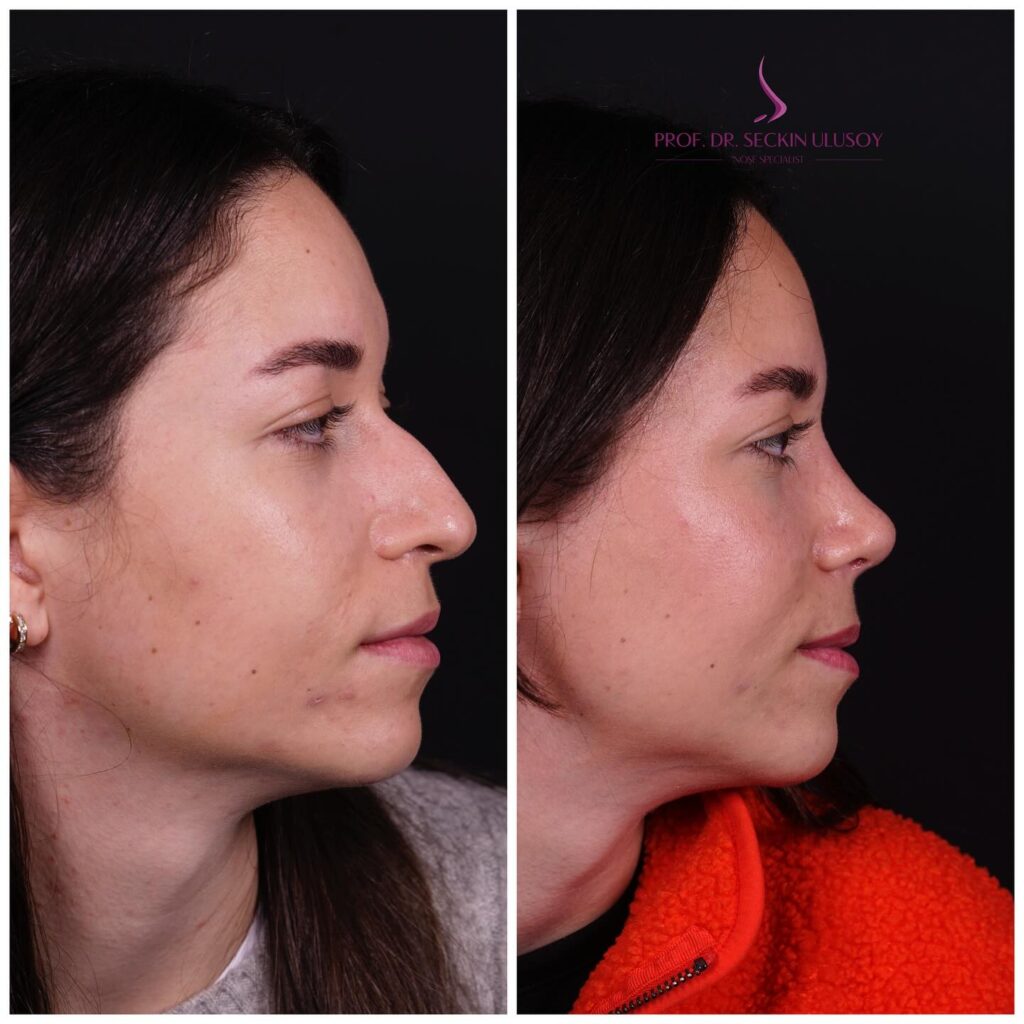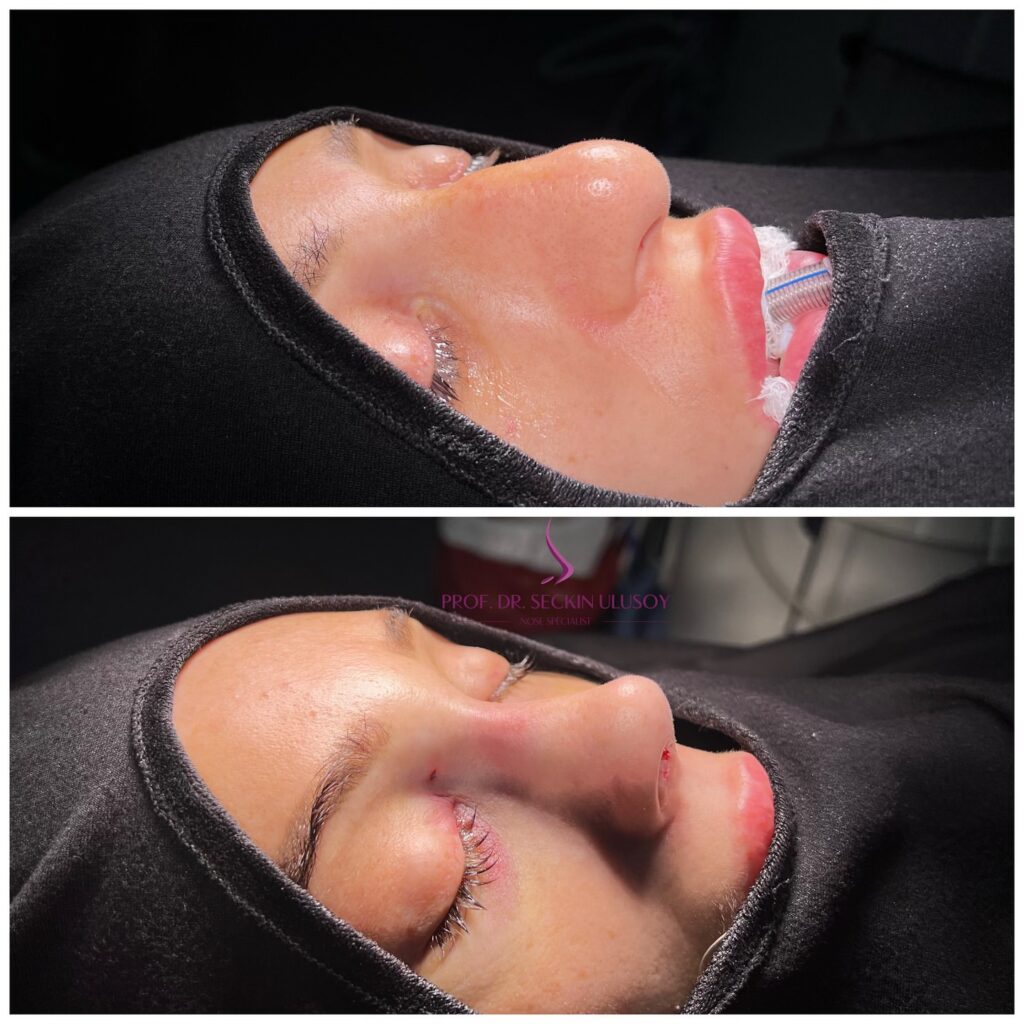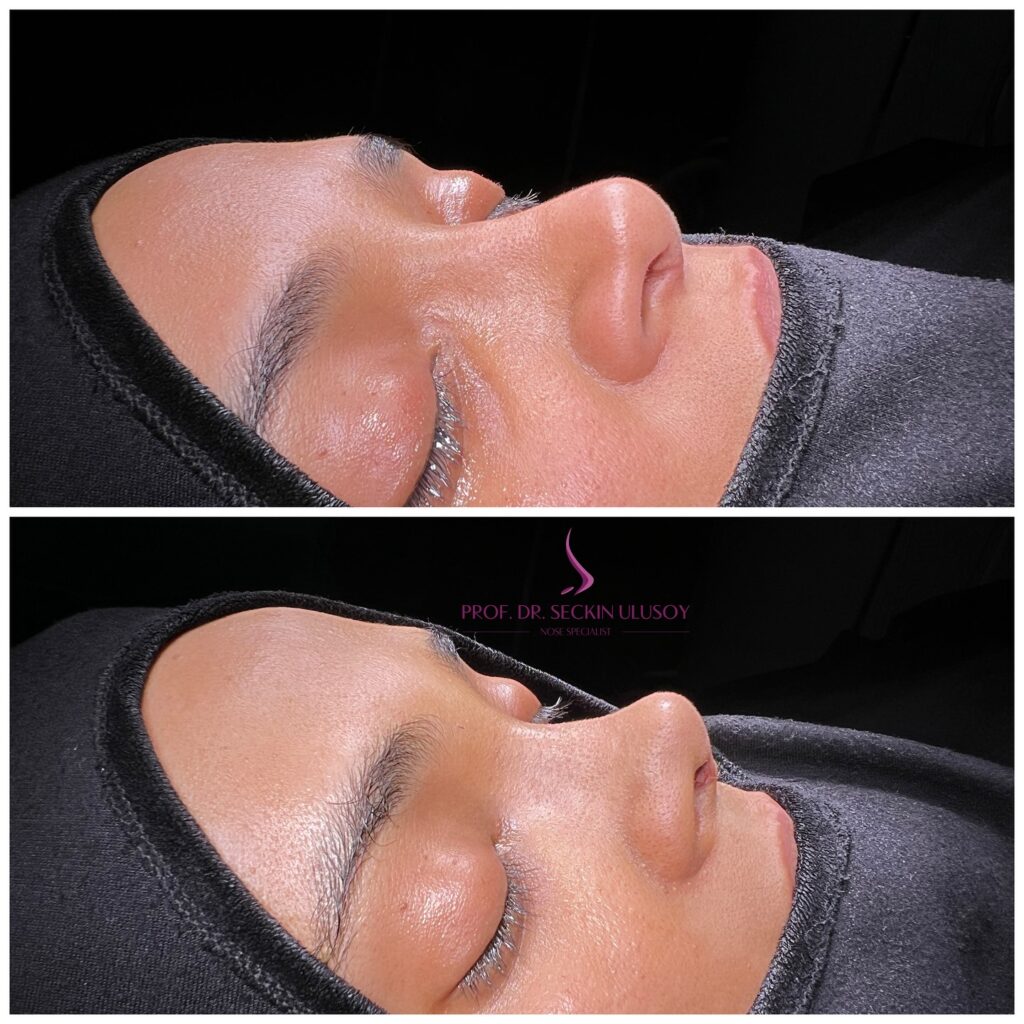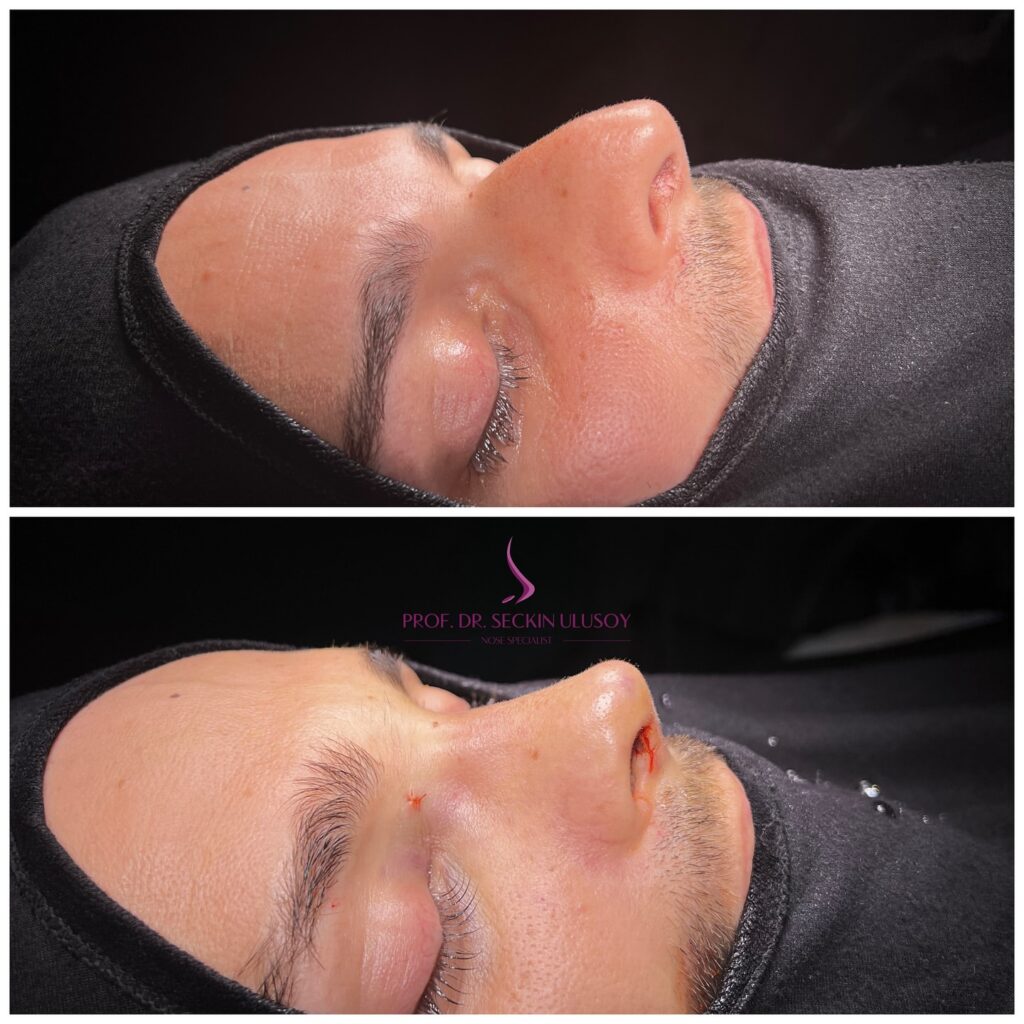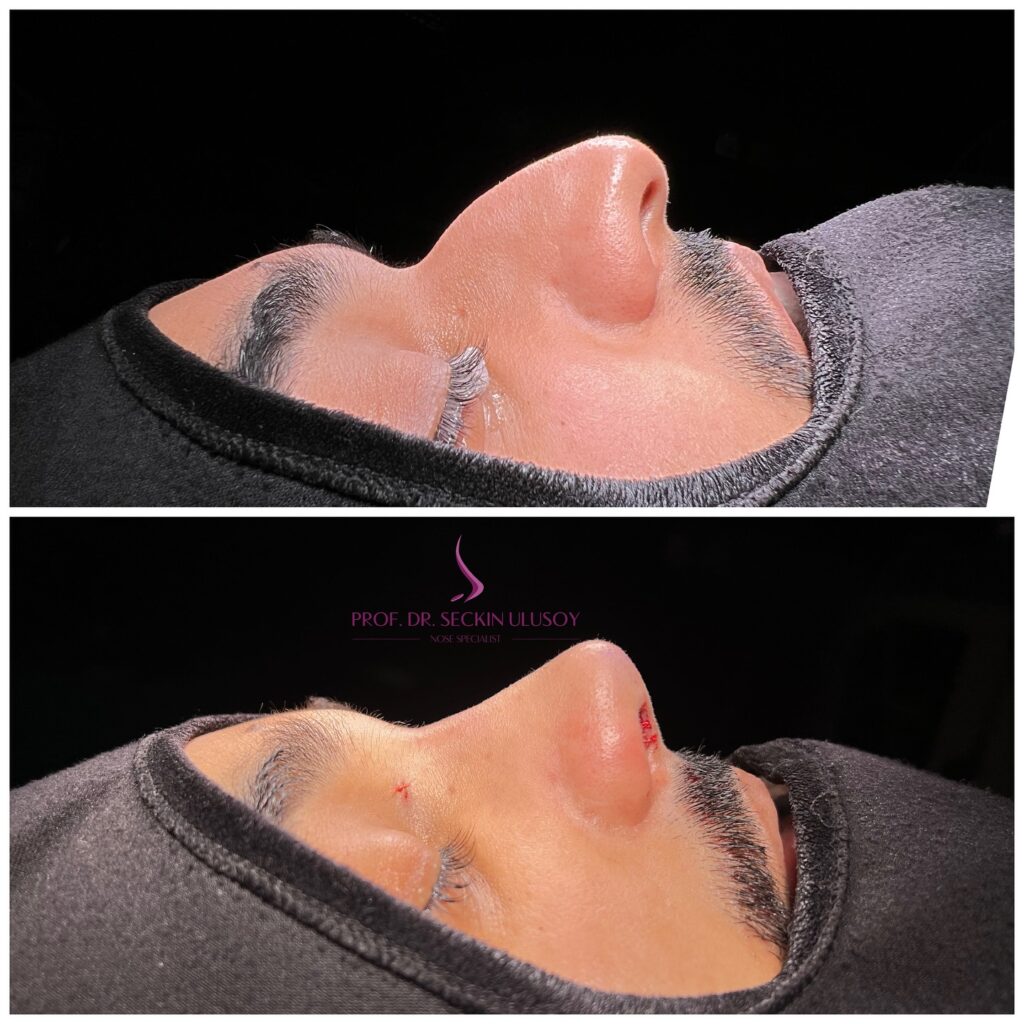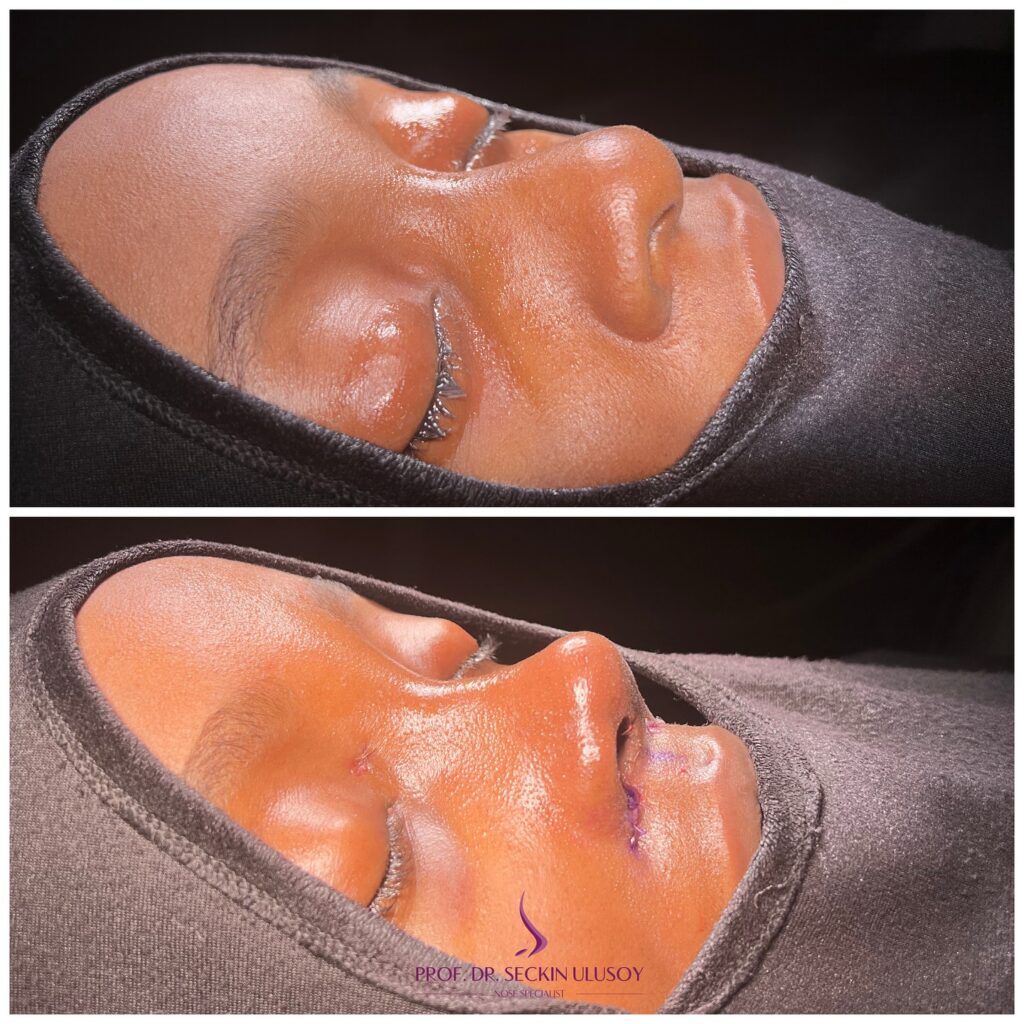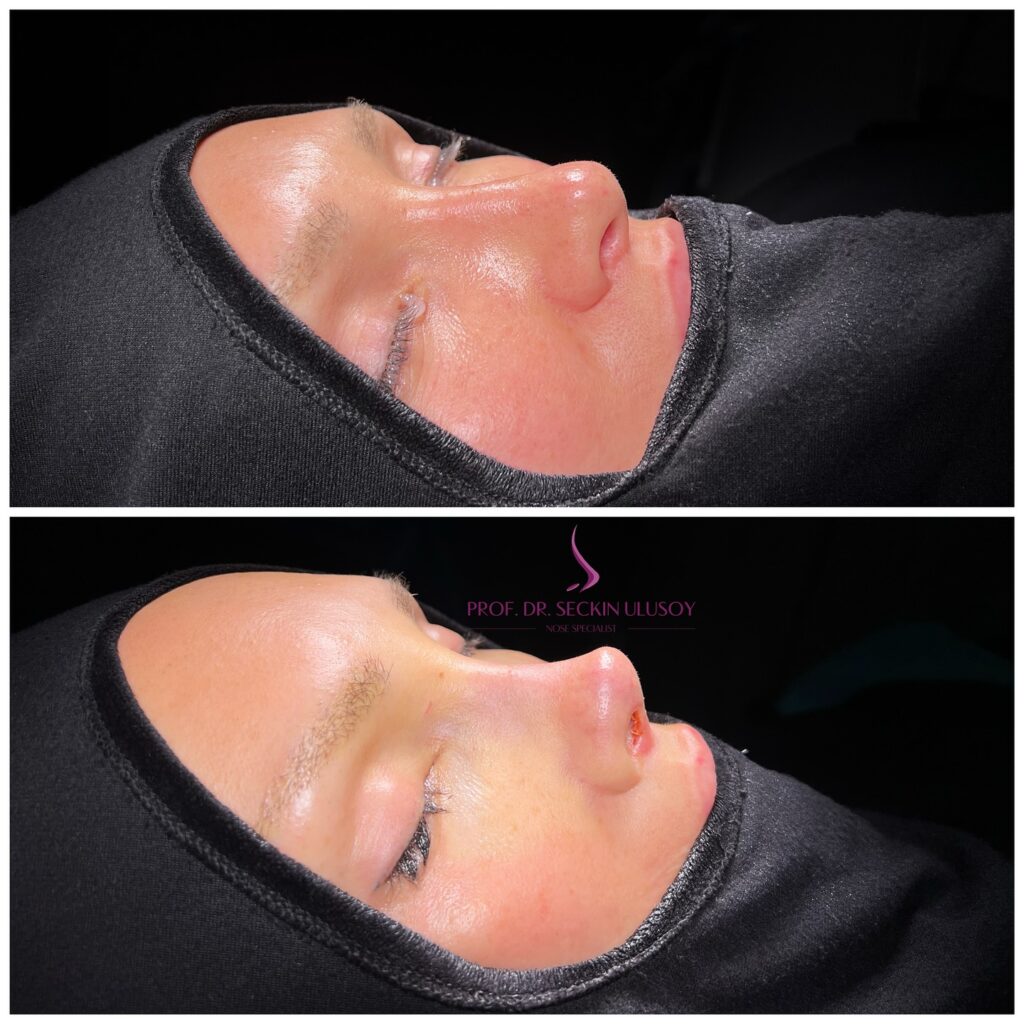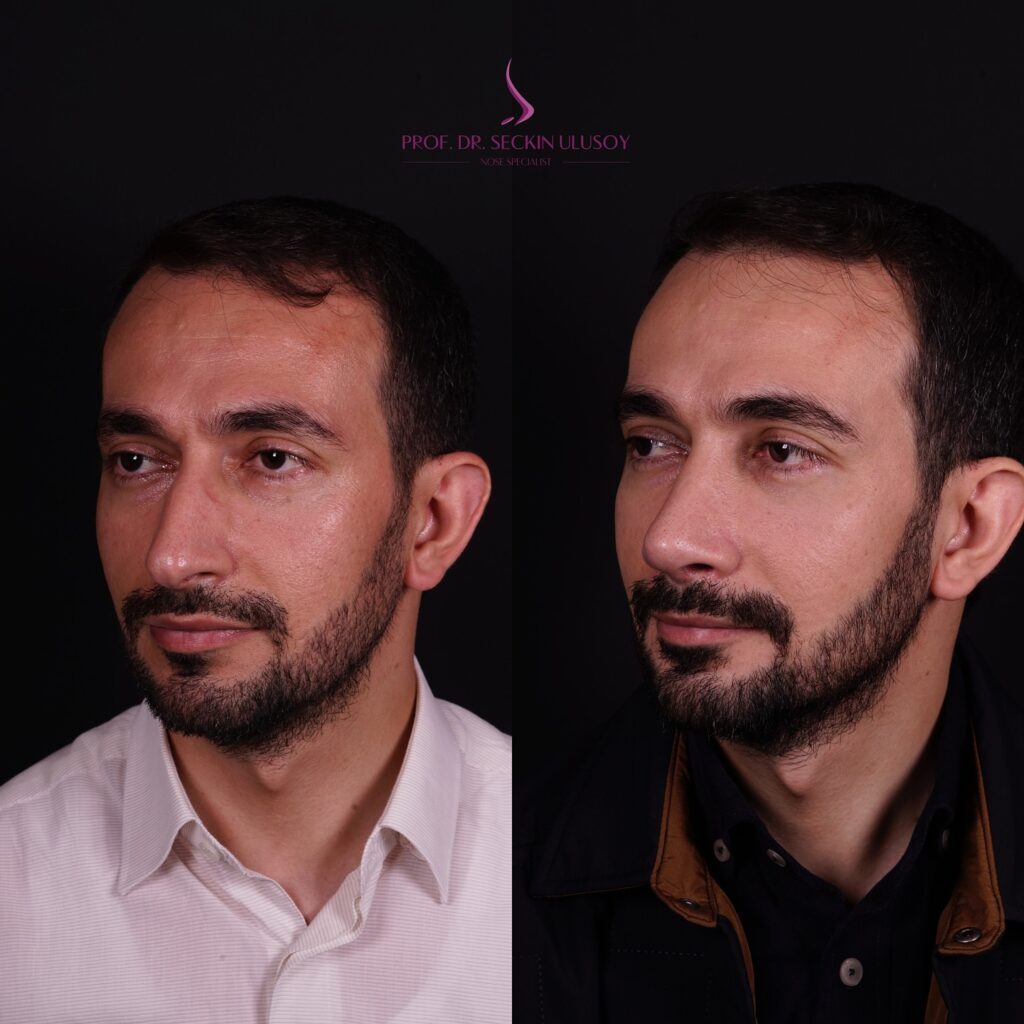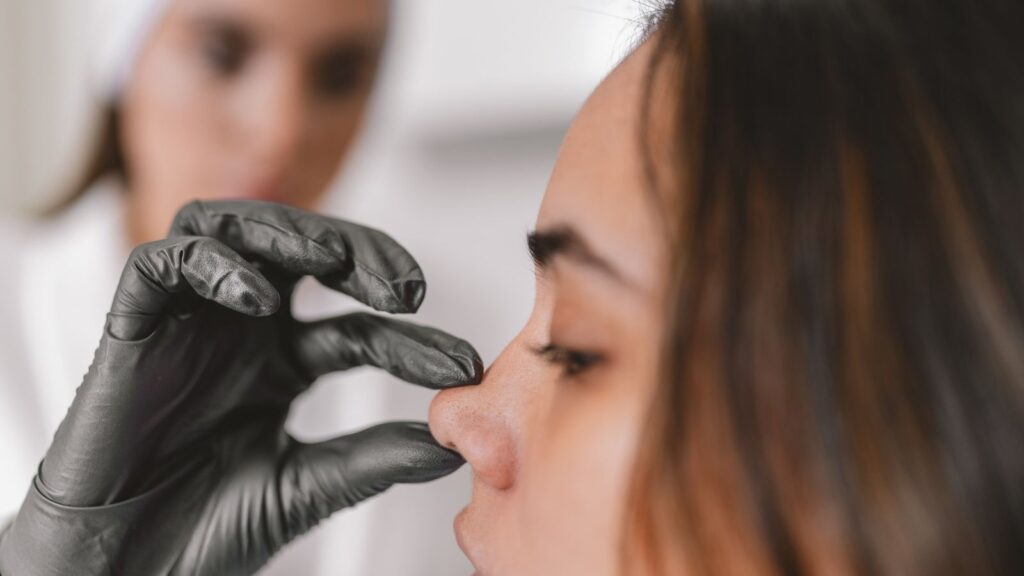
Crooked nose surgery is a corrective procedure aimed at straightening the nasal structure for both aesthetic harmony and functional improvement. It addresses deviations in the bone or cartilage that can affect breathing and appearance, restoring symmetry and nasal airway function.
Crooked nose surgery recovery process often involves moderate swelling and bruising, with initial results visible within weeks. Complete healing and stabilization of the nasal shape may take several months, during which patients should follow postoperative care instructions closely.
Crooked nose surgery benefits include improved nasal symmetry, enhanced facial balance, and restored breathing function. By correcting both internal and external deformities, the procedure delivers long-term functional and cosmetic improvements with lasting results.
Crooked nose surgery candidates are individuals with nasal deviation caused by trauma, congenital conditions, or previous surgery. A thorough medical examination and imaging are essential to determine the appropriate surgical approach for optimal results.
What Is A Crooked Nose?
A crooked nose appears visibly misaligned or deviated from the vertical midline of the face. This condition can result from trauma, congenital factors, or a deviated nasal septum. Depending on the severity, it may affect both appearance and breathing. Treatment often involves rhinoplasty or septorhinoplasty to correct the alignment and restore proper nasal function.
How Is a Crooked Nose Surgery Diagnosed and When Is It Necessary?
Contrary to popular belief, the diagnosis of a nasal fracture and the decision for surgery are based more on a detailed physical examination by a specialist rather than X-rays. One of the first suspicions after facial trauma is a broken nose, which means a crack or fracture in the bony or cartilaginous skeleton of the nose.
There are some typical symptoms that should make you suspect a nasal fracture after trauma:
- Intense pain in and around the nose
- Rapidly developing swelling
- Bruising spreading under the eyes (“raccoon eyes”)
- Nosebleeds that are difficult to stop
- Sudden difficulty or complete obstruction in nasal breathing
- Visible deviation, crookedness, or collapse of the nose
- A crackling sound (crepitus) when touching the nose
Many patients request an X-ray immediately in case of suspected fracture. However, X-rays alone are usually insufficient to clearly show nasal fractures and do not affect the treatment plan. Therefore, the gold standard in diagnosis is the careful physical evaluation by the physician. During the exam, the physician does not only focus on the external appearance but also uses special tools to assess the internal state—especially the health of the nasal septum and airway patency.
In fact, the main question during the physician’s examination is not simply “is it broken?”, but rather “does this fracture require intervention?” Simple, non-displaced cracks often heal on their own without intervention. The specialist essentially seeks answers to three critical questions:
- Did the fracture cause a visible deformity?
- Did the fracture cause a functional problem affecting breathing?
- Has a serious complication developed that requires urgent intervention?
Sometimes, severe swelling after trauma can hide the underlying damage to bone and cartilage. For this reason, the physician may want to see you again 3–5 days after the trauma, once the swelling has gone down, to make a more accurate assessment. This is a strategic step to plan the right treatment.
However, some situations require emergency medical intervention and cannot wait. These include:
Septal Hematoma: Blood accumulation in the middle section of the nose. It can lead to permanent damage (such as saddle nose deformity) by compressing the blood vessels feeding the cartilage and must be drained immediately.
Uncontrollable Nosebleed: Severe bleeding that does not respond to simple tamponades.
Clear, Watery Discharge: May indicate a skull base injury and cerebrospinal fluid leakage—an emergency requiring neurosurgical consultation.
Open Fracture: When a fractured bone pierces the skin and becomes exposed. Immediate surgical repair is required due to the risk of infection.
Why Is Timing So Important in Crooked Nose Surgery?
Obtaining the best results from crooked nose surgery depends on performing the intervention within the correct time frame. This “critical window” prevents bones from healing in the wrong position and allows the surgeon to make the best assessment. Timing is based on a delicate balance: on the one hand, you need to wait a few days for swelling to go down, so the surgeon can accurately see the nose’s true shape. On the other hand, you must intervene before the bones start to heal in the wrong position.
These ideal timing intervals are as follows:
In adults: Between 7 and 14 days after trauma.
In children: Between 3 and 7 days after trauma, as their bones heal faster.
If this window is missed (for example, if the patient presents after 2–3 weeks), the bones will likely have already started to set in the wrong position. At this point, a simple correction is not enough. A much more extensive operation, such as “septorhinoplasty,” will be necessary and must be postponed until at least 6 months after the trauma for full tissue healing. That’s why timely intervention is a critical step that can save the patient from a much more challenging process in the future.
How Is Closed Reduction Crooked Nose Surgery Performed?
Closed reduction is a correction method for simple, non-comminuted, displaced nasal fractures, performed without any external incision. Although often called non-surgical, it is actually a surgical manipulation performed under anesthesia. The goal is to restore the pre-trauma appearance and open up the airway.
The procedure is usually performed under general anesthesia or deep sedation so that the patient feels nothing. The surgeon inserts a special instrument (an elevator) through the nostril to gently lift and reposition collapsed or displaced bone fragments. With the other hand, the surgeon guides the bones externally. This process is entirely dependent on the surgeon’s sense of touch and experience, as the fracture line is not directly visible. Once the bones are aligned, a cast or plastic splint is placed on the outside to maintain the position, and internal splints (tampons) are usually inserted to support the internal structure and control bleeding. The internal splints are removed after a few days, and the external cast about a week later. With correct patient selection and timing, this method yields highly successful results.
What Techniques Are Used in Advanced Crooked Nose Surgery?
If the fracture is severe, with multiple bone fragments, or if the septum (the nose’s central pillar) is also damaged, closed methods are inadequate. In this case, open surgical techniques that allow the surgeon to see and repair the fracture directly are employed.
The main open techniques that can be applied include:
Open Reduction: The surgeon directly accesses the broken bones and cartilage, precisely aligning them. Broken fragments may be fixed with small wires or absorbable mini-plates. Preferred in cases with comminuted fractures or when closed reduction has failed.
Septoplasty: This operation focuses on correcting the septum, especially when post-traumatic difficulty in breathing is caused by septal fracture or deviation. The septum is the main support of the nose—if it remains crooked, bones placed above it may also become misaligned over time. For a permanent solution, septoplasty is usually performed together with bone repair.
Rhinoplasty / Septorhinoplasty: The most comprehensive surgical approach in crooked nose correction, resolving both functional and aesthetic concerns. Old, incorrectly healed fractures, severe traumatic deformities, or cases where the nose must be completely reconstructed all require this operation. Bones are surgically broken (osteotomy) and reshaped, and cartilage from the ear or rib may be used to reinforce the skeleton.
Why Is Crooked Nose Surgery Different in Children?
Pediatric nasal fractures require a much more delicate approach than in adults, due to the unique anatomy and ongoing facial growth in children. In infants, visible crooked nose appearances demand even more careful attention.
Main differences from adults:
Greater Flexibility: Children’s nasal skeletons are more cartilaginous and their bones are not fully hardened. So, “greenstick” (bending) injuries are more common than full fractures, which may not cause obvious deformity but can still severely affect breathing.
Faster Healing: Their bones heal very quickly, so any necessary intervention should be performed within the first 3–7 days.
Growth Centers: The most critical issue is the presence of growth centers in the nose and septum that guide future facial development. Aggressive surgery that damages these areas can cause permanent facial asymmetries.
Therefore, the general approach in children is minimal intervention. Closed reduction under general anesthesia is typically preferred. Major reconstructive surgeries like rhinoplasty are avoided until facial growth is complete (around age 15–16 for girls, 17–18 for boys), unless absolutely necessary.
What Should Be Considered Before and After Crooked Nose Surgery?
The success of crooked nose surgery depends as much on preoperative preparation and postoperative care as on the surgery itself. This process requires close cooperation between physician and patient.
Some key points for a safe and smooth operation:
- Have a detailed discussion with your surgeon.
- Bring old photos showing your nose before trauma.
- Avoid blood thinners (Aspirin, Ibuprofen, etc.) and certain herbal supplements as directed by your doctor.
- Stop smoking and all nicotine products 2–4 weeks before surgery, as they impair healing.
- Arrange for someone to accompany you on the day of surgery.
- Do not eat or drink for at least 6–8 hours prior to general anesthesia.
Recovery requires patience. It is important to know that the initial swelling and bruising are temporary:
- Keep your head elevated at all times during the first few days (even while sleeping, use extra pillows).
- Apply cold compresses as recommended by your doctor, especially around the eyes.
- Use prescribed painkillers and antibiotics regularly.
- Avoid heavy lifting, bending forward, and straining.
- Do not blow your nose; if you need to sneeze, do so with your mouth open.
- Wait for your doctor to remove casts and splints; do not attempt this yourself.
- Avoid strenuous exercise and contact sports for about 6 weeks.
- Refrain from wearing glasses until approved by your doctor.
- Be patient—final nasal shape can take up to a year to settle.
What Are the Risks of Crooked Nose Surgery?
As with any surgery, crooked nose surgery carries potential risks, though most are rare and minimized in the hands of an experienced surgeon. Patients must be informed about these risks as part of the consent process.
Possible risks and complications include:
- Reactions to anesthesia
- Infection at the surgical site
- Bleeding (epistaxis) that may be hard to control
- Unwanted cosmetic outcome (persistent deviation or asymmetry)
- Ongoing or recurrent breathing difficulties
- Septal perforation (hole in the septum)
- Temporary or rarely permanent numbness in the nasal tip or upper lip
- Rarely, changes in sense of smell
- Need for secondary revision surgery if the desired result is not achieved
It’s important to understand that many of these risks are more related to the severity of the initial trauma than the surgery itself. The goal of surgery is to repair this damage, but the complexity of the trauma can sometimes make a perfect result difficult to guarantee.
What Are the Long-Term Expectations After Crooked Nose Surgery?
Long-term success after crooked nose surgery is measured by two criteria: improvement in the patient’s breathing and satisfaction with the nose’s appearance. Thanks to modern surgical approaches, patient satisfaction is now very high in both areas.
Most patients experience both better breathing and a straighter, more natural appearance similar to their pre-trauma nose. In the past, especially after simple corrections, there was a risk that the nose might deviate again during healing. With today’s “structural rhinoplasty” philosophy, this issue has largely been solved. This approach not only aligns bones and cartilage but also reinforces the nasal skeleton with cartilage grafts. This ensures that the nose remains stable and solid in the long term.
Frequently Asked Questions
What is crooked nose surgery and who may need it?
Crooked nose surgery is a rhinoplasty procedure designed to correct nasal asymmetry caused by trauma, congenital structural differences, or previous surgery. It aims to improve both facial appearance and nasal function when breathing is affected.
What causes a crooked nose to develop?
A crooked nose may result from nasal trauma, genetic factors, developmental asymmetries, or deviations of the nasal septum. In some cases, previous nasal surgery or healing irregularities can also contribute to a crooked appearance.
How is crooked nose surgery performed?
The procedure involves repositioning and reshaping the nasal bones, cartilage, and septum to achieve better alignment. The surgical approach is customized according to the severity and location of the deviation.
Can crooked nose surgery improve breathing problems?
Yes, many patients with a crooked nose also have a deviated septum or structural narrowing that affects airflow. Corrective surgery can improve nasal symmetry while enhancing breathing function.
Is crooked nose surgery more complex than standard rhinoplasty?
In many cases, yes. Correcting asymmetry often requires detailed reconstruction of the nasal framework and precise adjustments to both cosmetic and functional structures to achieve long-term stability.
How long is the recovery period after crooked nose surgery?
Most patients return to routine activities within one to two weeks. Swelling and bruising improve gradually, while subtle changes in nasal shape continue to refine over several months.
Can a crooked nose become crooked again after surgery?
Although modern surgical techniques provide long-lasting results, healing characteristics, scar tissue formation, or nasal trauma after surgery may affect alignment. Following post-operative instructions helps support optimal outcomes.
Will there be visible scars after crooked nose surgery?
Closed rhinoplasty leaves no visible external scars because incisions are made inside the nose. Open rhinoplasty involves a small incision on the columella, which usually heals with minimal visible scarring.
When can patients return to sports after crooked nose surgery?
Light physical activity is usually allowed after a few weeks, but contact sports and activities with a risk of nasal injury are generally postponed for several months. The exact timing depends on healing progress and surgeon recommendations.
When are the final results of crooked nose surgery visible?
Initial improvements can be seen once early swelling subsides. However, complete healing and final nasal definition typically take between 6 and 12 months, depending on the extent of correction and individual healing patterns.