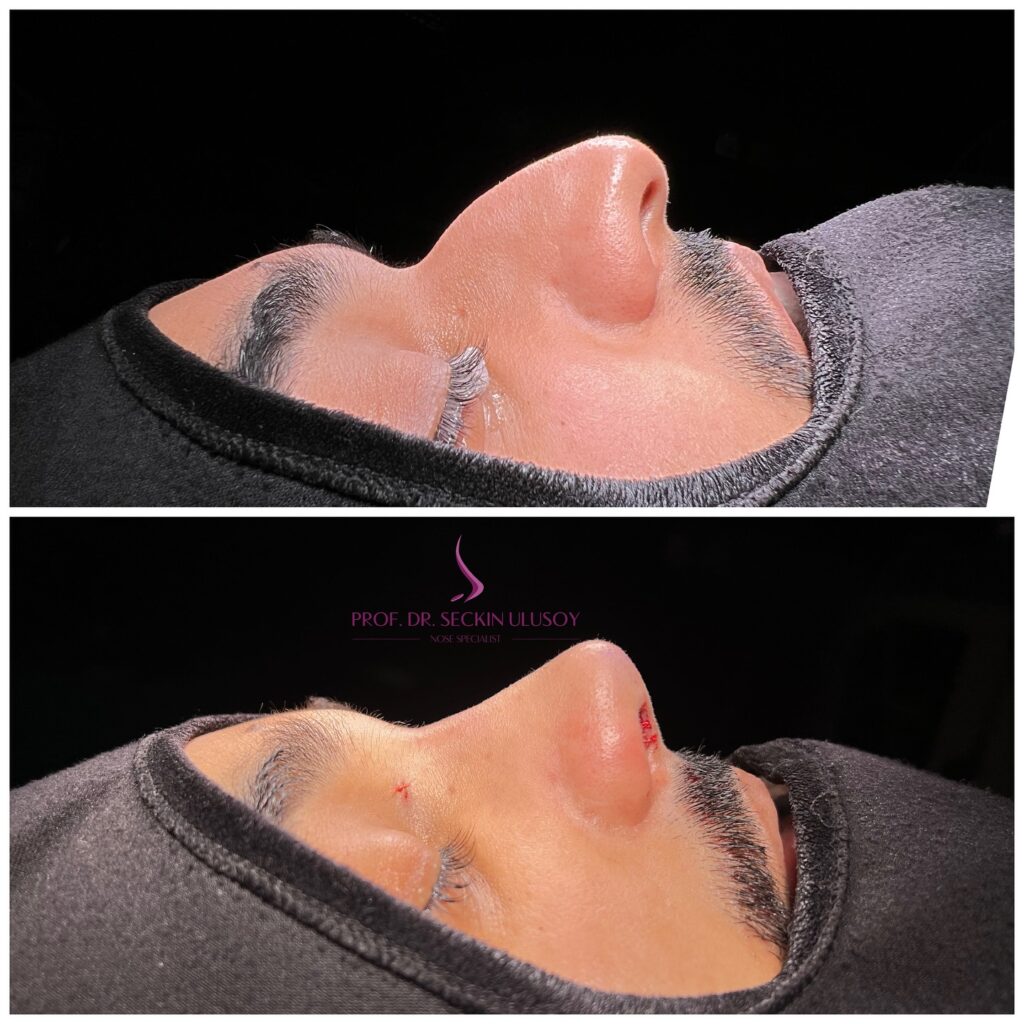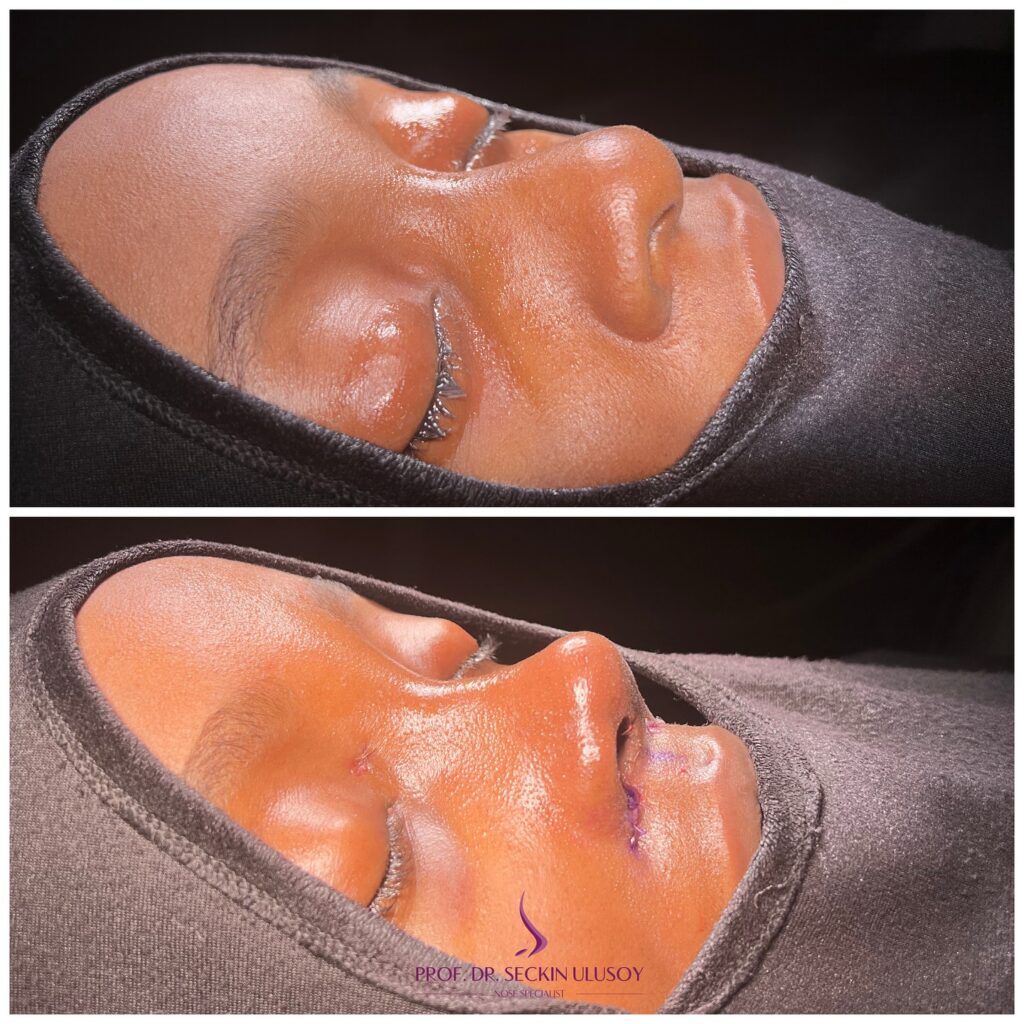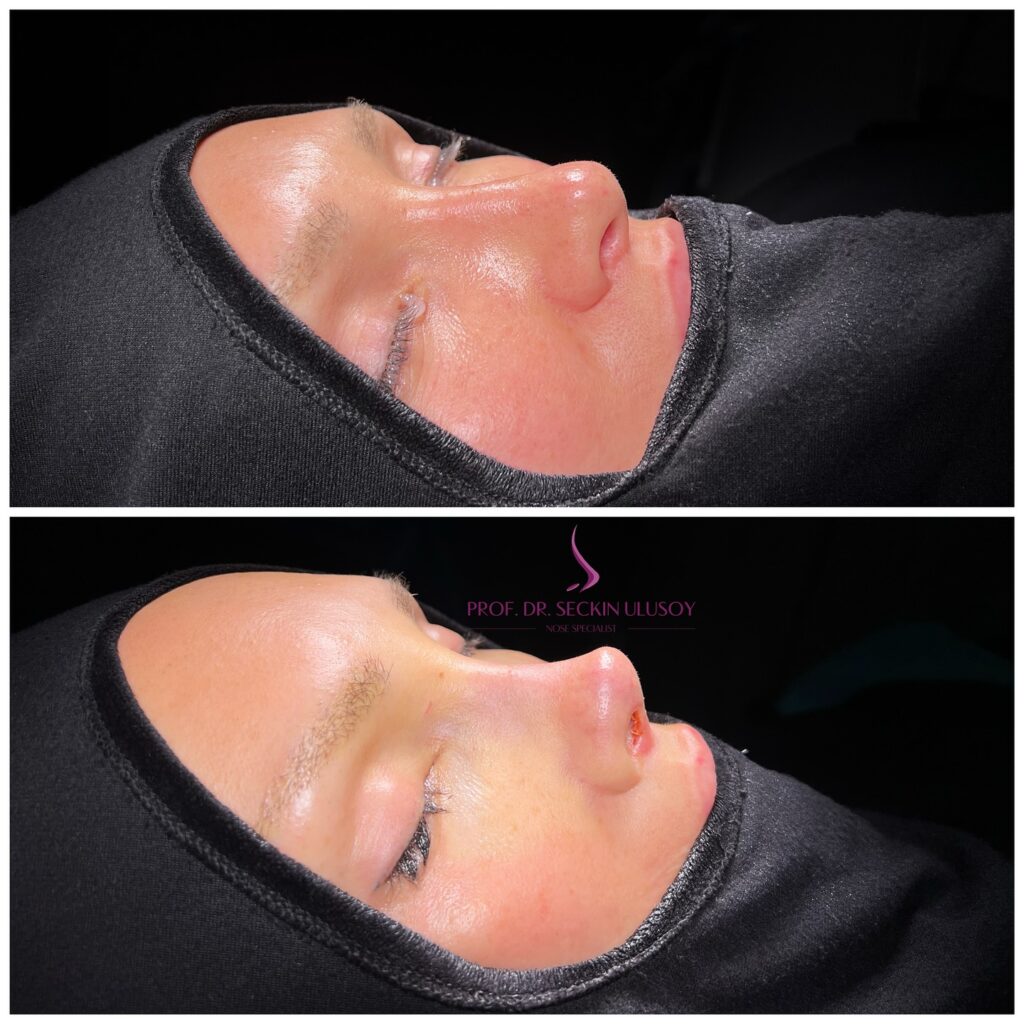
Closed female rhinoplasty is a surgical approach in which the incisions are placed inside the nostrils, avoiding an external columellar incision. In suitable patients, this technique can be used to refine the bridge, adjust tip position, improve projection, and create a more balanced nasal contour while preserving a natural appearance. The exact surgical plan depends on the patient’s anatomy, skin thickness, cartilage structure, and aesthetic goals.
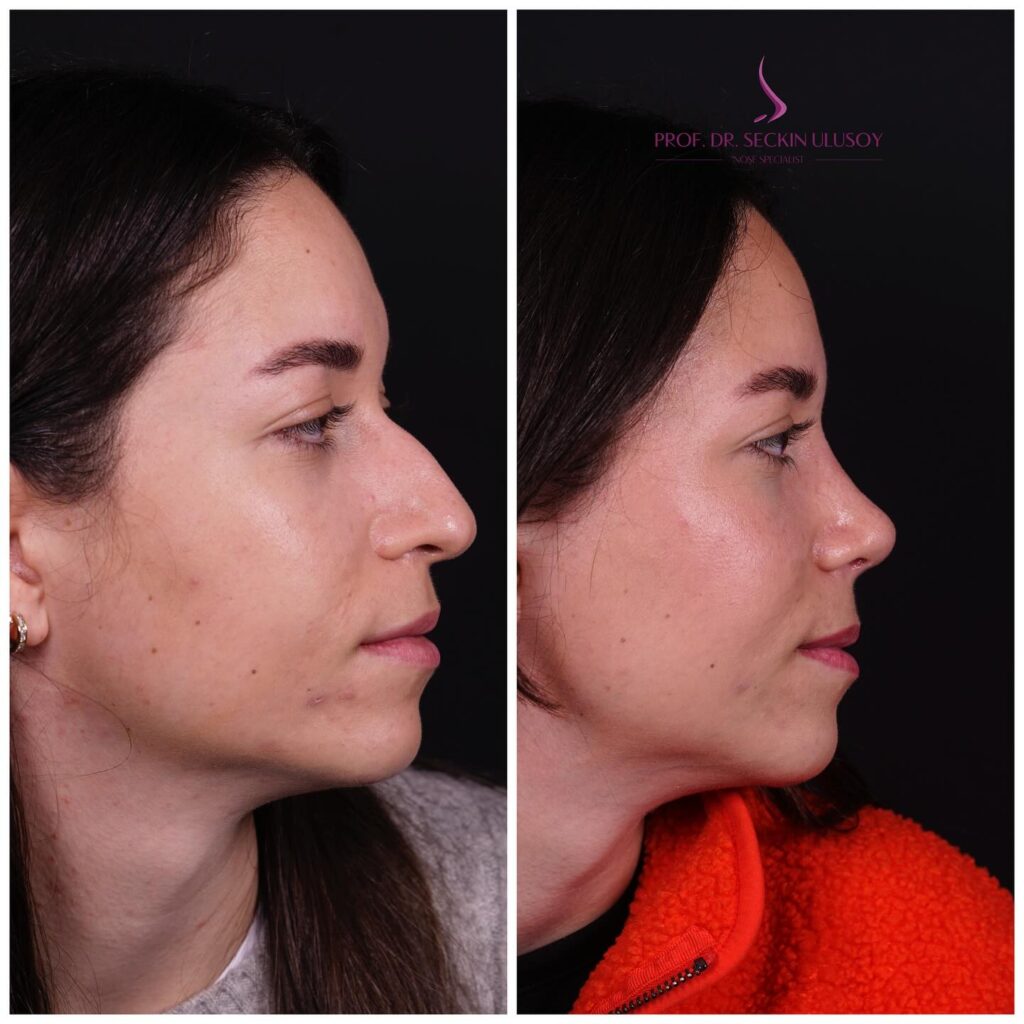
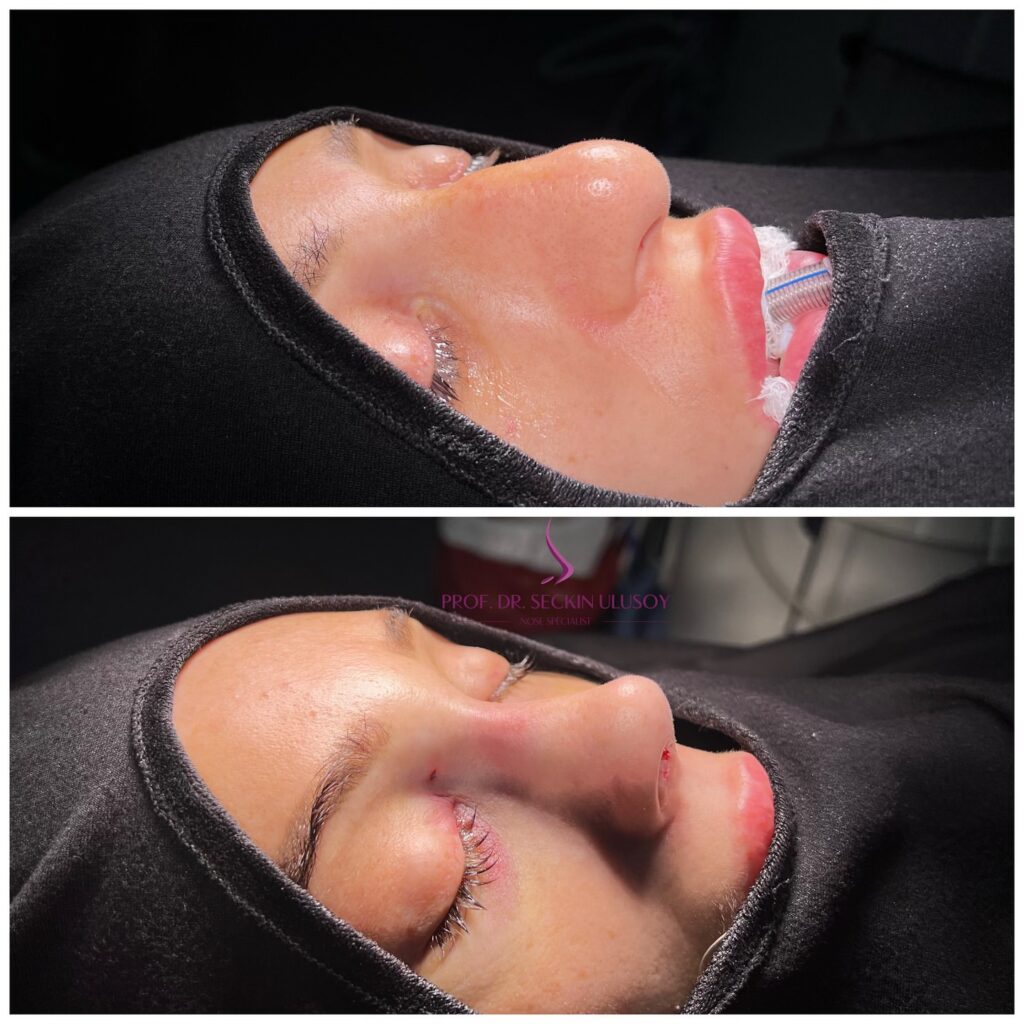
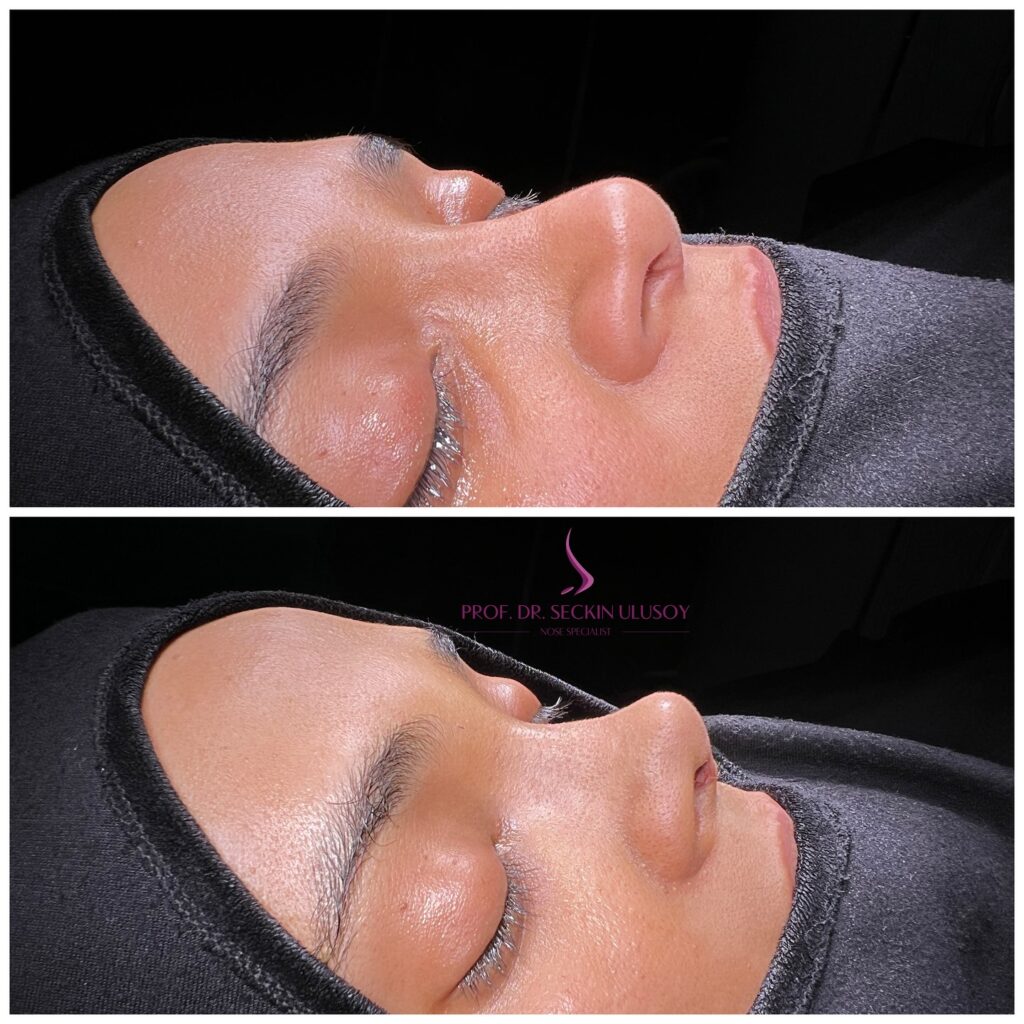
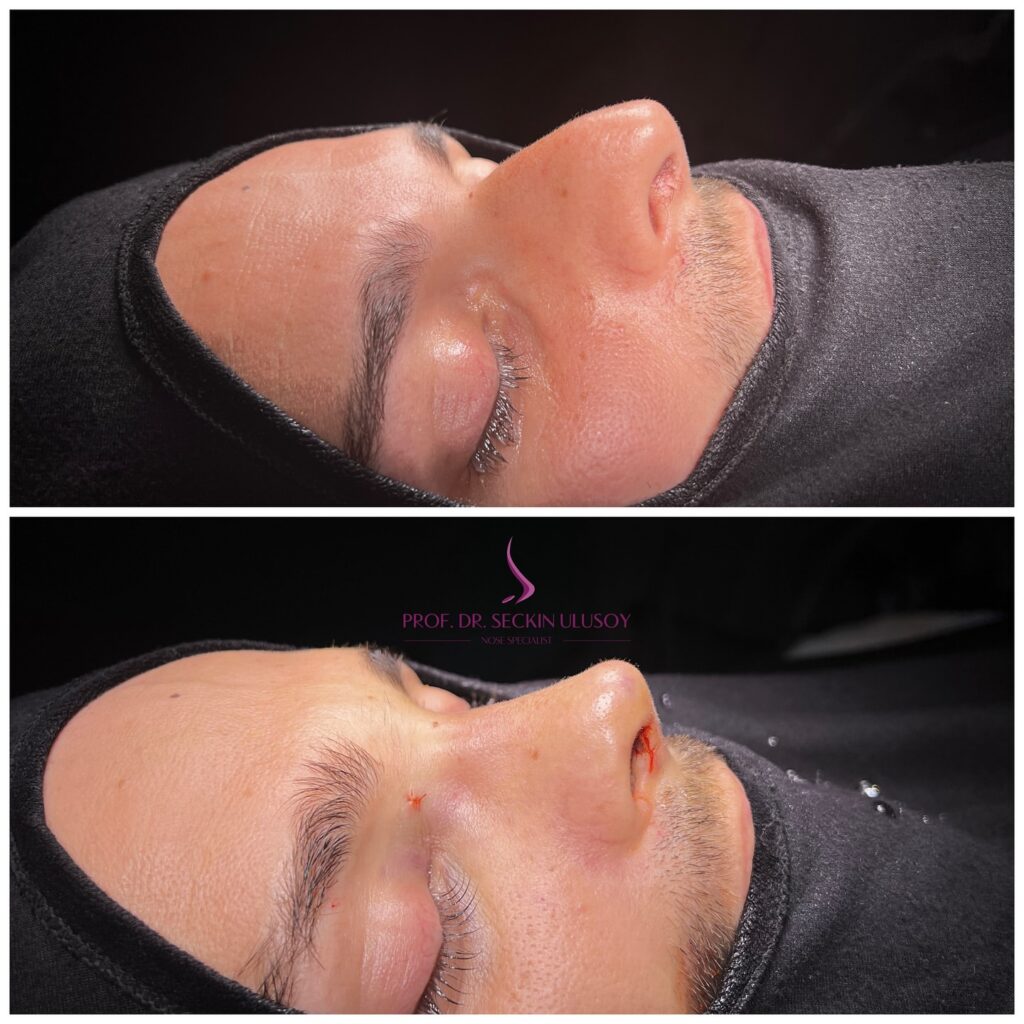
Closed female rhinoplasty before and after photos are particularly useful when evaluating long-term results. Early postoperative images can still be influenced by swelling, especially around the nasal tip, whereas long-term photographs provide a clearer view of how the tissues have settled and how the final nasal shape relates to the rest of the face.
Before surgery, patients may present with concerns such as a dorsal hump, drooping or bulky tip, bridge irregularity, excessive projection, or asymmetry. After rhinoplasty, the goal is generally to create smoother nasal lines, improved tip definition, and better proportion between the nose, forehead, lips, and chin. In female patients, refinement is usually planned carefully to avoid an overly reduced or artificial appearance.
A closed approach may be appropriate for selected primary rhinoplasty cases, but the decision between closed and open techniques depends on the type and complexity of correction required. The most suitable method is determined after a detailed nasal and facial assessment.
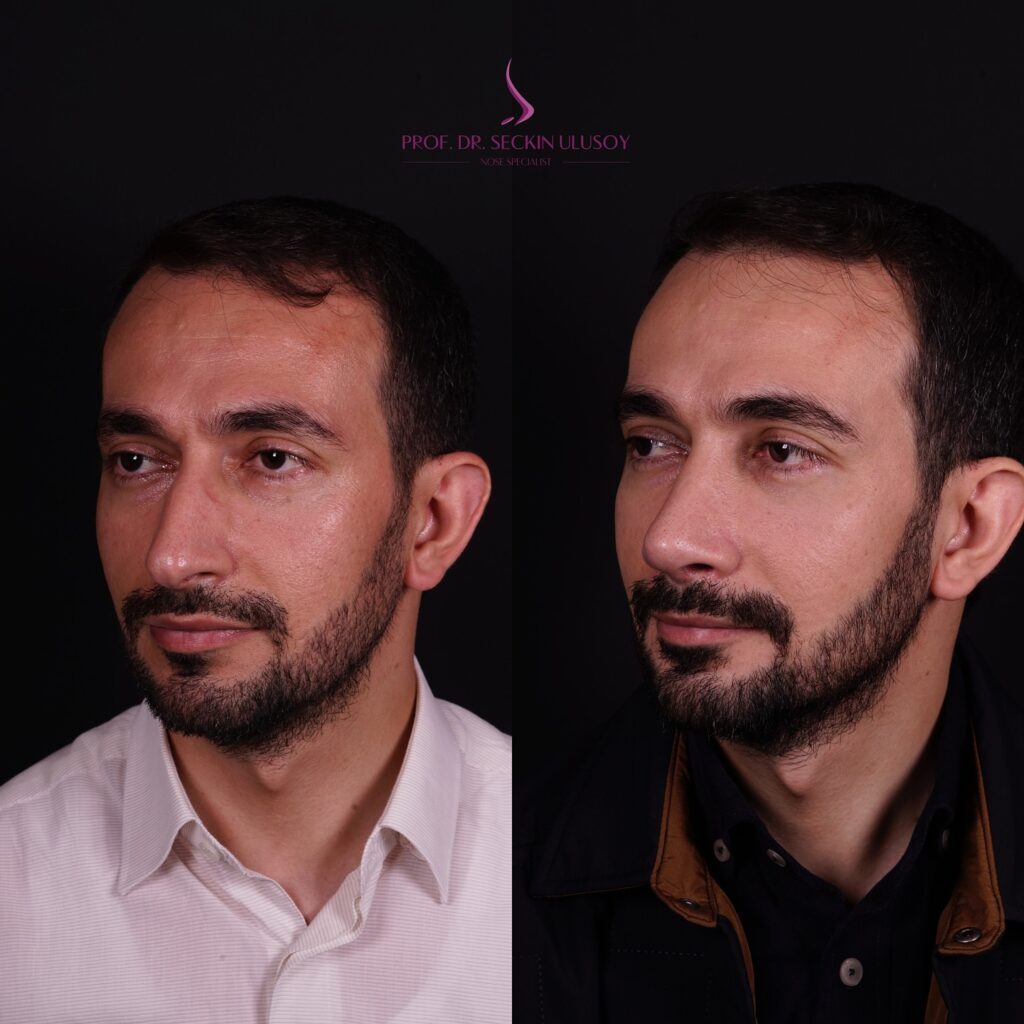
Long-term healing after rhinoplasty is gradual. Although most swelling decreases within the first several months, subtle refinement can continue for a year or longer. Patients with thicker skin may require additional time for final tip definition to become apparent.
The closed female rhinoplasty long-term result before and after photo below is shared to illustrate a real patient outcome after an extended healing period. Individual results vary depending on nasal anatomy, surgical technique, skin characteristics, postoperative care, and the healing process.