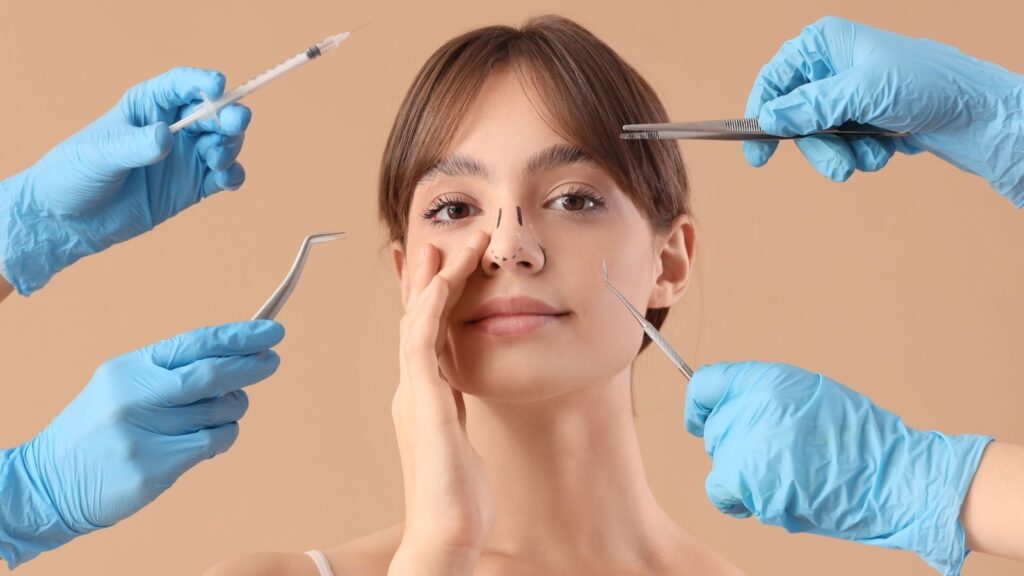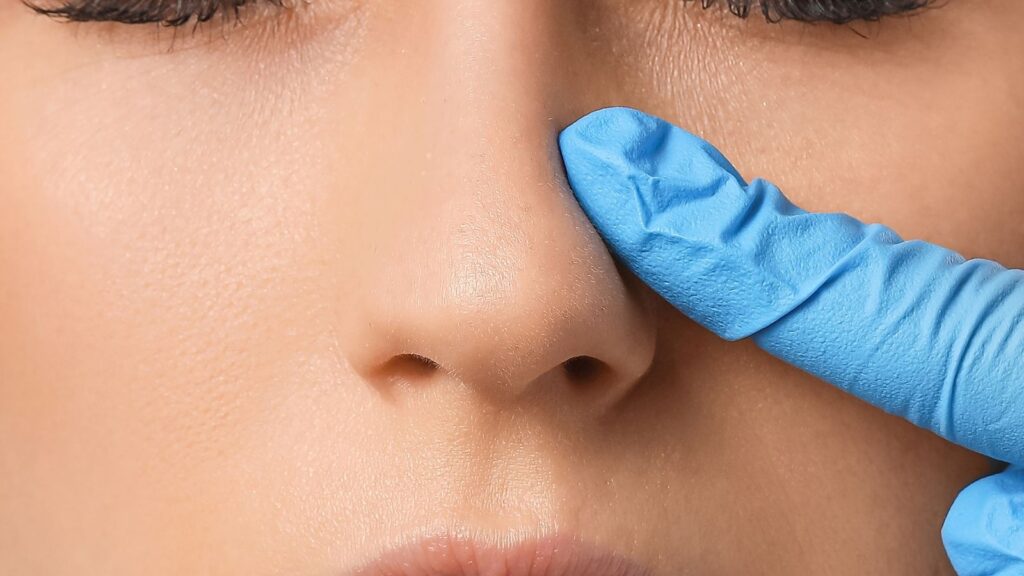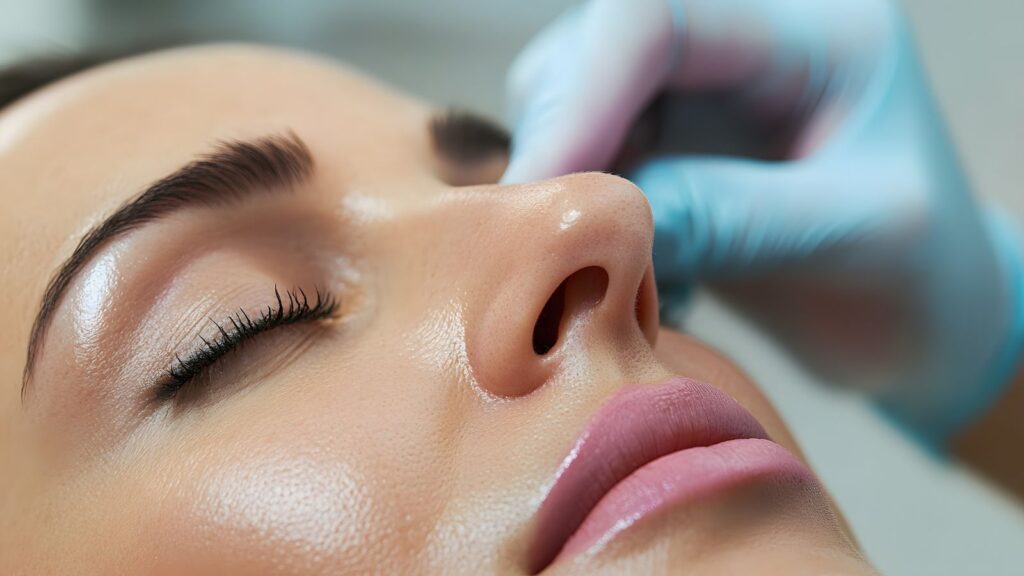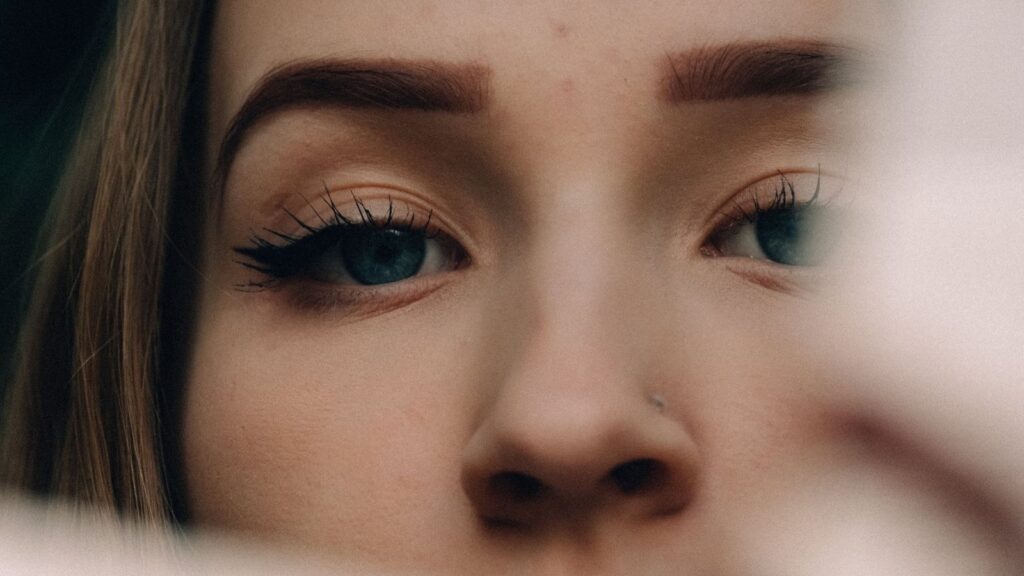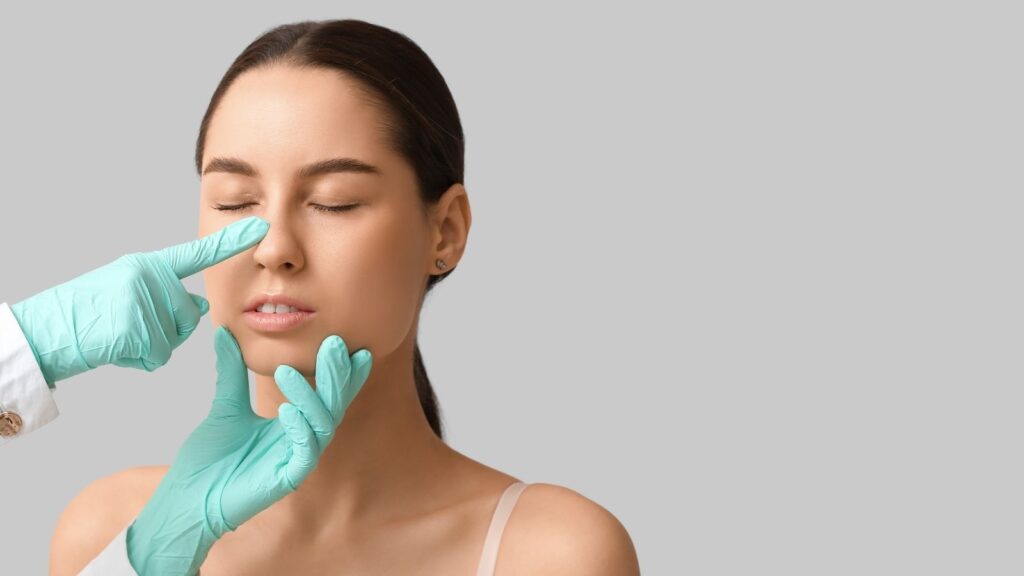
Button nose is generally defined by a small, rounded, and slightly upturned nasal shape. It offers an aesthetically cute and youthful appearance. This nose type may occur genetically or can be achieved through aesthetic surgery. Harmony with facial proportions is important.
Button nose aesthetics are performed by shaping the nasal tip. In rhinoplasty procedures, the nasal tip is reduced and lifted without disrupting the natural structure of the nose, giving it a button-like form. It is a procedure frequently preferred especially among women.
The question of who is suitable for a button nose should be evaluated according to face type and expectations. While it looks natural on individuals with small and rounded facial features, it may create a disproportionate appearance on long faces. An expert physician’s evaluation is required.
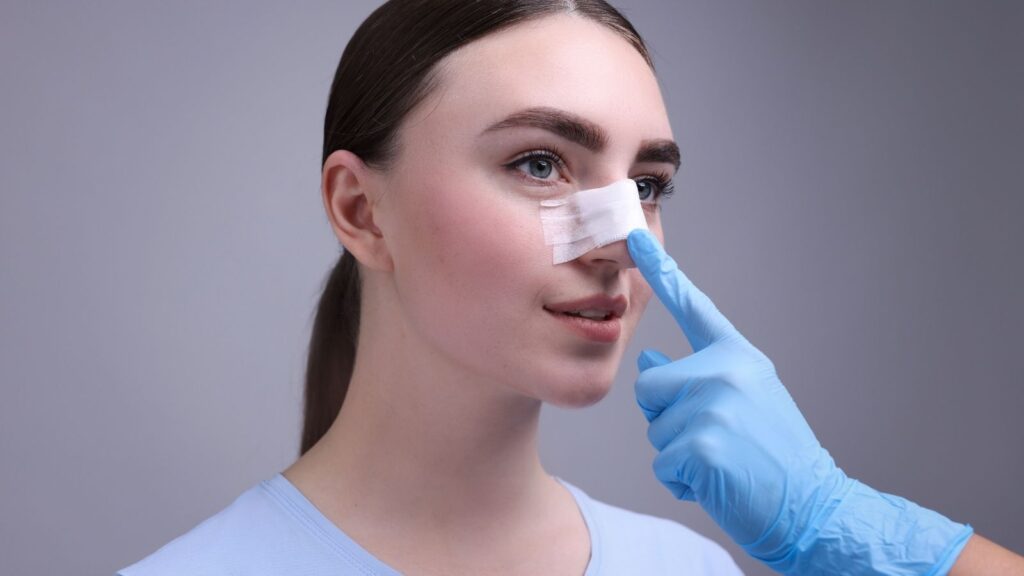
The recovery process after a button nose procedure is similar to classic rhinoplasty. Swelling and bruising usually decrease within 1–2 weeks. The final nasal shape becomes apparent between 6 months and 1 year. The permanence of the results depends on the success of the surgery.
| Things You Should Know | Information |
| Definition | “Button nose” is an aesthetic term describing the rounded, wide, and protruding appearance of the nasal tip. It usually develops due to genetic factors. |
| Anatomical Features | The wide and prominent structure of the nasal tip cartilages (especially the alar cartilages) causes the button nose appearance. |
| Causes | Genetic predisposition, thick skin structure, wide nasal wings, and the shape or position of the cartilages supporting the nasal tip are influential in this appearance. |
| Prevalence | It can be seen at any age and in any gender. Familial transmission is common. |
| Aesthetic Concerns | Button nose is a frequently expressed aesthetic concern, especially among individuals considering rhinoplasty. |
| Treatment Methods | Surgical intervention (rhinoplasty) is the most common treatment method. By reshaping the cartilages at the nasal tip, a thinner and more proportionate appearance can be achieved. |
| Rhinoplasty Techniques | It can be performed using open or closed techniques. Cartilage resection, suturing techniques, and support grafts targeting the nasal tip cartilages may be used. |
| Recovery Process | Returning to social life is usually possible within 1–2 weeks. Final results may take 6–12 months to settle. |
| Non-Surgical Methods | Temporary shaping with fillers may be possible; however, it is generally insufficient for the button nose appearance. |
| Points to Consider | Surgical results may be limited in individuals with thick nasal skin; realistic expectations are important. |
What Is Button Nose Deformity and How Is It Recognized?
When we talk about a button nose, a small, cute childlike nose immediately comes to mind. In children, this appearance is normal and cute; however, as facial bones develop, the nose should lengthen and settle into a certain angle. If this development is incomplete or disrupted for various reasons, the nasal tip moves excessively away from the upper lip.
From a technical perspective, there are certain standards for the angle between the nasal tip and the lip in both women and men. In a button nose, this angle is excessively wide. In other words, the nasal tip, so to speak, “looks toward the sky.” The most obvious sign of this condition is that when you talk to someone face-to-face, that person can clearly see the inside of your nostrils. We call this “nostril show.”
Genetic factors, of course, play a major role in the formation of this structure. The bone and cartilage structure inherited from the family determines the developmental process of the nose. However, this is not the only cause. Sometimes, traumas experienced during childhood can affect the growth centers of the nose and stop its elongation. Sometimes, unfortunately, previously unsuccessful nose surgeries lead to this outcome. Excessive removal of cartilage from the nasal tip during a prior surgery or healing tissue pulling the nose upward can result in an acquired button nose appearance.
The most common causes of this deformity are as follows:
- Genetic inheritance
- Congenital developmental differences
- Childhood traumas
- Unsuccessful previous surgeries
- Tissue loss after infections
- Excessive cartilage removal
Do Non-Surgical Filler Applications Solve the Button Nose Problem?
With the increasing popularity of aesthetic procedures today, patients understandably often ask, “Can this be corrected without surgery?” Although the 15-minute procedures we see on social media may seem very appealing, the reality is unfortunately quite different when it comes to a button nose.
The button nose problem is not a problem of “deficiency,” but rather a problem of “position and structure.” The reason the nasal tip is excessively upturned is the lack of a strong skeletal support to hold it down. Filler materials have a gel-like consistency and are inherently soft. When we inject filler into the nasal tip, yes, we create volume there, but this volume does not have the strength to push the nose downward.
On the contrary, fillers applied to the nasal tip usually push the nose even further forward and upward. An already upturned nose may become even more swollen and elevated with fillers. We sometimes call this the “Avatar nose” appearance; an artificial look forms where the nasal bridge and tip are aligned. Additionally, fillers occupy space under the nasal skin, making the nose appear larger than it actually is.
As for thread-lift methods; the logic of these techniques is to lift tissue upward. However, in a button nose, what we are trying to do is not lift the nose, but rather lower and lengthen it. Therefore, thread-lift methods are completely ineffective for this deformity and may even be harmful by applying force in the wrong direction.
The reasons filler applications are insufficient for button nose cases are as follows:
- Inability to provide structural support
- Risk of increasing rotation
- Widening of the nasal tip
- Lack of permanence
- Risk of vascular compression
- Tissue hardening
- Artificial appearance
Why Is Structural Rhinoplasty the Only Permanent Solution for Button Nose?
Correcting a button nose deformity is not a simple aesthetic touch-up; it is literally a civil engineering project. The existing structure (nasal skeleton) is short and rotated upward. We need to lengthen this structure and ensure it remains in its new position for life. This is where “Structural Rhinoplasty” comes into play.
In structural rhinoplasty, our philosophy is this: not removing, but repairing and strengthening. In the past, reducing the nose by cutting away cartilage was fashionable in rhinoplasty. However, this approach caused the nasal roof to collapse and the tip to rotate upward over time. In button nose repair, we do the opposite; we add new “beams” and “columns” to the nose.
To rotate the nasal tip downward (de-rotation) and lengthen the nose longitudinally (elongation), we reorganize the cartilage structure inside the nose. If we simply pull the nose downward with sutures, the nose will return to its original position like a rubber band once the sutures dissolve or loosen. This is because the nasal skin and soft tissues have a strong memory and want to return to their previous position. To overcome this resistance, we build an unshakable skeleton inside the nose using cartilage grafts (patches). This ensures that the result is permanent rather than temporary.
Why Do We Prefer the Open Technique in Button Nose Surgery?
In rhinoplasty, there are two main approaches: open and closed, and both have their own advantages. However, when dealing with an excessively upturned nasal tip that we intend to lengthen, we as surgeons want to have complete control. Therefore, the “Open Technique” is the gold standard for us in these cases.
In the open technique, we make a very small incision in the area called the columella between the nostrils. Thanks to this incision, we lift the nasal skin and can clearly see the underlying bone and cartilage structure with the naked eye, just like looking at an anatomical atlas.
Correcting a button nose requires millimetric precision. The angle, symmetry, and stability of the cartilages we add to the nasal tip determine the success of the surgery. In the closed technique, placing and fixing these grafts (cartilage pieces) is like building a ship model inside a narrow tunnel; it is possible but very difficult and prone to error. In the open technique, however, we see everything, control every point, and work with millimetric precision when suturing the cartilages together. The tiny scar that forms after surgery fades so much over time that it becomes almost impossible to notice with the naked eye.
The advantages of the open technique in this surgery are as follows:
- Wide field of view
- Millimetric control
- Ease of graft fixation
- Symmetry control
- Bleeding control
- Tissue preservation
- Clear visualization of deviations
Which Cartilages Do We Use to Lengthen the Nasal Tip?
The most critical stage of button nose surgery is selecting the “spare part,” namely the cartilage source, that we will use to lengthen the nose. The nose’s own existing cartilages are usually short and do not provide sufficient material for lengthening. Therefore, we need to harvest cartilage from other parts of the body or from deeper areas of the nose.
Our first and favorite source is the patient’s own nasal septal cartilage (septum). The septum is the wall that divides the nose into two. If the patient has never had surgery before, there is usually a reserve of straight and strong cartilage deep inside the nose that we can use for lengthening. This cartilage is gold for us; it is both straight and strong.
However, a significant portion of button nose cases are “revision” patients undergoing a second or third surgery. In these patients, unfortunately, the nasal septal cartilages may have been used or damaged in previous surgeries. In such cases, we need a stronger source to rebuild the nose: rib cartilage. A small piece of cartilage taken from the patient’s own rib provides us with an abundant and very strong material to reconstruct the nose from scratch. Ear cartilage, being softer and more curved, is used as an auxiliary material to shape the nasal tip rather than to keep the nose straight.
The cartilage sources we use are as follows:
- Nasal septum
- Rib cartilage
- Ear cartilage
- Cadaver cartilage
What Is the Role of a Septal Extension Graft (SEG) in Button Nose Surgery?
At the heart of button nose surgery lies a technique called the “Septal Extension Graft” (SEG). This technique represents a revolution in modern nasal surgery. Simply put, it involves lengthening the existing supporting column of the nose by adding a new piece.
Imagine that the roof of a building is too short. To extend the roof, you need to add solid new beams to the ends of the existing beams and fasten them together. Similarly, we suture the new cartilage pieces we prepare bilaterally onto the short septal cartilage in the center of the nose. This physically lengthens the nasal skeleton.
This newly extended skeleton gives us the freedom to push the nasal tip downward as much as we want and fix it at that point. The nasal tip is no longer a soft structure hanging in the air, but a resistant structure anchored to a solid wall behind it. As a result, factors such as skin contraction or gravity during the healing process cannot lift the nasal tip upward again. The SEG technique is the key to the long-term success of button nose surgeries.
What Do We Pay Attention to When Shaping the Nasal Tip?
After establishing the skeleton and lengthening the nose, the aesthetic refinements begin. The nasal tip should not only be lowered but also be delicate, defined, and elegant. In button noses, the nasal tip is usually round and wide like a “ball.” We call this a “bulbous tip.”
To correct this rough appearance, we use special suturing techniques. In the past, thinning was done by cutting away cartilage, but this led to artificial-looking noses over time, as if squeezed with a clothespin. Now, instead of cutting the cartilages, we shape them with millimetric sutures placed over them. Thanks to these sutures, the ball-like appearance at the nasal tip disappears, and a more angular, light-reflecting, elegant nasal tip emerges.
Additionally, with a very important suture called the “Septocolumellar Suture,” we attach the nasal tip to the solid skeleton (SEG) we have created. This suture locks the position of the nasal tip. We adjust how upturned or projected the nasal tip will be with this suture. Our goal is for the patient’s nose not to drop or rotate upward even when smiling.
The features we aim for in the nasal tip are as follows:
- Ideal rotation angle
- Symmetrical appearance
- Elegant light reflections
- Natural mobility
- Sufficient projection
- Well-shaped nostrils
What Is the Recovery Process Like After Button Nose Surgery?
One of the topics our patients are most curious about is the recovery process. We frequently encounter questions such as “You lengthened my nose; will I have a lot of pain?” or “When can I return to social life?”
First of all, I would like to point out that contrary to popular belief, nose surgeries are not very painful. Patients usually complain not of pain but of nasal congestion in the first days. Since we also stretch the skin and soft tissues to lengthen the nose in button nose surgery, a feeling of tightness at the nasal tip in the first days is completely normal.
Postoperative edema (swelling) is an inevitable part of the healing process. The first 3 days are when swelling is most intense. One week later, when we remove the splint and tapes, the patient notices that the nose has lengthened and the nostrils are no longer visible from the front. However, this appearance is still rough. The nasal tip is swollen and firm.
Here I would like to mention a very important detail: the “Settling Allowance.” When performing button nose surgery, we lower the nasal tip slightly more than planned. On the operating table, the nose may look a bit long to you. The reason for this is that during the healing process, the skin tends to contract and pull the nose slightly upward. We calculate this allowance in advance. In the first weeks, the nose you think might be “a bit too long” gradually rises millimeter by millimeter over the months and settles into its ideal final position.
Possible experiences during the recovery process include:
- Temporary nasal congestion
- Numbness at the nasal tip
- Edema and swelling
- Firmness at the nasal tip
- A feeling of restriction when smiling
- Bruising around the eyes
Are Revision Button Nose Surgeries More Difficult?
As mentioned earlier, button nose deformity often appears after unsuccessful rhinoplasty. The patient has previously undergone surgery, and the nose has been excessively shortened and left upturned. In this case, the surgery we perform is a “Revision Rhinoplasty,” and honestly, it is technically more difficult than primary surgeries.
The difficulty lies in not knowing what awaits us inside. How much cartilage was removed in the previous surgery? How much was the skin damaged? How much scar tissue is present inside? All of these are puzzles we must solve during surgery. Additionally, in revision cases, skin elasticity may be reduced. Even if we want to lengthen the nose, the previously cut and healed skin may resist this change.
Therefore, managing expectations and ensuring patience in revision patients is very important. The recovery period is longer in revisions. It may take a year, or even two years in patients with thick skin, for swelling to subside and for the skin to adapt to the new skeleton. However, with the right techniques and usually rib cartilage support, it is absolutely possible to achieve satisfying, natural, and permanent results even in revision cases.
The challenges of revision surgery are as follows:
- Unknown anatomy
- Degraded skin quality
- Reduced blood circulation
- Insufficient cartilage reserve
- Presence of scar tissue
- Psychological sensitivity
What Should Be Considered After Surgery?
A successful surgery is only half of the process. The other half depends on how well the patient takes care of themselves. Especially after this surgery, in which we lengthen the nose and place structural supports, protecting the nose from trauma is vital.
Sleeping with the head elevated in the first weeks helps reduce swelling more quickly. Nasal hygiene should be performed gently with seawater sprays; fingers should never be inserted into the nose, and forceful blowing should be avoided. We recommend not wearing glasses for at least 6–8 weeks so that the sutures and grafts at the nasal tip can heal properly. Glasses can apply pressure precisely on the bone and cartilage junction we placed to lengthen the nose.
Skin health is also very important. Protecting the skin from the sun prevents pigmentation and increased swelling. Smoking is absolutely undesirable, as it disrupts blood circulation by clogging the finest blood vessels of the skin. For the already tense and healing nasal tip skin, smoking is a major enemy and significantly reduces healing quality.
Postoperative precautions include:
- Protecting from trauma
- Not wearing glasses
- Sleeping with an elevated pillow
- Avoiding heavy sports
- Protecting from the sun
- Not smoking
- Avoiding excessive facial expressions
- Staying away from steamy environments
Frequently Asked Questions
What genetic factors lead to a button nose structure?
A button nose occurs as a result of genetic inheritance. Short, rounded, and upturned nasal tip cartilages create this type and usually show familial transmission.
How is a button nose shaped with aesthetic surgery?
A button nose can be refined or lengthened with rhinoplasty. The surgeon reshapes the nasal tip cartilages to provide a more balanced and facially harmonious appearance.
Is it possible to change the appearance of a button nose with nasal fillers?
Nasal fillers can temporarily balance the button nose appearance by enhancing the nasal bridge and dorsum. However, they may be insufficient for lengthening or refining the nasal tip.
Does a button nose type cause breathing problems?
The button nose type itself usually does not cause breathing problems. However, if accompanied by a deviated septum or narrow nostrils, respiratory issues may occur.
What kind of aesthetic perception does a button nose create in men?
In men, a button nose may create an overly soft or feminine impression depending on facial features. This may cause aesthetic dissatisfaction and increase surgical demand in some men.
Does a button nose change over time in children?
Yes, the button nose structure in children may change with puberty. As the nasal bridge and cartilage structures grow, the nasal tip may lengthen or become more defined.
How is aesthetic modeling planned for a button nose type?
Planning is done according to facial proportions and patient expectations. Generally, the nasal tip is refined, the nasal bridge is emphasized, and harmony with the nasal dorsum is achieved.
What is the recovery process like after button nose surgery?
Although recovery varies from person to person, swelling usually decreases within 2–3 weeks. The final nasal shape settles within 6–12 months. The nasal tip may be more sensitive after the procedure.
How does a button nose structure affect facial aesthetics?
A button nose can make the facial expression appear cuter or more youthful. However, in some individuals, it may be disproportionate to facial features and disrupt overall facial harmony.
How can I balance the appearance of a button nose with makeup?
With contouring techniques, shading the nasal bridge and sides can reduce the rounded appearance of a button nose. Highlighting the nasal dorsum can make the nose appear longer and slimmer.