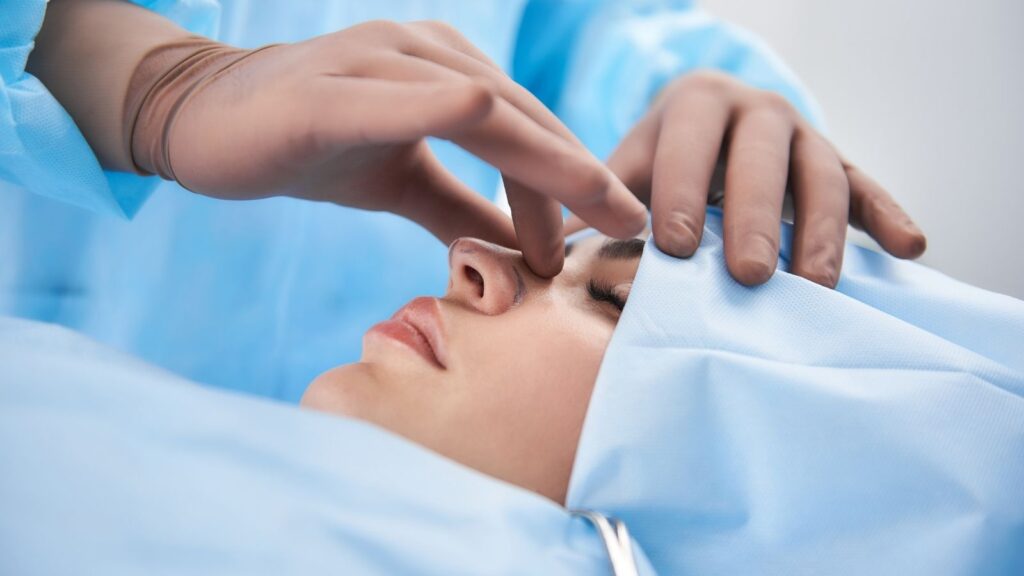
It is possible to undergo nose surgery 2 or 3 times; this situation is generally evaluated within the scope of revision rhinoplasty. Additional surgical intervention may be planned due to aesthetic dissatisfaction after the first surgery, functional breathing problems, or trauma. However, each repeat operation requires a detailed examination.
The need for revision rhinoplasty is mostly based on deformities, asymmetry, or functional problems such as nasal obstruction that develop after the first surgery. Since the nasal tissue is more sensitive in second or third operations, surgical planning should be individualized and tissue reserve should be carefully evaluated.
Risk factors in repeated nose surgeries include elements such as increased scar tissue, reduced circulation, and weakening of cartilage support. Therefore, the likelihood of complications is higher compared to primary surgery. Planning within the framework of realistic expectations by an experienced surgeon is important.
Planning a third nose surgery is carried out with a detailed physical examination, photo analysis, and imaging methods if necessary. When required, grafts such as ear or rib cartilage may be used. The aim is to ensure both aesthetic integrity and preservation of nasal functions.
What Is Revision Rhinoplasty?
The second surgical procedure performed after the first rhinoplasty operation is called secondary rhinoplasty, while the third and subsequent surgeries are referred to as tertiary rhinoplasty. These procedures are generally evaluated under the title of “revision rhinoplasty.”
The main purposes of revision surgeries may include:
- Persistence of nasal obstruction
- Insufficient correction of septum deviation
- Aesthetic deformities (asymmetries, collapse, nasal tip problems)
- Post-traumatic deformity
- Structural changes that develop during the healing process
Revision surgery generally requires more technical expertise and detailed planning compared to the first operation. Because the nasal tissue is no longer in the natural anatomical structure present during the primary (first) surgery.
Why Does Multiple Nose Surgery Become More Difficult?
Each surgical procedure causes a certain degree of fibrosis (scar tissue formation) in the tissues. Scar tissue may make it difficult to distinguish normal anatomical planes. This situation requires the surgeon to carry out the dissection (surgical separation of tissues) process more carefully.
In addition, the following conditions may be present in repeat surgeries:
- Decreased cartilage support
- Changes in skin thickness
- Partial impairment of blood circulation
- Differences in wound healing capacity
The nose is a sensitive organ both aesthetically and functionally. Especially if there is a loss of support in the nasal tip region, reconstruction may be required. At this point, the patient’s own rib cartilage (costal cartilage) or ear cartilage may sometimes be used as a graft. Such applications are planned entirely according to individual anatomy and needs.
Waiting Period for Second and Third Surgery
Before planning revision rhinoplasty, it is generally expected that sufficient time has passed since the first surgery. The reason for this is the complete resolution of edema (swelling) and stabilization of the tissues.
In most cases, this period is accepted as at least 12 months on average. However, this duration may vary depending on the patient’s healing rate, skin structure, and the scope of the procedure performed. Evaluations made in the early period may be misleading because edema after nose surgery may persist for a long time.
Is It Suitable for Every Patient?
Although it is theoretically possible to perform nose surgery for the second or third time, it may not be suitable for every patient. During the evaluation, the following factors are taken into consideration:
- Current skin thickness
- Condition of intranasal support structures
- Breathing functions
- General health status
- Patient’s expectations
Especially in patients who have undergone multiple surgeries, tissue reserve may be limited. This situation makes surgical planning more complex. Therefore, establishing realistic expectations is important.
What If Functional Problems Persist?
In some patients, even if the aesthetic result is at an acceptable level, difficulty in breathing may continue due to nasal valve insufficiency, turbinate hypertrophy (enlargement of the nasal turbinates), or septal problems. In such cases, a detailed examination by an ear, nose, and throat (ENT) specialist is required.
During the diagnostic process, the following may be evaluated:
- Endoscopic nasal examination
- Acoustic rhinometry
- Nasal airflow measurements
- Imaging methods if necessary
If functional problems are present, revision surgery is planned not only for aesthetic purposes but also to correct respiratory physiology.
Psychological and Expectation Management
In repeated aesthetic surgeries, the patient’s expectations should be handled carefully. Body perception and aesthetic satisfaction are subjective concepts. Especially if a third surgery is being considered, detailed communication between the surgeon and the patient is important.
In some cases, existing minor asymmetries may not require surgical intervention. Therefore, the decision-making process should be based not only on aesthetic concerns but also on functional necessities and anatomical limitations.
What Are the Possible Risks?
As with any surgical procedure, there are certain risks in revision rhinoplasty. These include:
- Bleeding
- Infection
- Prolonged edema
- Asymmetry
- Persistence of breathing problems
- Need for additional grafts
The risk of complications in repeat surgeries may vary depending on individual factors. Therefore, detailed preoperative evaluation (pre-surgical assessment) is of critical importance.