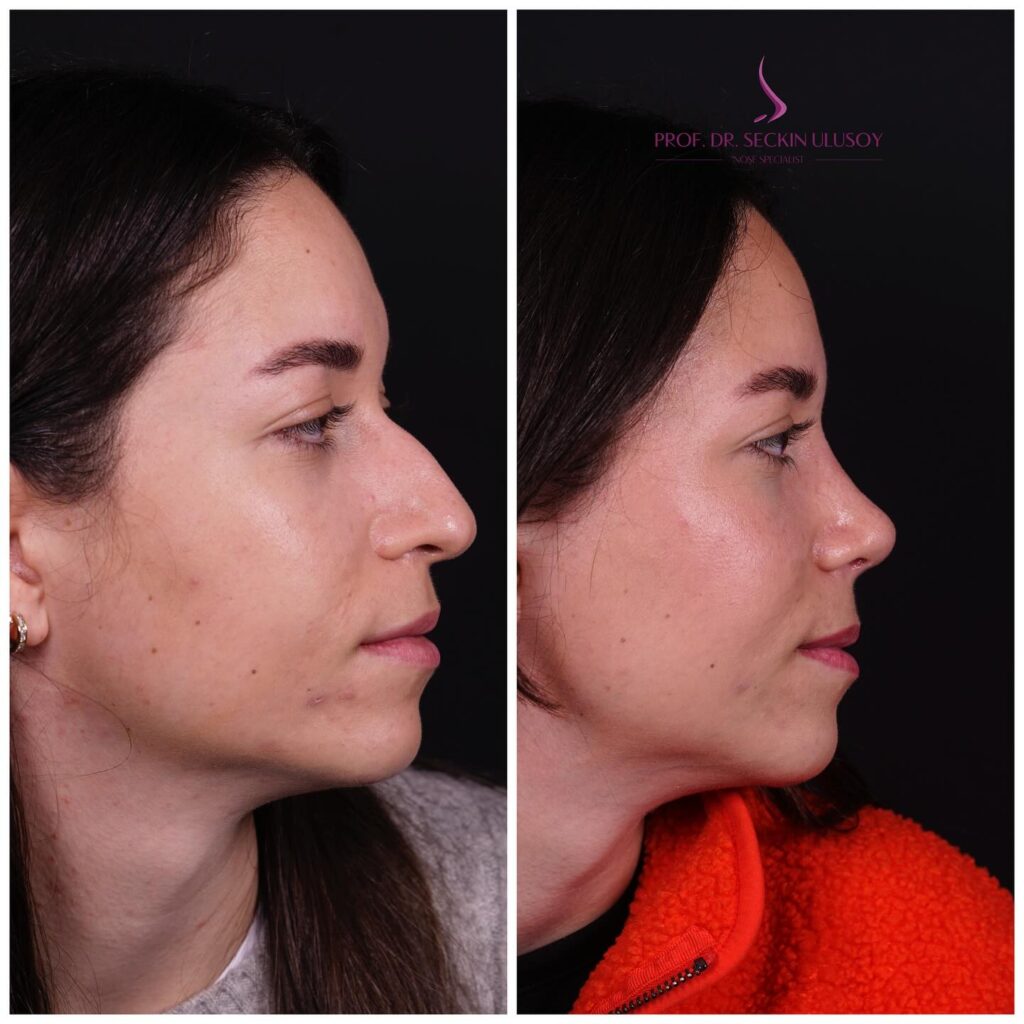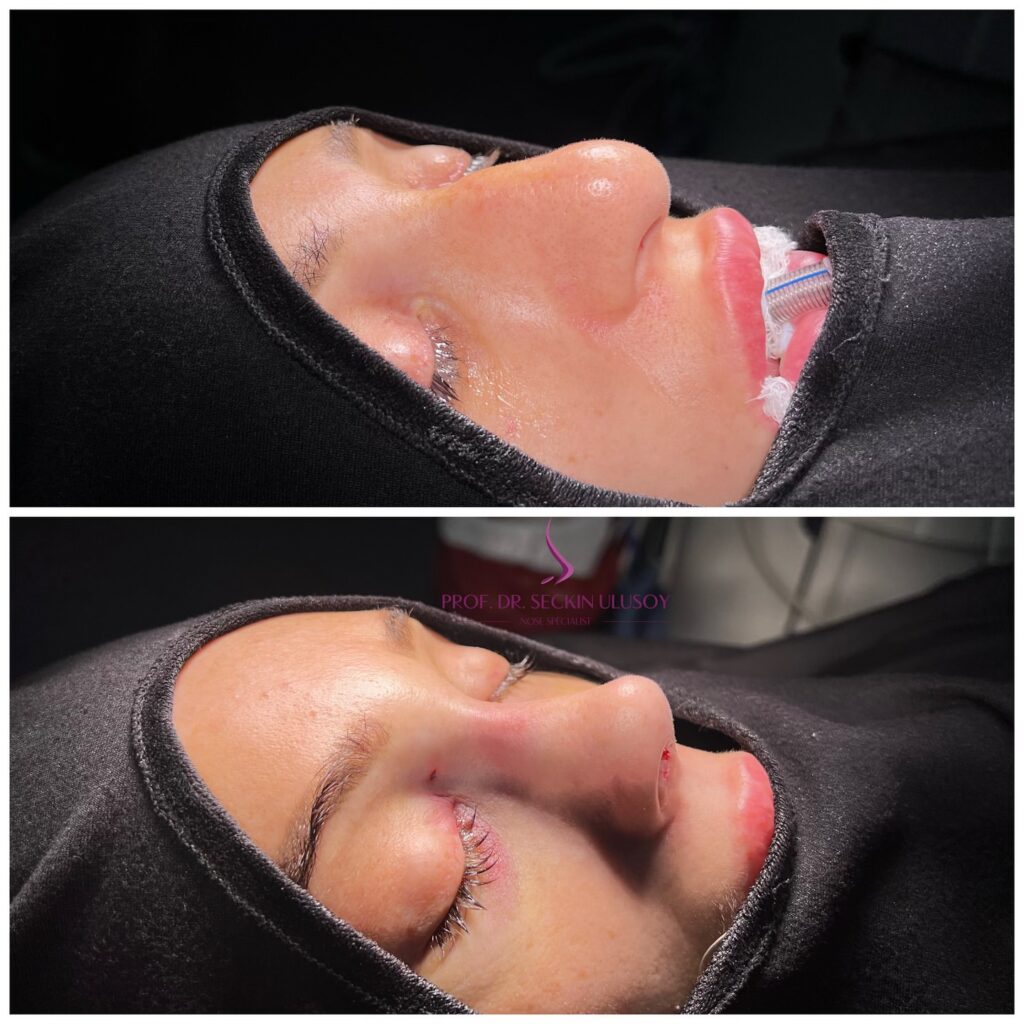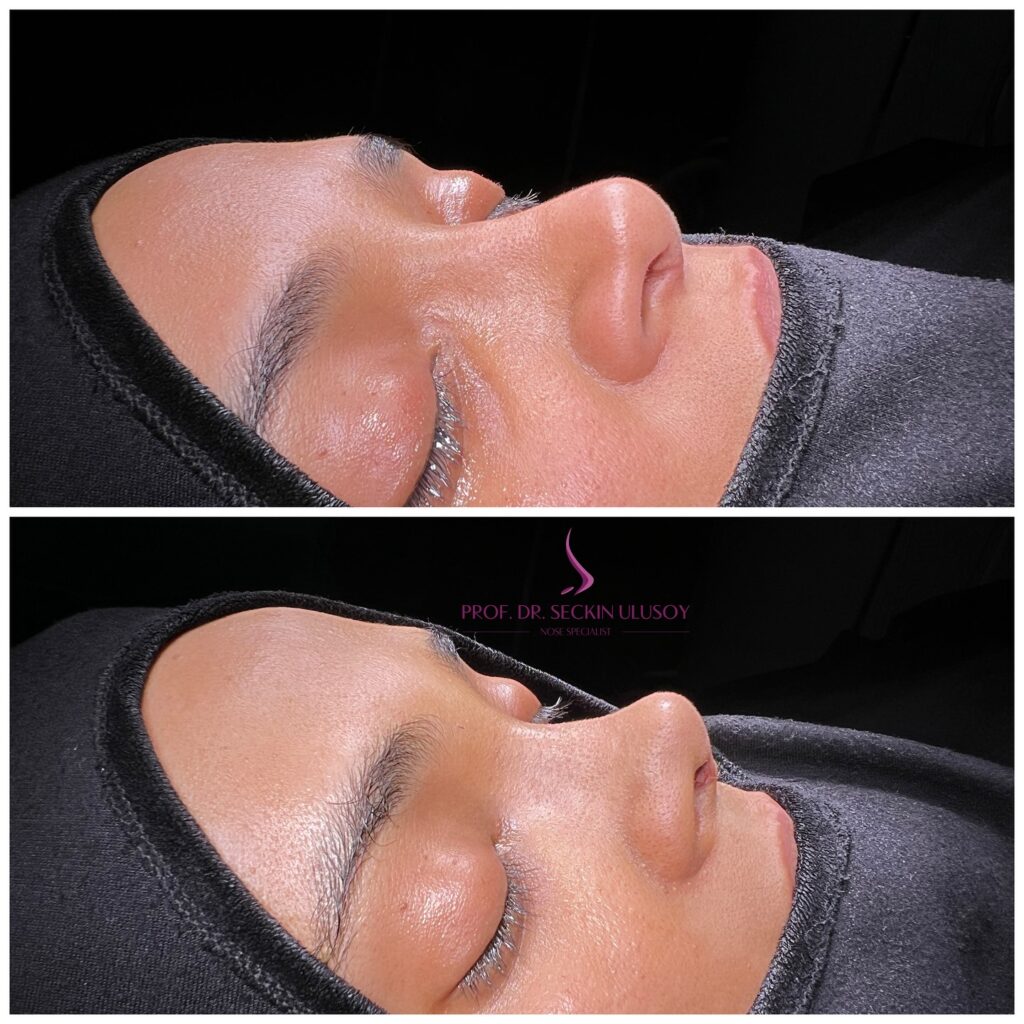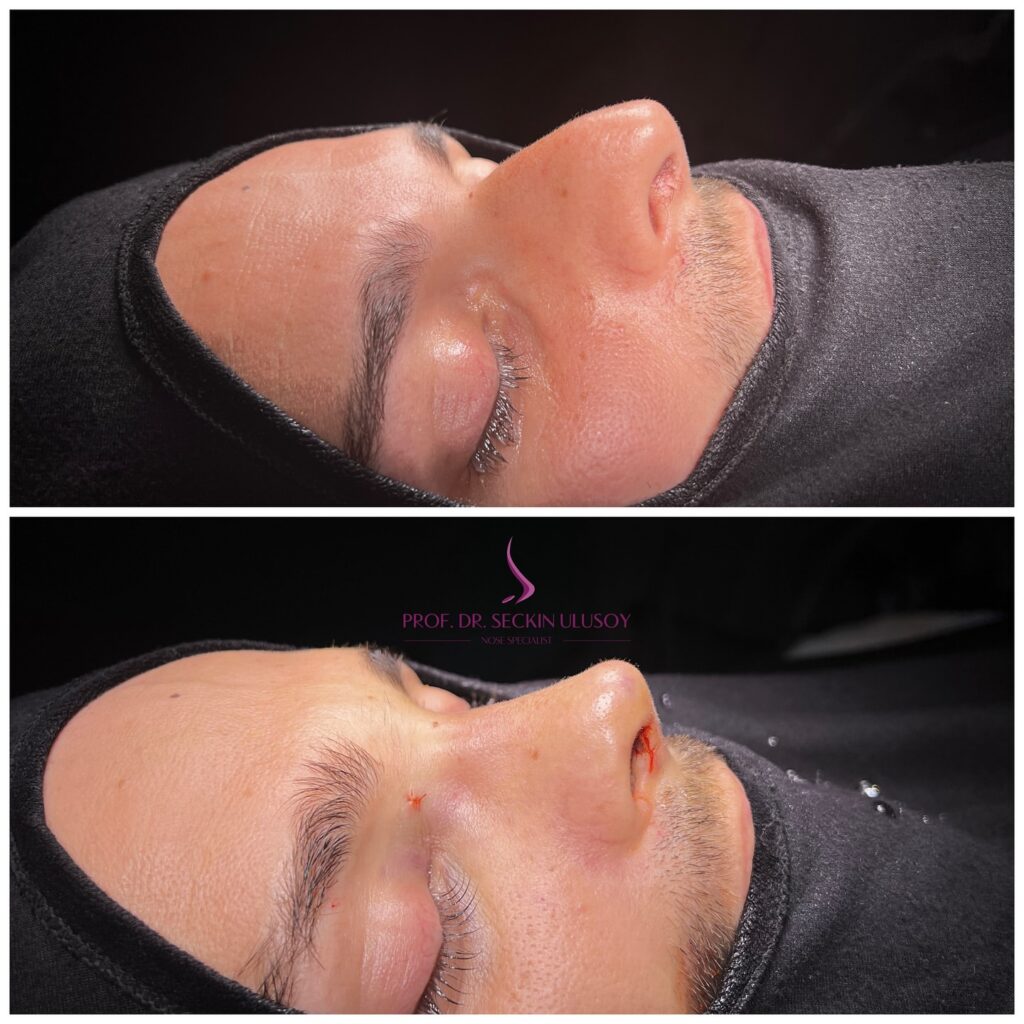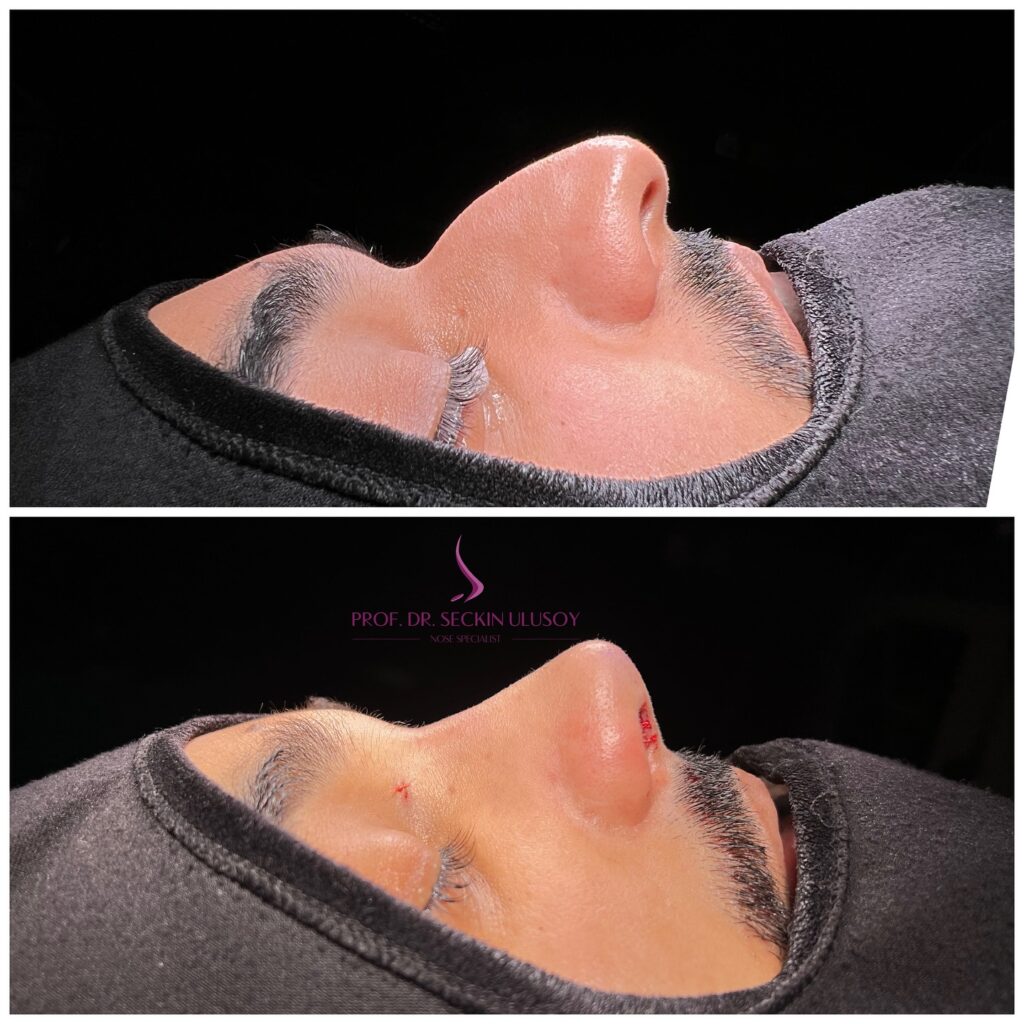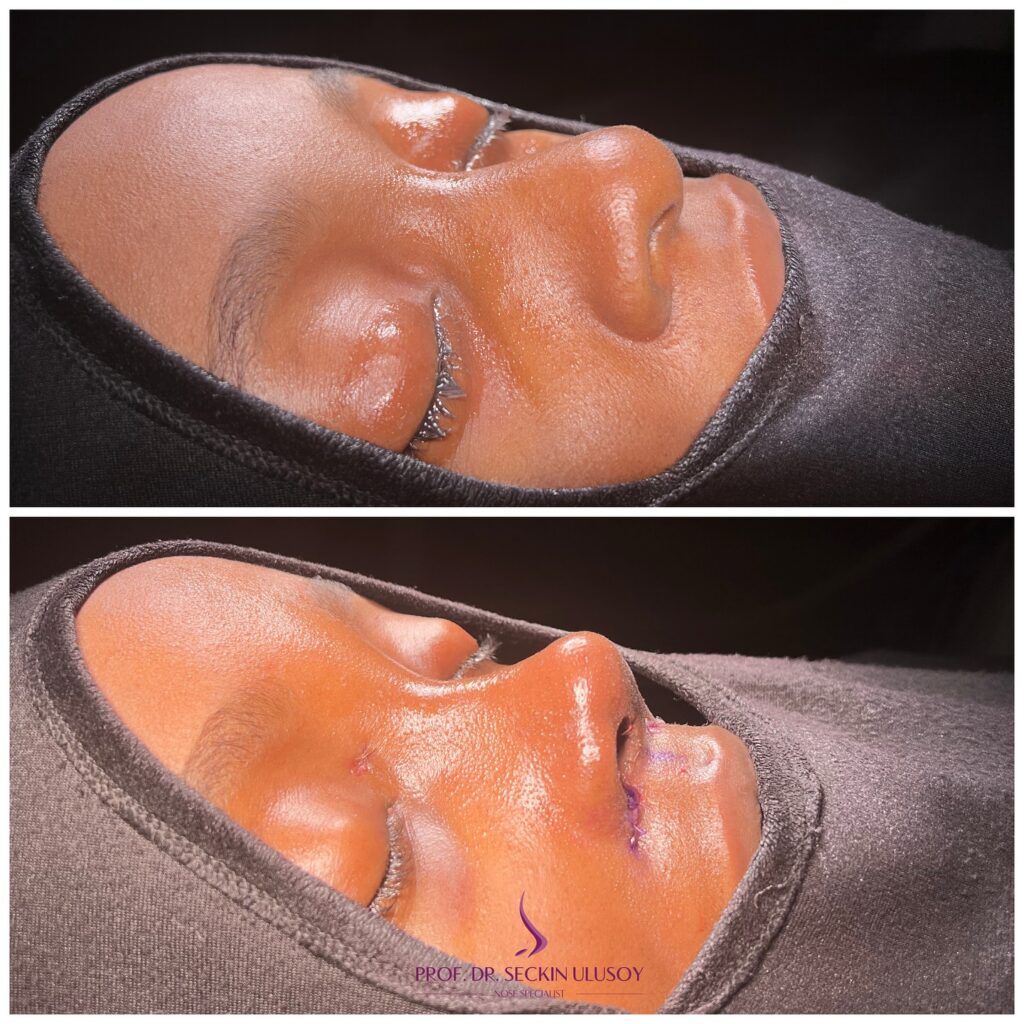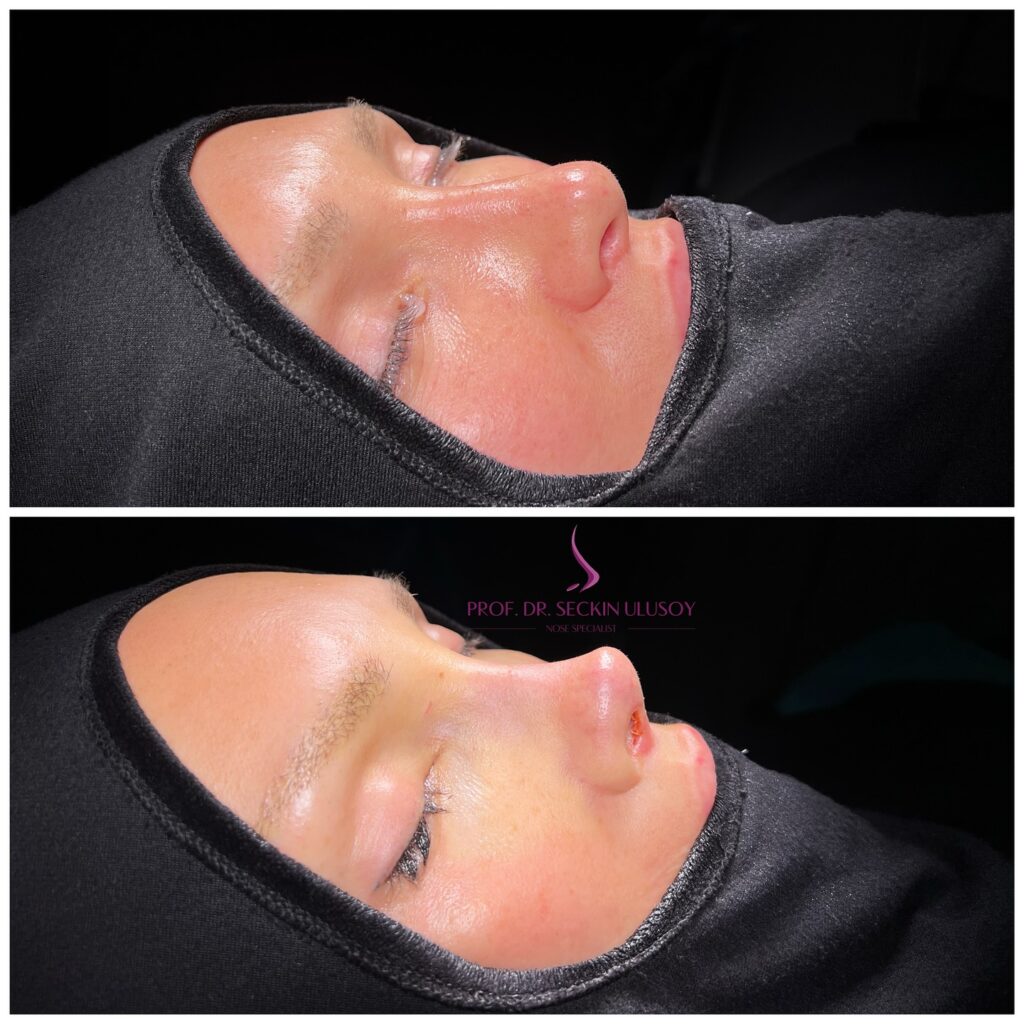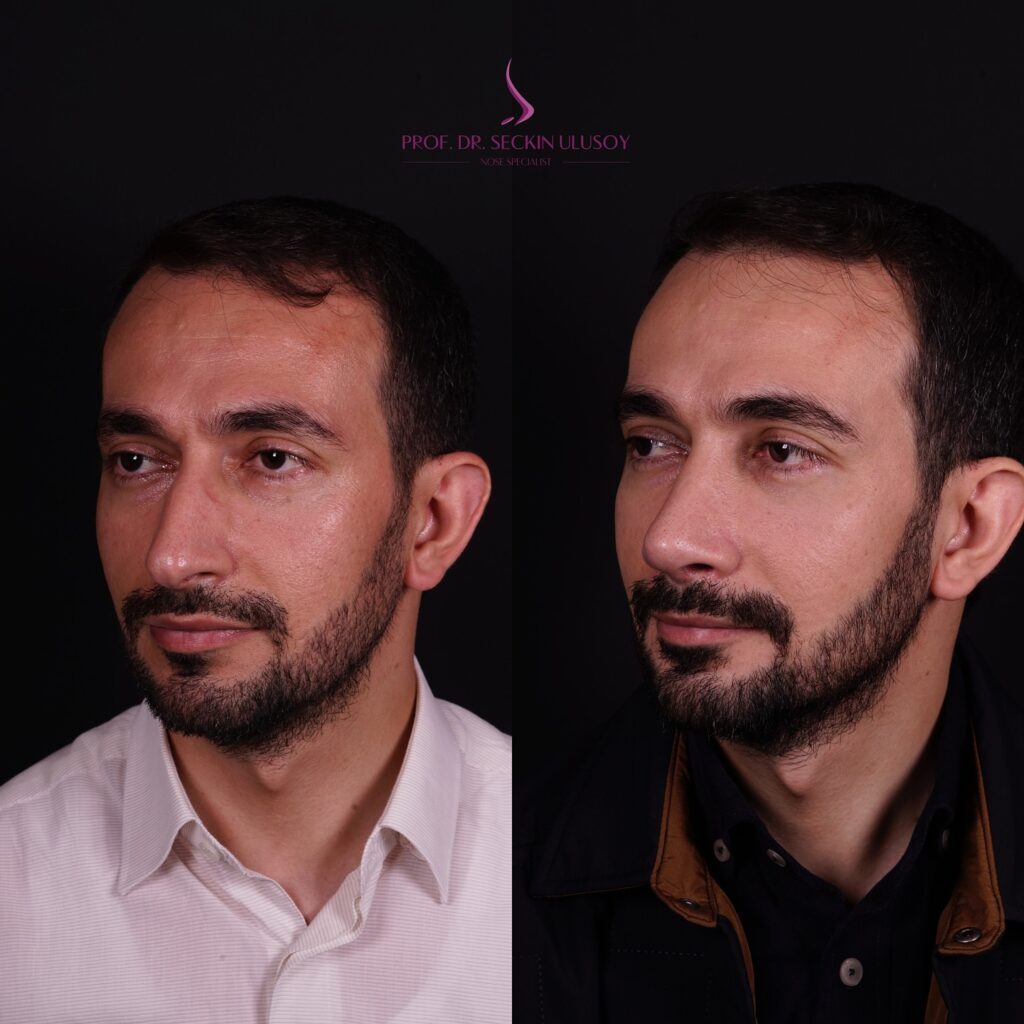
| Purpose of Use | To increase the symmetry of the nostrils |
| Conditions in Which It Is Used | For symmetrical healing after all rhinoplasty operations |
| Material Types | Bioplastic, transparent acrylic, PTFE (polytetrafluoroethylene), silicone |
| Transparency Feature | Usually transparent or skin-colored; intended to be unnoticeable |
| Time of Placement | Immediately after the rhinoplasty silicone is removed |
| Duration of Use | 4-6 hours during the day, throughout the night (first three weeks); at least 5 nights a week (6 months) |
| Cleaning Requirement | Cleaning is recommended after removal; soap and water or saline solution are used |
| Possible Side Effects | Irritation, infection, allergic reaction (especially with unsuitable materials) |
What Is a Nostril Retainer?
A nostril retainer is a medical device used after rhinoplasty, particularly to preserve the shape and openness of the nostrils. These small supports, made of silicone or medical plastic, prevent the nostrils from closing asymmetrically during the healing period and help make the aesthetic results more permanent. They also support the nasal tip, reduce the risk of drooping, and facilitate breathing.
What Is a Nostril Retainer Used For?
In its simplest definition, a nostril retainer is a special device, usually U-shaped and made of soft and flexible medical silicone, that is placed inside the nostrils after nasal surgery. It has two arms that fit into the two nostrils and a bridge that connects these arms across the base of the nose. So, what is the main purpose of this seemingly simple device?
The moment the operation is completed, your nose has achieved the desired shape. However, the body has its own healing dynamics. During this process, two fundamental natural forces come into play: tissue memory and scar tissue contraction. Tissue memory is the tendency of cartilage and skin to return to their former shape, just like a rubber band that you bend for a while and that tries to return to its original form when released. Scar tissue contraction is the gradual shrinking of newly formed tissue during healing, pulling the underlying structures. These two forces may jeopardize the elegant and symmetrical result achieved through surgery.
At this point, the nostril retainer acts as a “protective mold” and an “internal framework.” By applying continuous and gentle pressure, it reminds the healing tissues that they must remain in the correct position. By resisting tissue memory and the contracting force of scar tissue, it preserves the symmetry of the nostrils, the elevation of the nasal tip, and most importantly, the openness of the airway. In other words, the nostril retainer is a safeguard that protects the work created by the surgeon in the operating room against the possible negative effects of the healing process.
After Which Operations Is the Use of a Nostril Retainer Necessary?
The use of a nostril retainer is an integral part of the healing process after various operations involving both the aesthetic and functional structure of the nose. The main surgical conditions in which this device is used are as follows:
- Rhinoplasty
- Revision Rhinoplasty (Corrective Operations)
- Cleft Lip and Palate Surgery
- Nasal Valve and Stenosis Operations
- Septoplasty
After rhinoplasty, especially when reshaping has been performed on the nostrils and nasal tip, the use of a retainer is of great importance in preserving the aesthetic form achieved. It prevents the nostrils from becoming asymmetrical or collapsing over time.
Revision rhinoplasty, meaning correction of a previously operated nose, involves a more complex healing process. Due to existing scar tissue and weakened cartilage structures, retainer use becomes even more critical in these cases for preserving the result.
Cleft lip and palate surgery is one of the areas in which retainer use is most effective. Especially after repairs performed during infancy, it maintains the nasal wings and cartilage, which are prone to deformation, in the correct position and provides long-term symmetry.
After operations that correct functional problems such as nasal valve issues or vestibular stenosis (narrowing at the entrance of the nose), the retainer acts as a “stent.” It makes comfortable breathing permanent by preventing the airway opened through surgery from narrowing again due to scar tissue during healing.
In septoplasty operations, especially when the curvature of the nasal septum also affects the nasal tip and nostrils, it may be used to support the new position of the septum and stabilize the base of the nose.
Are There Different Types of Nostril Retainers?
Yes, because every patient’s nasal structure and needs are different, various nostril retainer designs have been developed to meet these needs. The types available on the market can basically be grouped into several categories:
- Standard (Ready-Made) Types
- Custom-Made Types
- Symmetrical and Asymmetrical Designs
- Pediatric and Adult Series
- Materials with Different Degrees of Firmness
Standard (Ready-Made) Types are the most commonly used retainers. They are offered in a wide range of sizes, numbered from small to large, to accommodate different anatomies. Your surgeon determines the most suitable size for you with the help of a special sizing kit.
Custom-Made Types are especially preferred for highly complex reconstructive operations or markedly asymmetrical noses for which standard sizes are unsuitable. They are specially produced to fit the patient’s nose using a mold taken from it.
Symmetrical and Asymmetrical Designs are selected according to the structure of the nostrils. If both nostrils are equal in size after surgery, a symmetrical retainer is used. However, if one nostril requires different support from the other, asymmetrical retainers with arms of different sizes and shapes are used.
Pediatric and Adult Series are designed specifically for each age group. Pediatric models are generally smaller, softer, and have special wings that make it easier to secure them to an infant’s face with tape. Adult series are optimized for use after rhinoplasty.
Materials with Different Degrees of Firmness are another distinguishing feature. Most retainers are made of soft medical silicone with flexibility similar to human cartilage. However, in cases of severe narrowing (stenosis), special stents made of firmer silicone or acrylic may be required to keep the airway open more effectively.
How Does a Nostril Retainer Differ from Nasal Packing and a Splint?
Think of your postoperative recovery process as a journey. At different stages of this journey, you have companions with different duties. Nasal packing, splints, and retainers are three different companions with different roles on this journey. Although they are frequently confused, their functions, structures, and periods of use are completely different, and they cannot replace one another.
The First Companion: Perforated Intranasal Silicone (Doyle Splint). It is the first aid you encounter immediately after the operation. It is usually made of silicone with a central opening that allows airflow. Its purpose is to control postoperative bleeding and reduce edema by applying pressure to the tissues. Since its role is brief and specific, it is generally removed by the physician within 2-6 days, completing its role in the journey.
The Second Companion: External Nasal Splint. These are like the “cast” of your nose. Those placed on the outside of the nose are generally made of thermoplastic or aluminum, while those placed inside to support the septum are made of firm silicone. Their role is to immobilize the nasal bones and cartilage reshaped during surgery so that they do not move. This firm protective shield allows the bones to heal in their new positions, preserves the main structure of the nose, and reduces swelling. They are generally removed by the physician after 6-10 days.
The Third and Longest-Term Companion: Nostril Retainer. After the silicone splints inside the nose are removed, meaning after the main framework of the nose has stabilized, the actual long-term journey with the retainer begins. Its task is not to stabilize the bones but to shape and protect the cartilage and soft tissues of the nostrils for months. It is made of soft and flexible medical silicone. Its function is to resist scar tissue contraction and tissue memory, allowing the nostrils to achieve their final and permanent shape. For this reason, its use continues for months, generally 3-6 months or longer. It is like a patient coach who accompanies you to the end of the marathon.
Does the Use of a Nostril Retainer Really Affect the Result?
This is the subject patients are most curious about and sometimes approach with doubt: “Is this tiny piece of silicone really that important?” The answer to this question is a definite “yes,” supported by both scientific data and clinical experience. We can compare the use of a nostril retainer to orthodontic treatment. Braces bring the teeth into the correct alignment, while the clear trays (retainers) used after the braces are removed keep the teeth in their new position. A nostril retainer performs this same function for the nose.
Studies have repeatedly demonstrated, especially in the most challenging cases such as cleft lip repairs, that patients who use retainers have significantly better long-term nasal symmetry and aesthetic results than those who do not. This scientific basis also applies to standard rhinoplasty operations. No matter how perfectly your surgeon performs the operation, the body’s own healing dynamics may affect the result. The retainer is a tool that positively controls these dynamics.
You can think of it as your nose’s “personal trainer” during the healing process. Without you noticing, it works during certain hours of the day or while you sleep at night to keep your nose in the correct form. It preserves the roundness of the nostrils, prevents widening of the nasal base, and maintains support of the nasal tip. Therefore, paying attention to retainer use means not leaving the beautiful result achieved through surgery to chance, but rather securing it.
How Is the Correct Nostril Retainer Size Determined?
Selecting the correct retainer size is one of the most critical steps for both the effectiveness of the device and your comfort. This is certainly not something the patient should do independently; it is performed by your surgeon or assistant, generally using a special sizing set. The goal is to find that perfect fit described as “snug but comfortable.”
The correct size should fit the nostrils perfectly and provide gentle support without causing any pain, stinging, or excessive pressure. If you need to use excessive force while inserting it, or if you notice whitening at the nasal tip after insertion, which indicates reduced blood circulation, or experience sharp pain, the size is probably too large. You should inform your doctor immediately.
On the other hand, the concern that “my nostril retainer keeps coming out of my nose” is generally a sign that the size is too small. The retainer should remain securely in place while you speak, laugh, or sleep. If it falls out easily or rotates inside the nose, it is not providing sufficient support. In this case, you may need to consult your doctor and switch to a larger size. The correct size should be comfortable enough for you to forget that it is there.
How Is a Nostril Retainer Inserted, Removed, and Maintained?
Using and maintaining your retainer correctly is a simple routine that you will quickly become accustomed to. Paying attention to these steps increases the effectiveness of the device and prevents hygiene-related problems.
Step-by-Step Guide for Insertion:
Inserting the retainer may initially require a few attempts in front of a mirror, but your hands will quickly become accustomed to it:
- First, wash your hands thoroughly with soap and water.
- Clean and dry your retainer in the same way.
- Apply a very small amount of a water-based lubricant or antibiotic cream recommended by your doctor to the tips of the retainer. This makes the procedure much easier.
- Gently place one arm of the device into one nostril and the other arm into the other nostril.
- It is generally necessary to push it slightly upward and backward at an angle and make a small twisting movement to ensure that it is fully seated.
- Make sure that the bridge fits fully and comfortably against the partition between the two nostrils (columella).
Removal and Maintenance Instructions:
Removal and maintenance are just as simple as insertion.
Removal: Hold the bridge beneath the device firmly and remove it in the opposite direction of insertion, gently twisting and pulling. Never pull it suddenly or forcefully.
Daily Cleaning: Before and after each use, wash the retainer by rubbing it with lukewarm water and mild, fragrance-free soap. Rinse thoroughly and dry completely with a clean cloth or paper towel.
Weekly Sterilization: To minimize the risk of infection, sterilization once a week is recommended. The easiest method is to leave the retainer in boiling water in a small container for 2-3 minutes. Then remove it with tongs and allow it to cool.
Things to Avoid: NEVER use harsh chemicals such as alcohol, cologne, disinfectant, or dishwasher detergent to clean the device. These substances damage the structure of the silicone, causing it to harden, crack, and change color.
Inspection and Storage: During each cleaning, visually inspect the device for any tears, cracks, or deformation. A damaged retainer loses its effectiveness and may harm the tissue, so it must be replaced immediately if damage is noticed. When not in use, store it in its own special, clean, and dry case provided to you.
How Many Hours a Day and for How Long in Total Should a Nostril Retainer Be Used?
The answer to the question “How many hours should a nostril retainer be used?” varies from person to person according to the type of operation performed, the structure of your skin, and your surgeon’s specific protocol. However, the general principle is that this is a long-term commitment.
Generally, more intensive use, for example 12-16 hours a day, may be recommended during the first weeks after the splints are removed. After this initial adaptation period, most surgeons ask their patients to wear the retainer while sleeping at night and for several additional hours while at home during the day. This corresponds to an average use of 8-12 hours per day.
The total duration of use generally starts at a minimum of 3 months and may extend up to 8 months. In more complex cases such as revision surgery or cleft lip repair, this period may last up to 1 year. Why so long? Because it takes months for the soft tissues and cartilage of the nose to adapt to their new positions and for scar tissue to mature and become stable. Trying to shorten this period means putting the beautiful result achieved at risk. Patiently and consistently following the usage program specifically determined by your surgeon is the key to reaching the desired result at the end of this journey.
What Is the Importance of Patient Responsibility in Using a Nostril Retainer to Preserve the Surgical Result?
Deciding to undergo nasal surgery is an important step. During this process, your surgeon designs and performs the most suitable operation for you using all of their knowledge, experience, and artistic perspective. However, when the operation is completed, only the first half of the process is finished. The second and perhaps more important half, the healing process, is now your responsibility. At this point, the nostril retainer becomes the most important bridge between the surgeon and the patient, a kind of “teammate.”
The success of the operation is measured not only by what happens in the operating room but also by the care you show during the following months. Your surgeon creates a sculpture through surgery; the nostril retainer is like a varnish that protects that sculpture from environmental conditions and the effects of time, allowing it to maintain its perfect form. Failing to give this device the necessary importance means leaving that beautiful sculpture unprotected.
Therefore, rather than seeing retainer use as a burden or chore, you should view it as an investment in your own health and aesthetic result. Following your surgeon’s instructions exactly, patiently using the retainer for the specified duration and frequency, and paying attention to its cleanliness actually means protecting your own effort, expectations, and the resources you have invested. Remember, the final result is a team effort. Your surgeon makes the best pass, but it is your care during the healing process and your discipline in using the retainer that will score the goal. This partnership is the safest way to achieve the lasting and perfect result you envision.