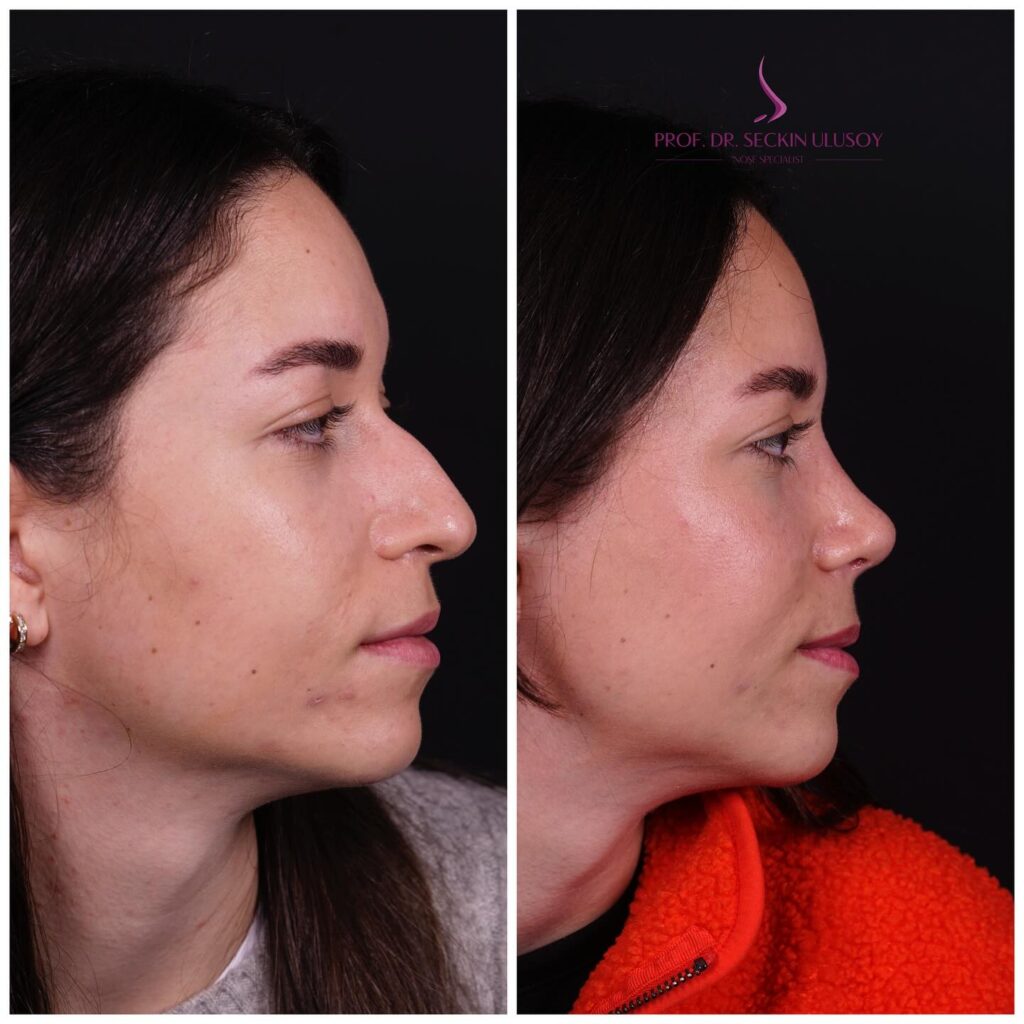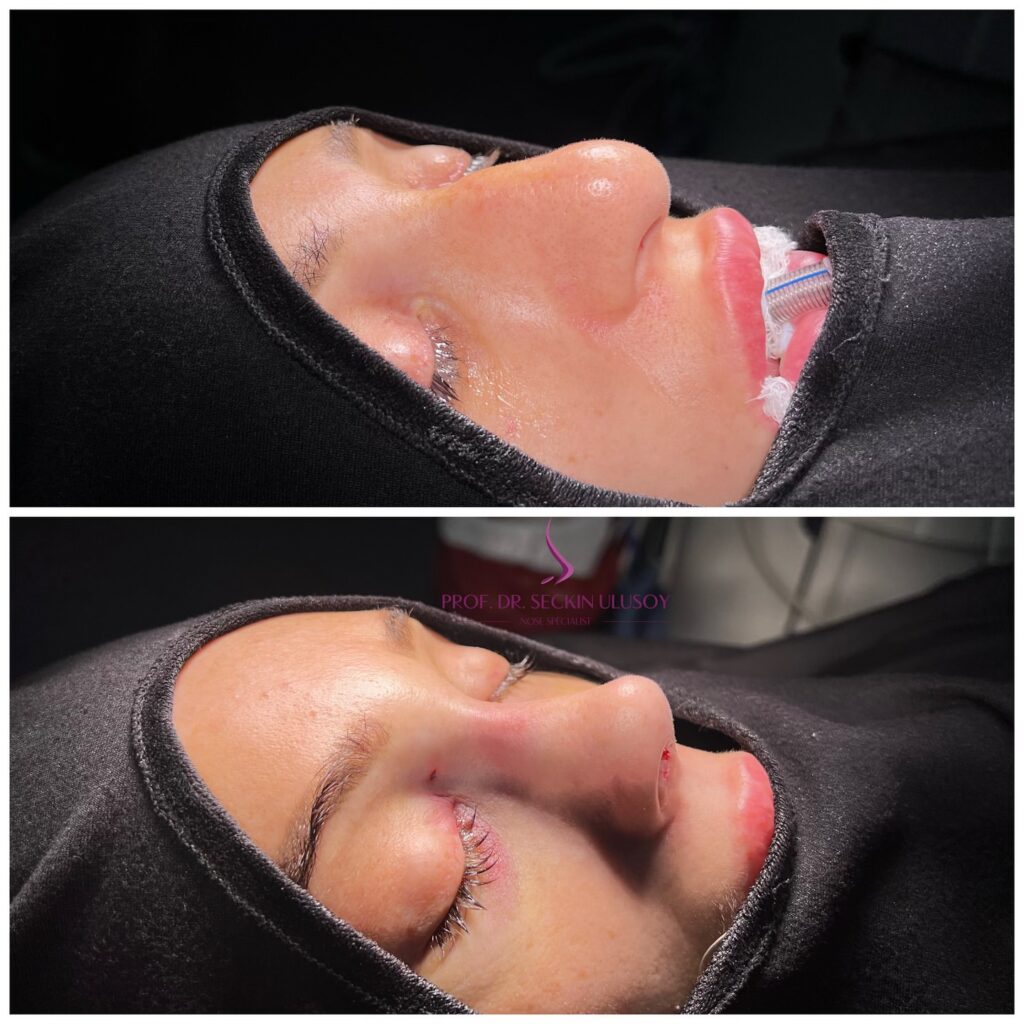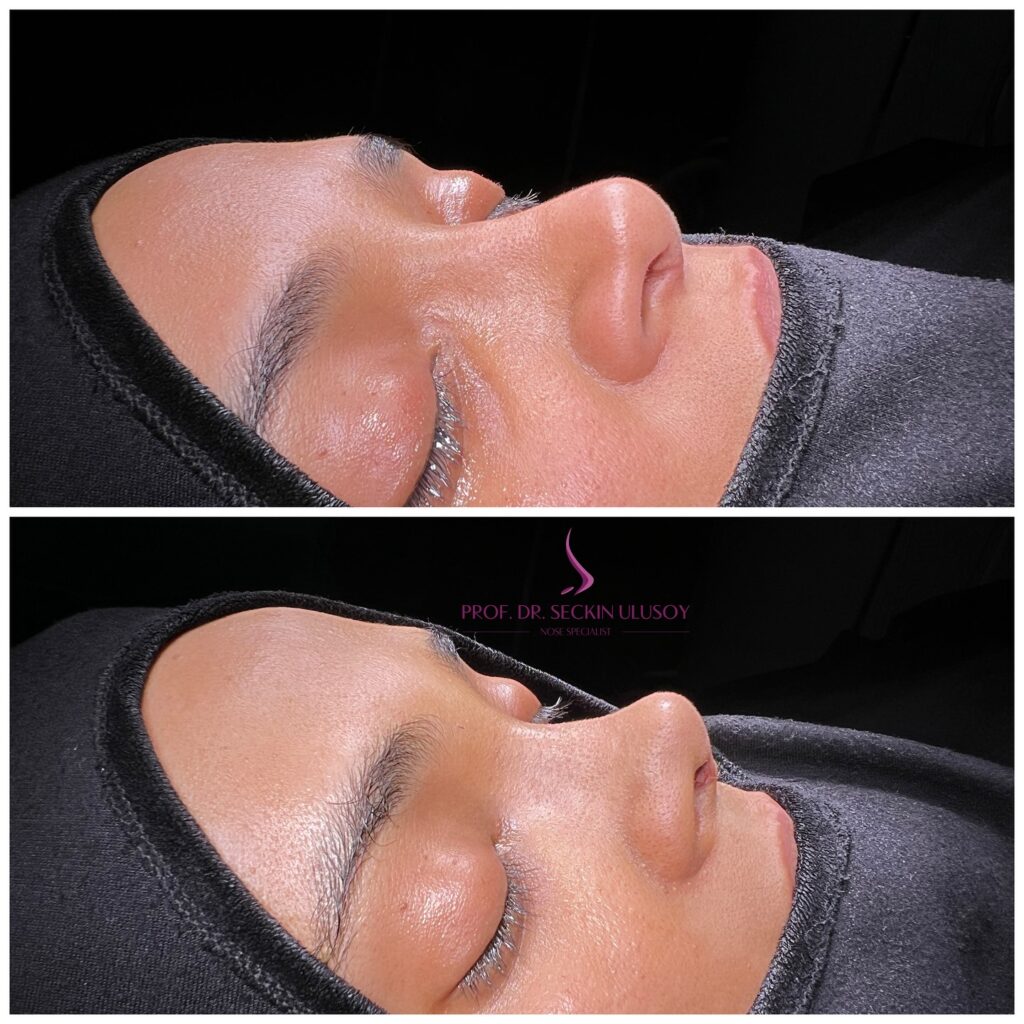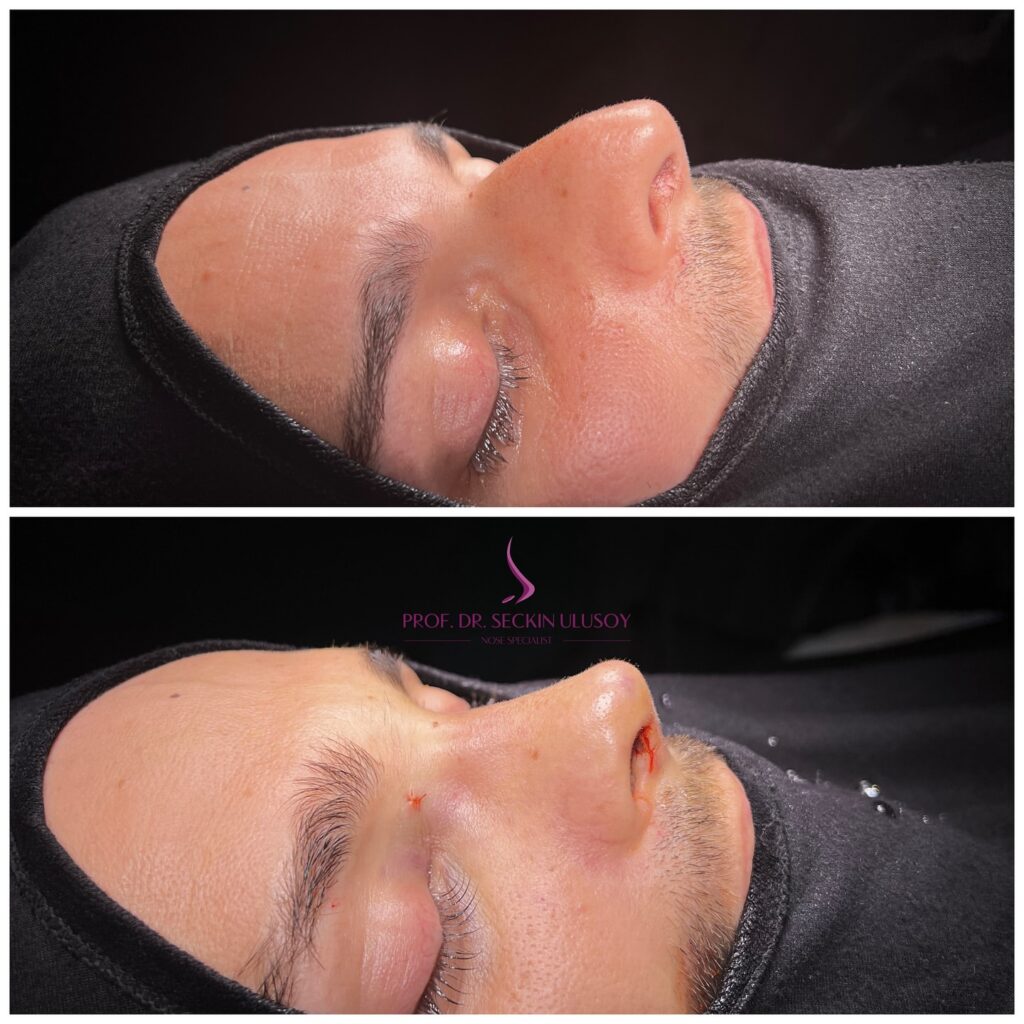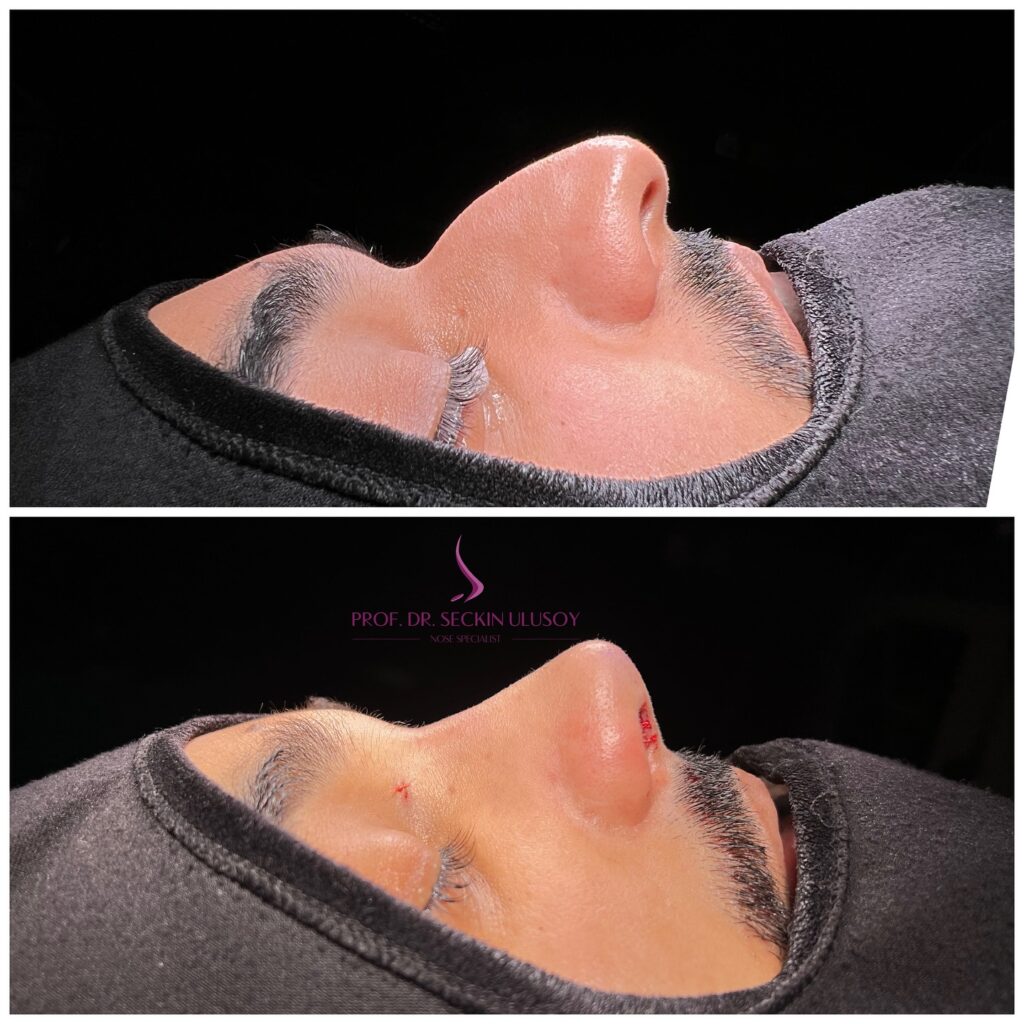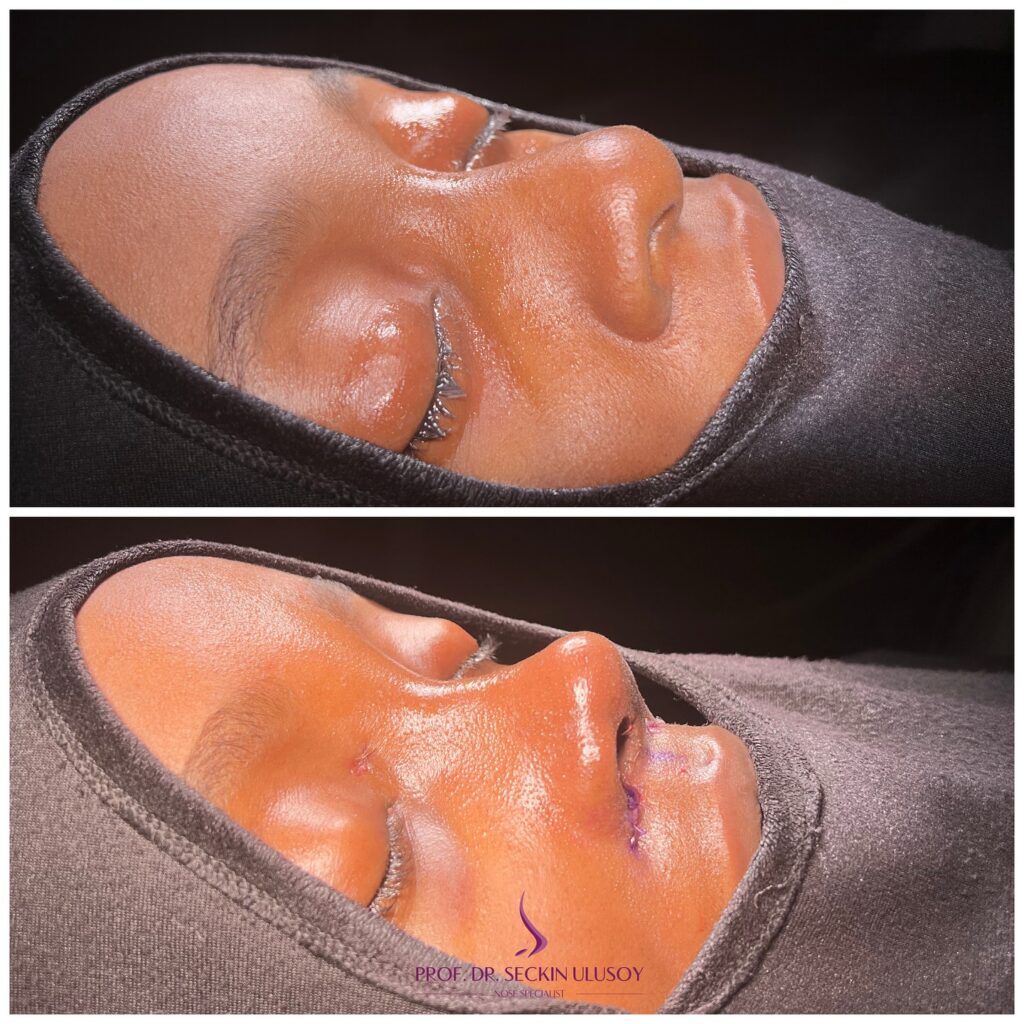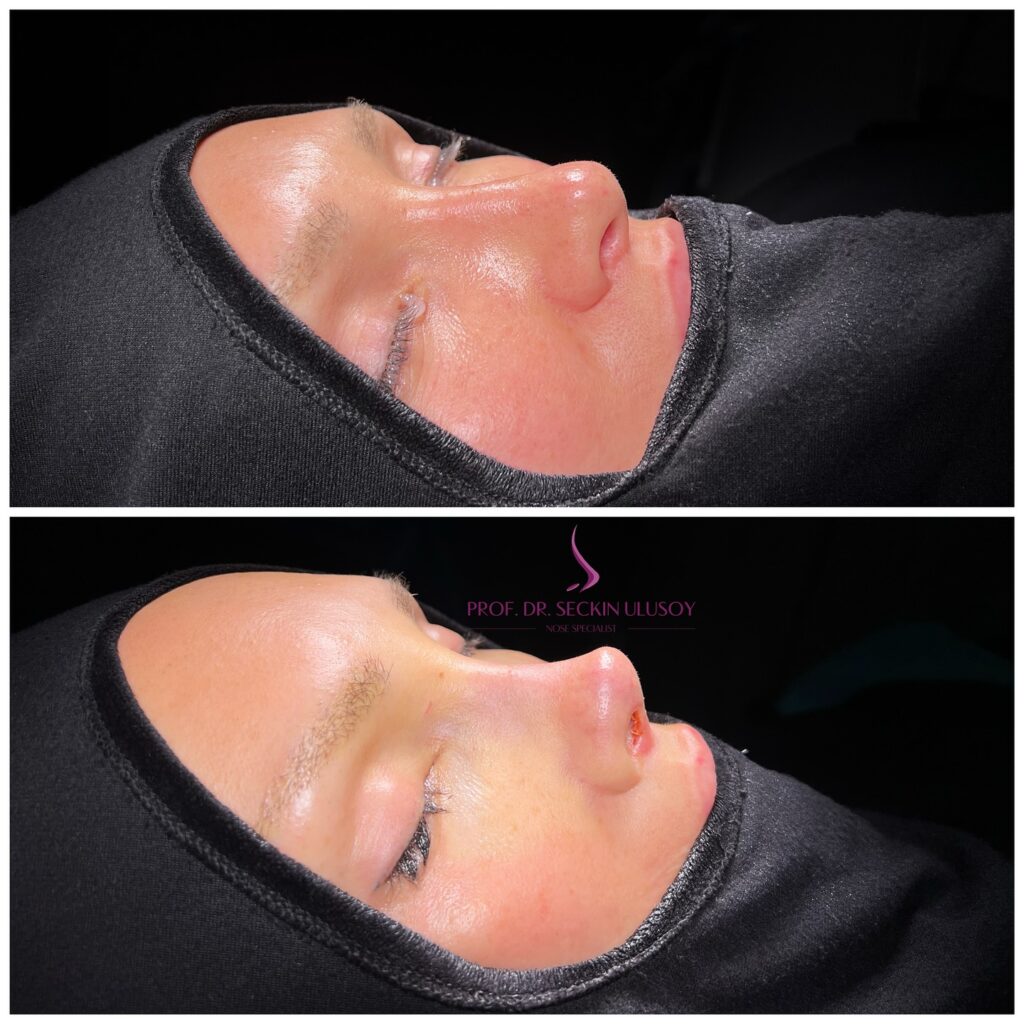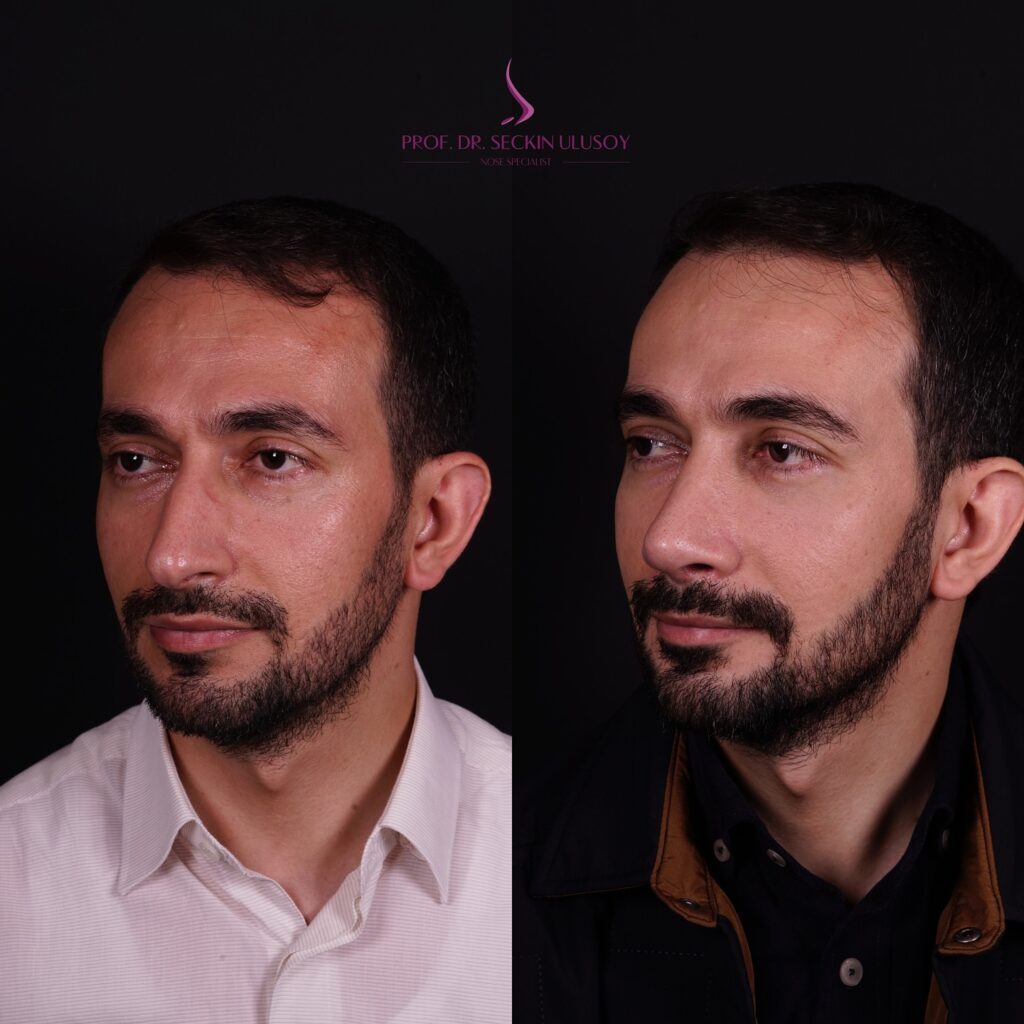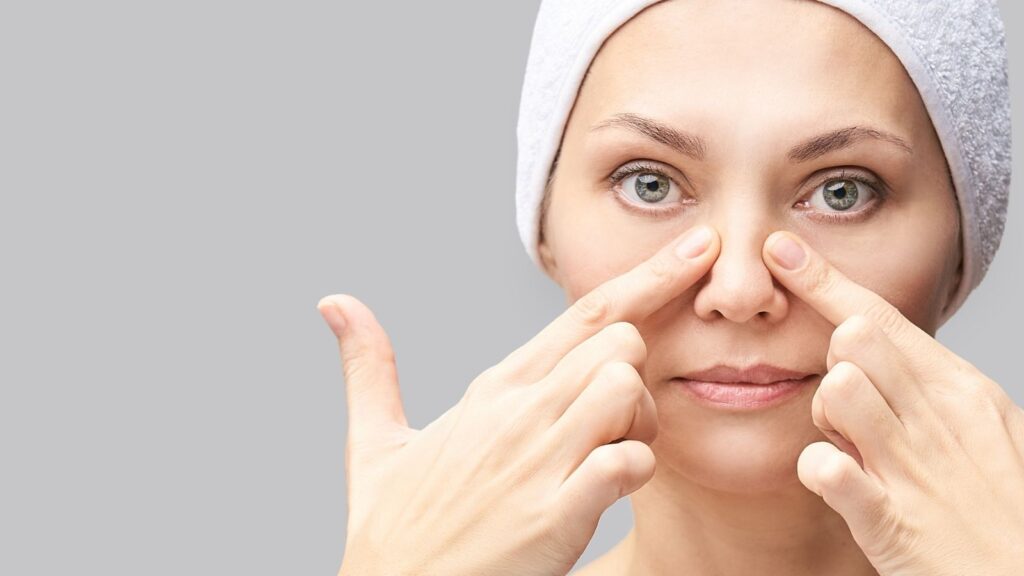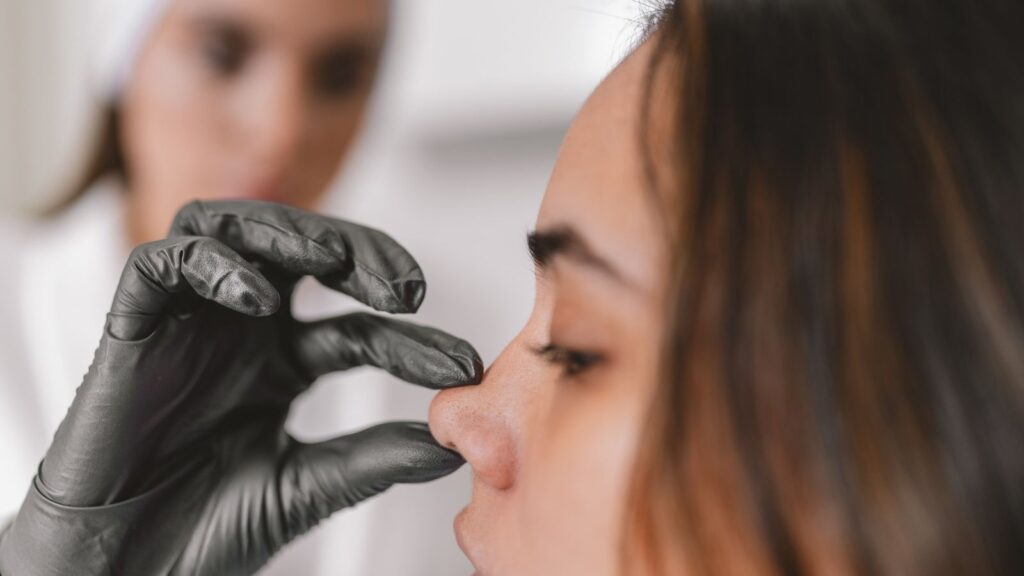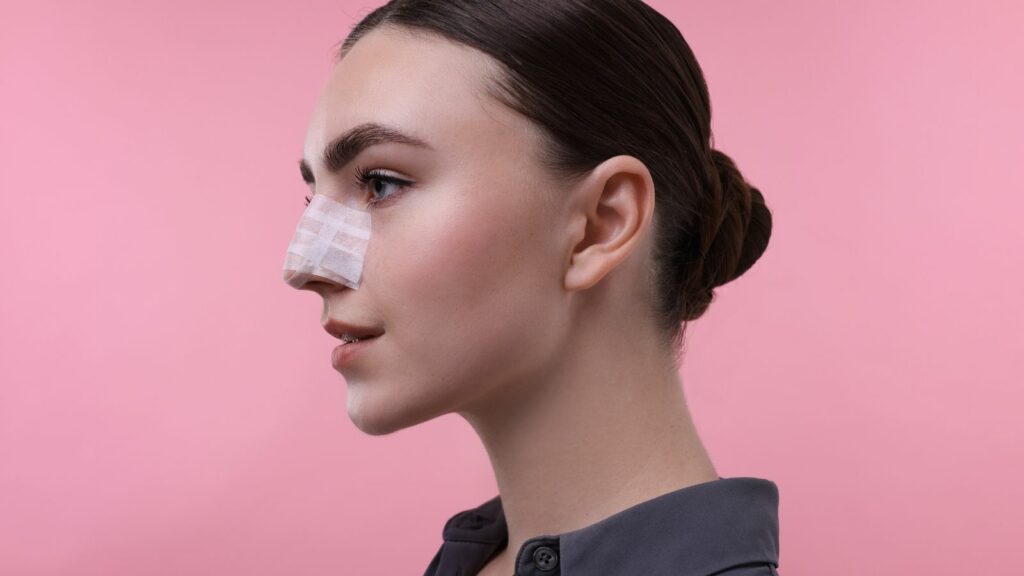
Edema after rhinoplasty is one of the most common findings during the healing process. Swelling in and around the nose becomes noticeable during the first weeks after surgery and decreases over time. This condition is considered normal.
The severity and duration of edema depend on the patient’s skin structure, the surgical technique, and individual healing characteristics. In patients with thick skin, the edema may take longer to resolve.
The intense edema seen during the first weeks usually subsides significantly within a few months. The final shape of the nose appears once the edema has completely resolved, and this process may take 6-12 months.
To reduce edema after rhinoplasty, cold application, keeping the head elevated, and limiting salt consumption are recommended. Following the surgeon’s recommendations positively affects the healing process.
Why Do Edema and Bruising Occur After Nose Surgery?
Do not be concerned about the swelling and bruising you see after surgery. These are the result of the body’s efforts to repair itself. During rhinoplasty, tissues such as the nasal bone, cartilage, and skin are delicately reshaped. The body perceives this condition as a type of “damage” and sends reparative cells and fluids to the area to initiate the healing process.
The permeability of the blood vessels increases, allowing these reparative agents to reach the tissues more easily. This fluid flow causes the edema that we observe externally as swelling. This condition becomes more prominent especially when the nasal bones are treated (osteotomy). Swelling may be seen not only in the nose but also in the cheeks and under the eyes. This condition reaches its most intense level during the first 2-3 days after surgery and then gradually begins to decrease. In short, edema and bruising are not complications but an essential part of healing.
When Does Edema Subside After Nose Surgery?
“When will this swelling go down?” is the issue patients are most curious about. Although everyone’s healing speed is different, it is possible to provide a general timeline. Even though most of the edema disappears within the first few months, it may take up to a year for the nose to achieve its final shape. Patience is the key to this process.
First 1-2 Weeks (Acute Period): This is the period when swelling is most noticeable. When the splint on your nose is removed approximately one week after surgery, your nose may appear more swollen than you expected. Do not let this disappoint you, because it is completely normal. During this period, bruising also decreases rapidly, and most people feel well enough to return to their social lives.
- Week – 3rd Month (Refinement Period): During this period, there is a visible decrease in swelling. The contours of your nose begin to become more defined and more harmonious with your face. By the end of the third month, approximately 90% of the edema will have subsided. You can now see the new shape of your nose much more clearly in photographs.
- Month – 1 Year (Final Shaping): This final stage is the period when the finest details emerge. The remaining small 10% of edema decreases slowly but steadily. The nasal tip, in particular, is the area that takes its final shape last. The resolution of this persistent edema reveals the elegance and final definition of the nose. In people with thick skin or those who have previously undergone nose surgery, this process may extend up to 18 months. Therefore, it is best to wait at least one year to evaluate the final result.
How Can Nasal Edema Be Reduced at Home?
It is in your hands to accelerate the healing process and make it more comfortable. If you are wondering how to eliminate edema after nose surgery, there are simple but effective methods that you can apply at home. In addition to your surgeon’s recommendations, you can follow the steps below.
Here are some tips to reduce edema:
- Keep your head elevated.
- Apply a cold compress.
- Drink plenty of water.
- Take light walks.
- Avoid salt.
- Quit alcohol and smoking.
- Avoid blowing your nose.
- Sneeze with your mouth open.
- Protect yourself from the sun.
- Avoid strenuous exercise.
How Should Nutrition Be After Rhinoplasty for Edema?
Your diet can create an edema-reducing effect after nose surgery and directly affect your healing. It is important to choose foods that support the body’s repair process and reduce fluid retention.
Some foods that support healing are:
- Pineapple
- Papaya
- Green leafy vegetables (spinach, cabbage)
- Colorful fruits (strawberries, blueberries)
- Turmeric
- Ginger
- Lean proteins (chicken, fish, legumes)
- Healthy fats (avocado, walnuts)
Things you should avoid because they may increase edema are as follows:
- Salty snacks (chips, crackers)
- Processed meats (salami, sausage)
- Pickles and canned products
- Instant soups and sauces
- Sugary drinks
- Alcohol
Why Is Edema After Rhinoplasty Different for Everyone?
Everyone’s body structure and healing capacity are different. Therefore, the amount and duration of edema vary from person to person. There are several main factors behind this difference.
The first is skin thickness. In people with thick and oily skin, edema tends to be more intense and last longer. Thick skin retains more fluid and takes longer to settle over the new underlying bone-cartilage structure. People with thin skin generally experience a faster healing process.
The second is the extent and technique of the surgery. In cases where the nasal hump is significantly removed, multiple interventions are made to the bones, or revision (secondary) surgeries are performed, tissue trauma will be greater and therefore the edema will also be more severe. There are also differences between the “open” and “closed” techniques. Since the lymphatic drainage pathways are affected more in the open technique, intranasal edema and swelling after nose surgery generally last somewhat longer. However, your surgeon will choose the technique most suitable for your anatomical structure in order to achieve the best aesthetic result.
Do Modern Surgical Techniques Reduce Nasal Edema?
Yes, definitely. Advances in technology have made rhinoplasty operations much less traumatic. This directly means less edema, less bruising, and faster healing.
- Piezo (Ultrasonic) Rhinoplasty, in particular, has revolutionized this field. In this technique, the nasal bones are not broken with a hammer and chisel as in traditional methods. Instead, ultrasonic sound waves are used to shape the bones millimetrically, almost with the precision of a sculptor. Since the Piezo device affects only bone tissue, it does not damage surrounding soft tissues such as blood vessels, nerves, and mucosa. This ensures that postoperative bruising and swelling are significantly reduced.
- Similarly, the philosophy of Preservation Rhinoplasty is based on showing maximum respect for the tissues. In this approach, the natural structures and supporting ligaments of the nose are preserved as much as possible. In this way, more natural results are achieved and the healing process is much more comfortable.
In Which Situations Should a Doctor Be Consulted After Nose Surgery?
Although mild fluctuations during the healing process are normal, some symptoms require caution and contacting your doctor. If you notice any of the following “red flag” symptoms, do not delay.
Conditions you should be concerned about:
- Swelling that gradually worsens and does not decrease
- Severe pain that does not respond to prescription painkillers
- Fever above 38°C
- Excessive redness and increased warmth in the nose
- Yellow-green or foul-smelling discharge from the incisions
- Sudden-onset and persistent shortness of breath
- Uncontrollable nosebleed