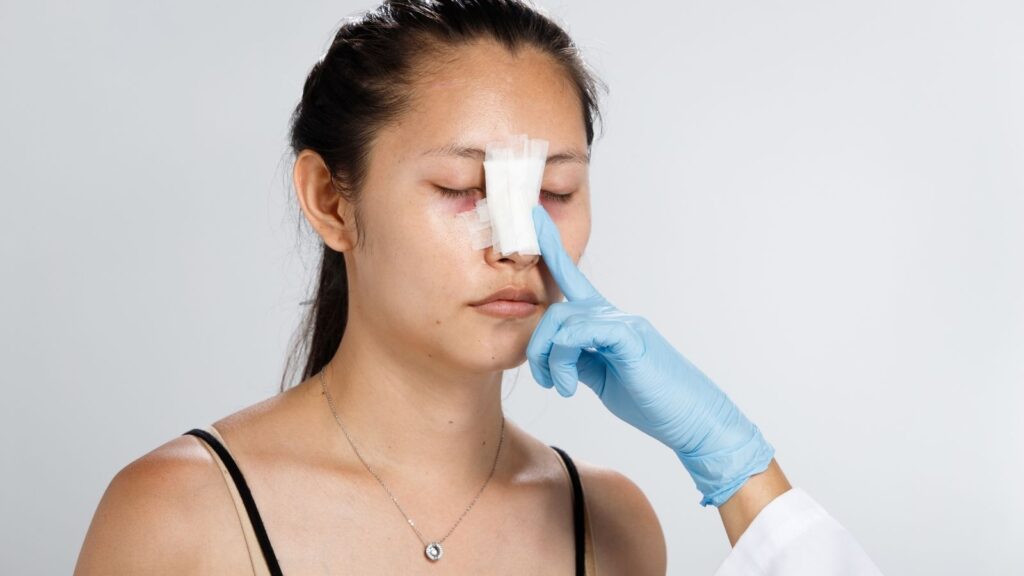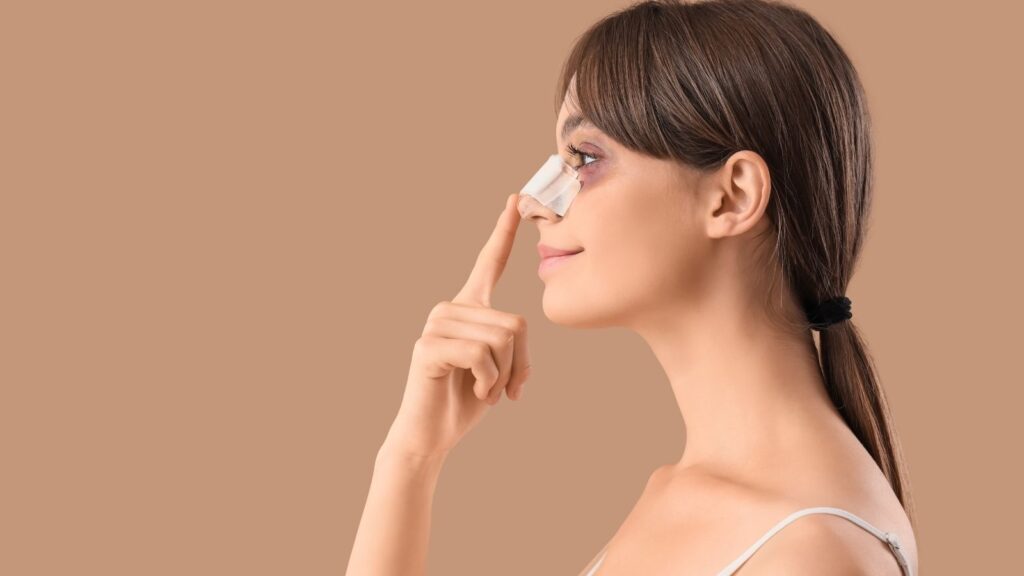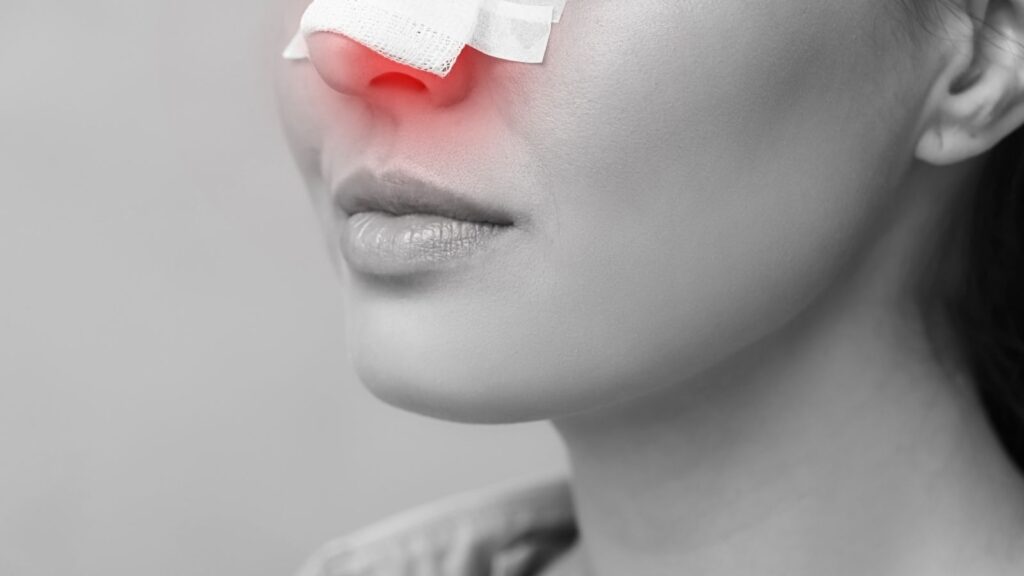
Nasal tip drooping is an aesthetic and functional problem that occurs when the tip of the nose shifts downward from its normal anatomical position. This condition creates an imbalance in appearance and may also negatively affect breathing functions. It generally develops due to aging, trauma, or surgery.
Symptoms of nasal tip drooping include the nasal tip pointing downward, the tip drooping even more while smiling, and aesthetic dissatisfaction. In some patients, nasal obstruction and shortness of breath may also accompany the condition.
From a functional perspective, nasal tip drooping may narrow the airway and make airflow more difficult. Especially in patients who experience difficulty breathing during speaking and exercise, the problem may significantly affect quality of life.
Surgical methods are prominent among the treatment options. With rhinoplasty or revision rhinoplasty, the nasal tip can be supported again, providing both an improved aesthetic appearance and functional relief. Choosing an expert surgeon and individualized planning are critically important for permanent results.
What Is Nasal Tip Drooping?
Nasal tip drooping is the condition in which the tip of the nose sags downward over time or after trauma. This condition may negatively affect both the aesthetics and function of the nose. It generally occurs as a result of aging, unsuccessful nasal surgeries, weak cartilage structure, or facial movements.
Why Does Nasal Tip Drooping Occur and What Are Its Main Causes?
There is no single cause of nasal tip drooping; on the contrary, it is a complex condition that occurs through the combination of several factors. Understanding these causes correctly is the first and most important step in determining the most effective personalized treatment method. Every patient’s nose is unique, and therefore the causes behind the drooping vary from person to person.
The main causes of nasal tip drooping can be examined under several principal categories:
- Structural (Congenital) Causes
- Causes Related to External Factors
- Dynamic Causes (Related to Muscle Movements)
- Causes Related to the Aging Process
- Causes Related to Trauma or Previous Surgeries
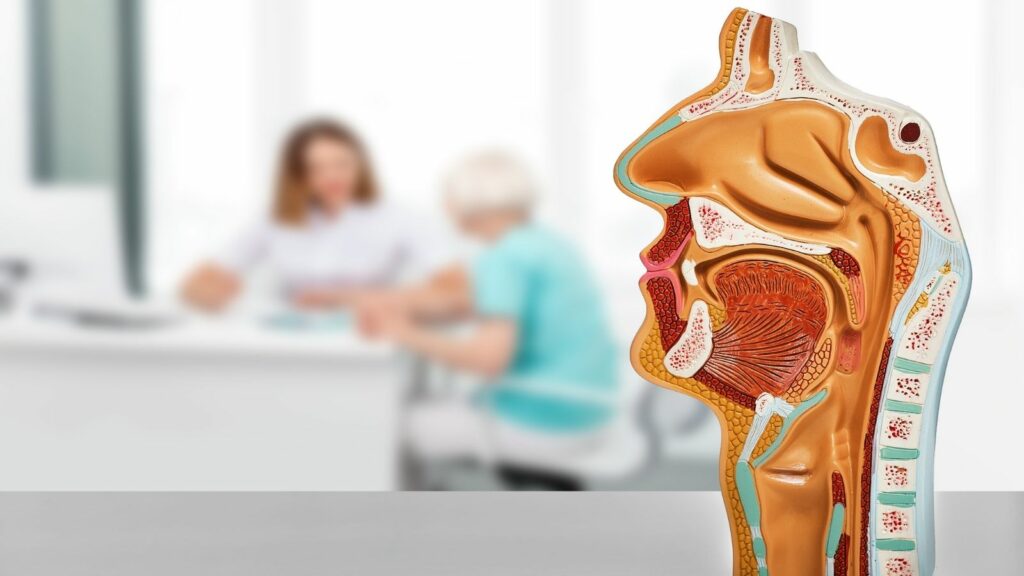
Structural Causes are entirely related to the cartilage structure of the nose itself. In some people, the nasal tip cartilages, called the lower lateral cartilages, may be congenitally weaker, longer, or inclined downward. These cartilages are the main supporting columns of the nasal tip. If these columns are not strong enough or are incorrectly positioned, the nasal tip gradually droops downward over time under the influence of gravity. Just as a building constructed on weak foundations may collapse over time, a weak cartilage structure also creates the conditions for nasal tip drooping.
External Factors are factors that affect the nasal tip cartilages from the outside. The most common of these is excessive length of the lower part of the septal cartilage, which forms the middle partition of the nose. We can compare this condition to the central pole of a tent being too long. The longer the pole, the more it pushes the top of the tent downward. Similarly, a long septum mechanically pushes the nasal tip downward and causes the appearance of a “long nose.” Another important external factor is the structure of the skin. Especially in people with thick, heavy, and oily skin, the weight of the skin continuously applies pressure to the underlying cartilage framework over time. This condition, particularly if the cartilage structure is already weak, causes the nasal tip to gradually sag downward.
Dynamic Causes arise from the movements of the facial muscles. The best-known example is the nasal tip being pulled noticeably downward while smiling. The muscle responsible for this is generally a small but effective muscle called the “Depressor Septi Nasi” (DSN). This muscle is located between the upper lip and the base of the nose and actively pulls the nasal tip downward when it contracts. If you notice that the tip of your nose droops and your upper lip shortens when you smile, this muscle is probably more active than normal in your case. This dynamic factor must be taken into consideration during surgical planning; otherwise, the beautiful result achieved after surgery may disappear while smiling.
How Is the Tip of Our Nose Supported and How Does Nasal Tip Drooping Affect This Support?
Have you ever wondered how the tip of our nose remains elevated against gravity? This is actually achieved through a remarkable balance of engineering established between cartilage, strong ligaments, and muscles. In order to correct nasal tip drooping permanently, it is necessary to understand very well how this support system works and where it fails. Comparing this system to a structure with legs may make the subject easier to understand.
The simplest and most intuitive analogy is the “tripod” model. We can compare the nasal tip to a three-legged camera tripod with two legs on the sides and one leg in the middle.
Side Legs: These are the cartilages that form the nasal wings.
Middle Leg: This is the cartilage that forms the partition between the two nostrils and joins together to act as a single support.
When you change the length or strength of any of the legs of this tripod, the position of the top of the tripod, meaning the nasal tip, also changes. If the side legs are too long, the tip points downward; if the middle leg is weak, the tip collapses. Nasal tip drooping operations basically aim to rebalance the legs of this tripod.
However, the support system of the nose does not consist only of this tripod. There is a more complex and hierarchical structure that holds it in place. The main support systems that keep the nasal tip elevated are as follows:
- The inherent structural strength of the nasal tip cartilages
- The fibrous connection between the upper and lower nasal cartilages (Scroll region)
- The connection of the central support of the nasal tip to the nasal septum
These three main supports are the most fundamental load-bearing elements of the nasal tip. The inherent strength and flexibility of the cartilage are the most basic factors. The “Scroll region” is like a critical hammock that suspends the nasal tip cartilages from the upper nasal dorsum cartilages. Unintentionally cutting this connection during rhinoplasty causes the support to weaken significantly. The third main support consists of fibrous structures connecting the base of the middle leg of the tripod to the septum, which is the main support of the nose.
In addition to these main supports, there are also auxiliary mechanisms that contribute to overall stability. Structures such as the interdomal ligaments, the nasal dorsum itself, and the bony projection at the base of the nose fine-tune this system and increase its integrity. The modern understanding of rhinoplasty aims to preserve these support mechanisms, especially the ligaments, as much as possible or to repair them meticulously if they are damaged. This is because we now know that the nasal tip is not merely a structure composed of cartilage but also a dynamic unit carried by a sophisticated tension network created by these ligaments.
Which Methods Are Used to Diagnose Nasal Tip Drooping?
Successful treatment of nasal tip drooping depends on diagnosing the source of the problem correctly and completely. This process involves much more than simply looking at the nose; it is a holistic approach consisting of listening to the patient’s complaints, performing a detailed examination, and analyzing the condition with objective measurements. The aim is to go beyond saying “the nasal tip is low” and find the answer to the question “why is it low?”
The diagnostic process begins with a sincere conversation with the patient. During this consultation, matters such as how long the drooping has been present, whether it has increased over time, whether there has been previous trauma, or whether surgery has been performed are discussed. In addition to aesthetic concerns, the presence of functional complaints such as difficulty breathing must also be questioned.
The physical examination that follows reveals the anatomical details of the problem. Points considered during the physical examination include:
- The thickness, oiliness, and quality of the skin
- The strength and flexibility of the nasal tip cartilages felt with the fingers
- How quickly the tip returns to its original position after being gently pressed downward and released
- How much the nasal tip moves during smiling or speaking
- Examination of the septum and airways by illuminating the inside of the nostrils
One of the most critical steps of this examination is the “dynamic evaluation.” When the person is asked to smile, it is observed whether there is a noticeable downward pull of the nasal tip. This simple test is the clearest way to understand whether an active muscle, the DSN muscle, is causing the drooping. If such a condition is present, an intervention to reduce the effect of this muscle must also be included in the surgical plan.
Finally, standardized photographs are taken to complete the diagnosis and surgical planning process. Various measurements are made on these photographs taken from different angles. The most important of these measurements is the “nasolabial angle” formed between the nose and the upper lip. An angle narrower than ideal is objective evidence of nasal tip drooping. In addition, proportions such as the length and projection of the nose, meaning how far it extends forward, relative to the other structures of the face are also evaluated, with the aim of ensuring that the new nasal shape is in complete harmony with the face. When all these steps are brought together, the surgeon has a personalized “roadmap,” and every step of the operation is planned according to this map.
How Is Nasal Tip Drooping Permanently Corrected with Surgical Methods?
The surgical treatment of nasal tip drooping is performed today according to the philosophy of “structural rhinoplasty.” The basis of this philosophy is not merely cutting out tissue that appears excessive, as in the past, but rather reshaping and strengthening the nasal framework to create a durable and stable structure in the long term. The aim is not only to create a nose that looks beautiful at that moment but also to build a solid foundation capable of resisting gravity and the contracting effects of wound healing even years later. For these complex and delicate procedures, the “open approach,” in which the entire cartilage framework can be clearly seen, is generally preferred.
Many different techniques are used together within a personalized plan to lift the nasal tip and secure it in its new position. The main surgical techniques used to lift and support the nasal tip are as follows:
- Reshaping and repositioning of the cartilages
- Special suture techniques that control the nasal tip
- Supportive cartilage grafts
- Correction of dynamic factors causing the drooping
Reshaping the cartilages means intervening in the legs of the tripod that forms the nasal tip. For example, if the cartilages that form the side legs of the tripod, called the lateral crura, are too long and turned downward, these cartilages can be cut and shortened by overlapping them to some extent (Lateral Crural Overlay). This procedure shortens the side legs and allows the nasal tip to rotate upward. If the nasal tip is both drooping and positioned too far back, a certain amount may be “borrowed” from the lateral cartilages and added to the middle leg using a suture technique called “Lateral Crural Steal.” This allows the tip both to lift and to move forward.
Special suture techniques are used to adjust the new position of the nasal tip with millimetric precision and secure it. One of the strongest and most frequently used techniques is the “Tongue-in-Groove” technique. In this technique, the middle leg of the nasal tip, the tongue, is interlocked with the septum, the main support of the nose, the groove, using sutures. This provides extremely strong and predictable control over rotation, but it may reduce the flexibility of the nasal tip to some extent.
Supportive cartilage grafts are the cornerstones of structural rhinoplasty. Cartilage pieces taken from the patient’s own body, generally from the septum inside the nose, the ear, or the rib, are used to strengthen a weakened or deficient framework.
- Columellar Strut: This is a small, rectangular piece of cartilage placed in the partition between the two nostrils. It works like an “internal support post” placed inside the middle leg of the tripod, preventing the nasal tip from collapsing and drooping downward.
- Caudal Septal Extension Graft (SEG): This is a very powerful technique used especially in severe drooping or revision operations. A new piece of cartilage is added to the end of the septum, the central support of the nose, like a “framework extension.” The nasal tip is sutured to this strong and stable new structure and securely fixed at the desired height and position. This technique provides maximum control over the position of the nasal tip.
Can Nasal Tip Drooping Be Treated with Non-Surgical Methods?
Although surgery is the most permanent and effective solution for nasal tip drooping, not everyone may want to undergo surgery, or their condition may not be serious enough to require it. At this point, certain temporary methods, also known as “non-surgical rhinoplasty,” come into play. These methods may be a good alternative for certain limited conditions, but it is very important to understand what they can and cannot do and their limitations.
Tip Lifting with Botulinum Toxin (Botox)
This method is especially suitable for dynamic nasal tip drooping, meaning drooping that occurs only with muscle movements. If your nose is normally in a good position but moves noticeably downward only when you smile, botulinum toxin may be a solution for you. The procedure is performed by injecting a very small dose of toxin into the DSN muscle that pulls the nasal tip downward. This allows the muscle to relax temporarily and lose its ability to pull the nasal tip downward. As a result, the nasal tip remains more stable while smiling and may even gain a slightly elevated appearance.
The ideal candidate profile for nasal tip lifting with botulinum toxin is as follows:
- Those whose drooping becomes noticeable only when smiling
- Those who want a very slight lift that does not require surgery
- Those seeking a quick and temporary solution for a special day or event
The effect of this procedure lasts approximately 3-4 months and must be repeated regularly for continued results. It works only for dynamic drooping and cannot lift a nose with structural problems.
Filler Injections (Liquid Rhinoplasty)
Hyaluronic acid-based dermal fillers can be used to camouflage nasal tip drooping and provide a slight lift. In this method, small amounts of filler are strategically injected into the angle between the nasal tip and the lip and into the base of the nose. This filler acts as a kind of “internal support” or “wedge” in that area, physically pushing the nasal tip upward and widening the nasolabial angle. This makes the nasal tip appear more elevated.
Suitable conditions for lifting the nasal tip with filler injections are as follows:
- Those with mild or moderate structural drooping
- Those who want to avoid surgery
- Those who have previously undergone surgery and need a minor touch-up
- Those who want to temporarily see the new shape of their nose before surgery
The results of filler application last between 9 and 18 months, depending on the type of product used. However, it should be remembered that filler is a volume-enhancing procedure; it cannot make the nose smaller and can only change its shape. The most important point is safety. The nose is a region with a very rich vascular network, and an incorrect injection may cause vascular occlusion and consequently serious complications such as tissue loss in the skin. For this reason, it is vital that such procedures are performed only by physicians who are highly experienced in this field and have a thorough knowledge of anatomy.
Why Is Nasal Tip Drooping More Difficult in Revision Operations and How Are Permanent Results Achieved?
Correcting the condition of a patient who has previously undergone rhinoplasty but experiences recurrent nasal tip drooping over time, meaning performing revision surgery, is one of the most challenging areas of facial aesthetic surgery. The reason is that the surgeon must work not with untouched anatomy but with a structure altered by healing tissue, unpredictable, and generally weakened. However, it is possible to overcome these challenges with the correct techniques and a patient approach.
There are fundamental factors that make revision operations more complex:
- Distorted or altered anatomy
- Extensive internal scar tissue
- Lack of cartilage available for support
- Reduced blood circulation
- A healing process that is more difficult to predict
During the first operation, the skin and soft tissue covering the nasal framework can be easily elevated. However, in revision surgery, these layers are covered with firm scar tissue that is tightly attached to the underlying cartilage and bone structure. Carefully releasing this tissue, finding the remaining intact cartilage, and working without damaging it require great precision and experience. Most of the time, the nasal tip support cartilages were excessively removed or weakened during the first operation. In this case, the aim is not merely to correct the shape but to rebuild the nasal framework, much like reconstructing the foundation of a collapsed building.
This reconstruction process almost always requires strong cartilage grafts. If the septal cartilage inside the nose was used during the first operation or is insufficient, the supporting cartilage is usually taken from the ear or, when a stronger structure is required, from the rib. A strong “Caudal Septal Extension Graft” (SEG) and a stable “Columellar Strut” are especially indispensable in revision surgery. These grafts create a new and solid foundation on which the nasal tip can be securely suspended.
So, what ensures that the result is long-lasting and permanent in both primary and revision operations? The secret to success lies in the strength of the structure created during surgery. No matter how beautiful the nose looks when the operation is completed, if the underlying framework is not strong enough to resist the contracting force of wound healing and gravity that will continue for months and years, the nasal tip will gradually droop again. This is why the philosophy of structural rhinoplasty is so important. A nose supported with strong grafts and secured with firm sutures can withstand the test of time.
It is normal for the nasal tip to “settle” or descend slightly during the first months after surgery, and this is a natural result of the reduction in swelling. An experienced surgeon takes this settling into account and lifts the tip slightly more during surgery, creating a mild over-rotation. However, a noticeable decline over time is a sign that the supporting structure is insufficient. A permanent result is possible not only by creating an aesthetic shape but also by constructing an engineering structure capable of carrying that shape for a lifetime.