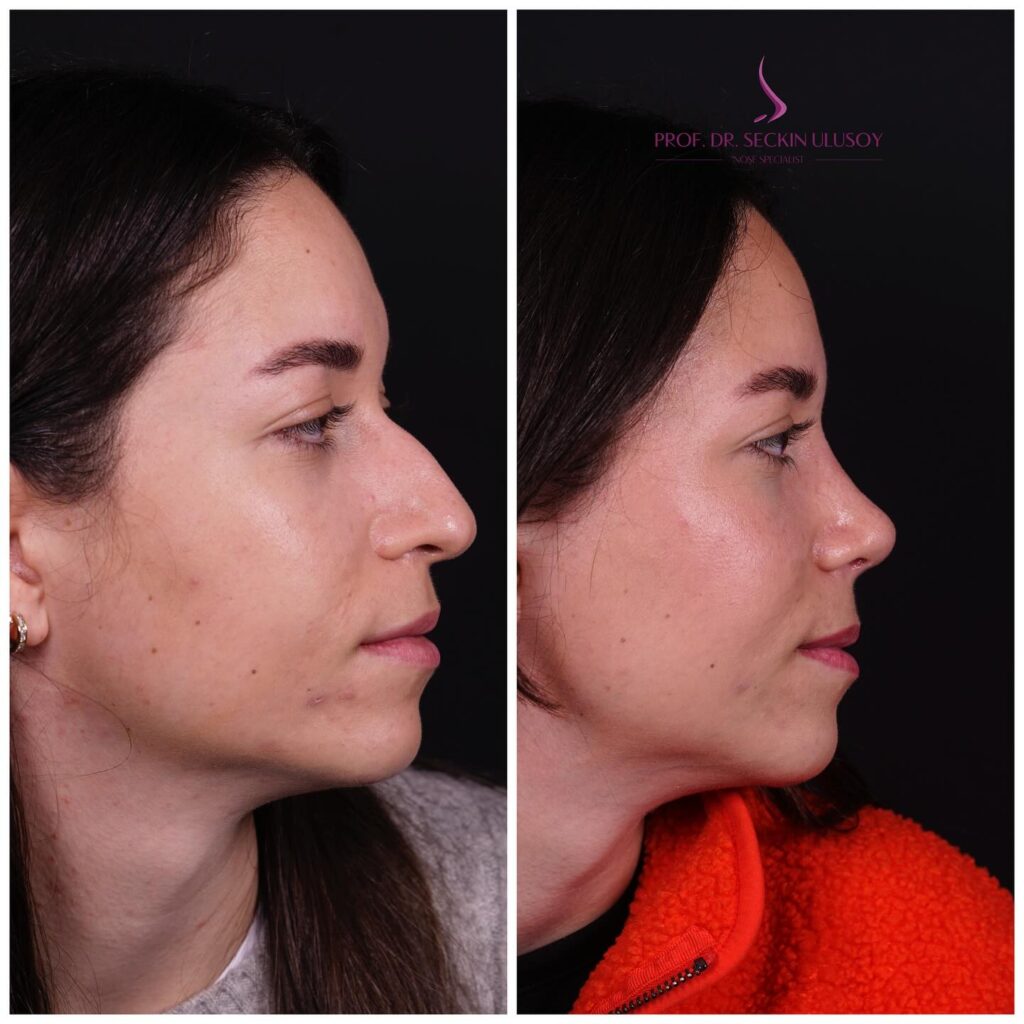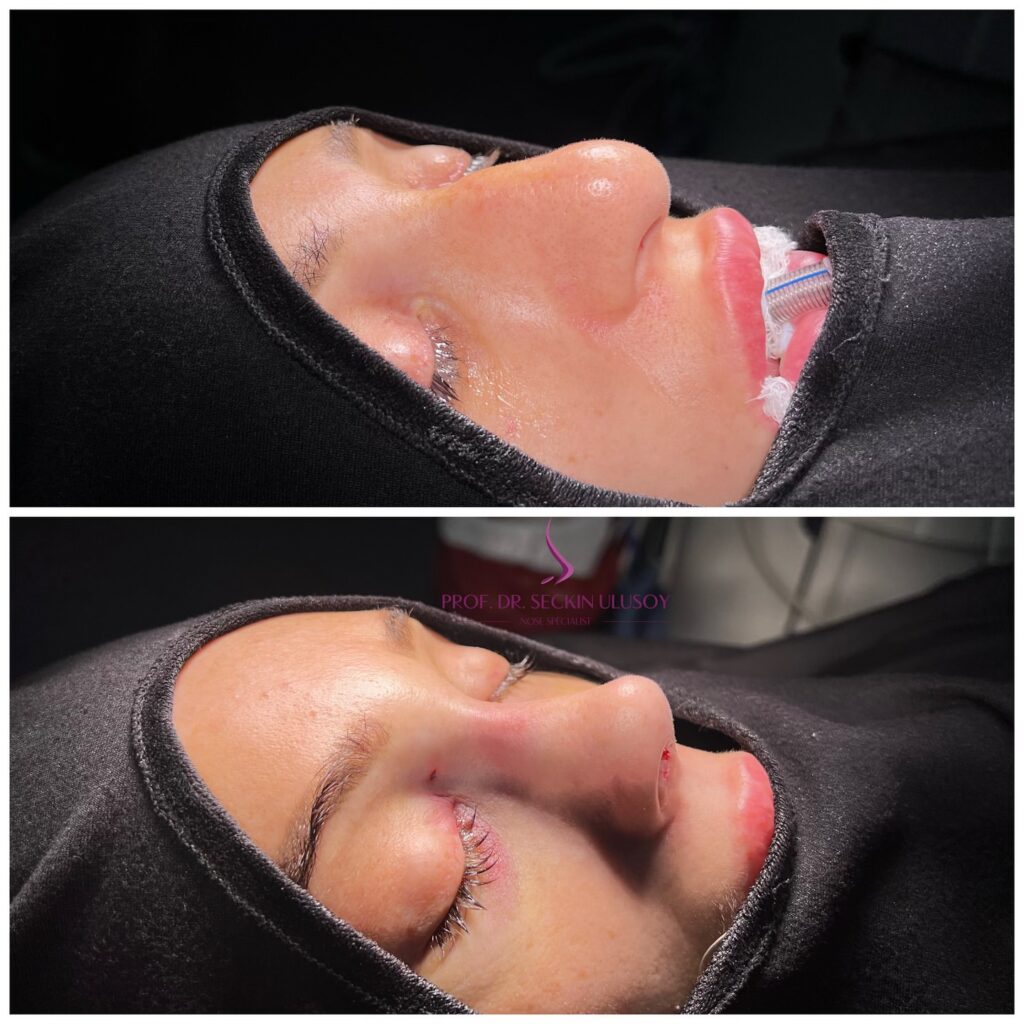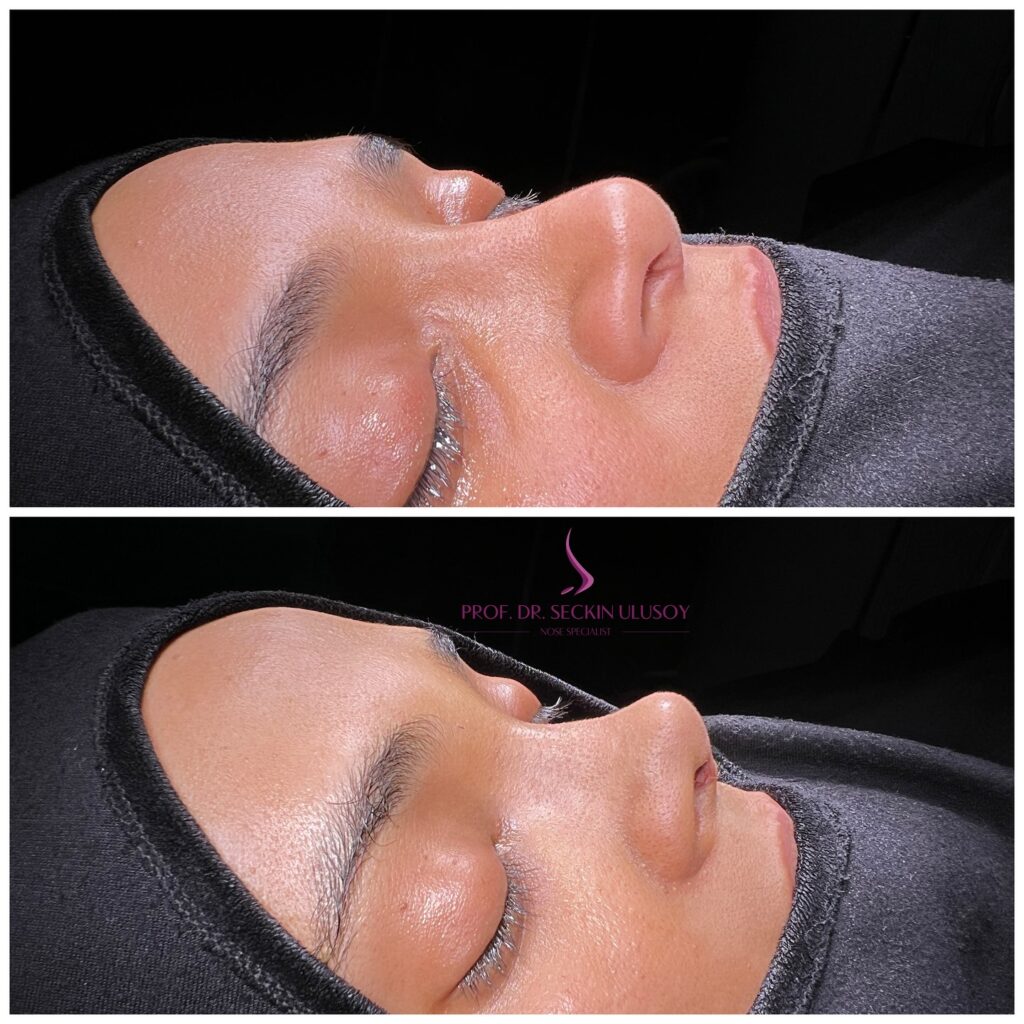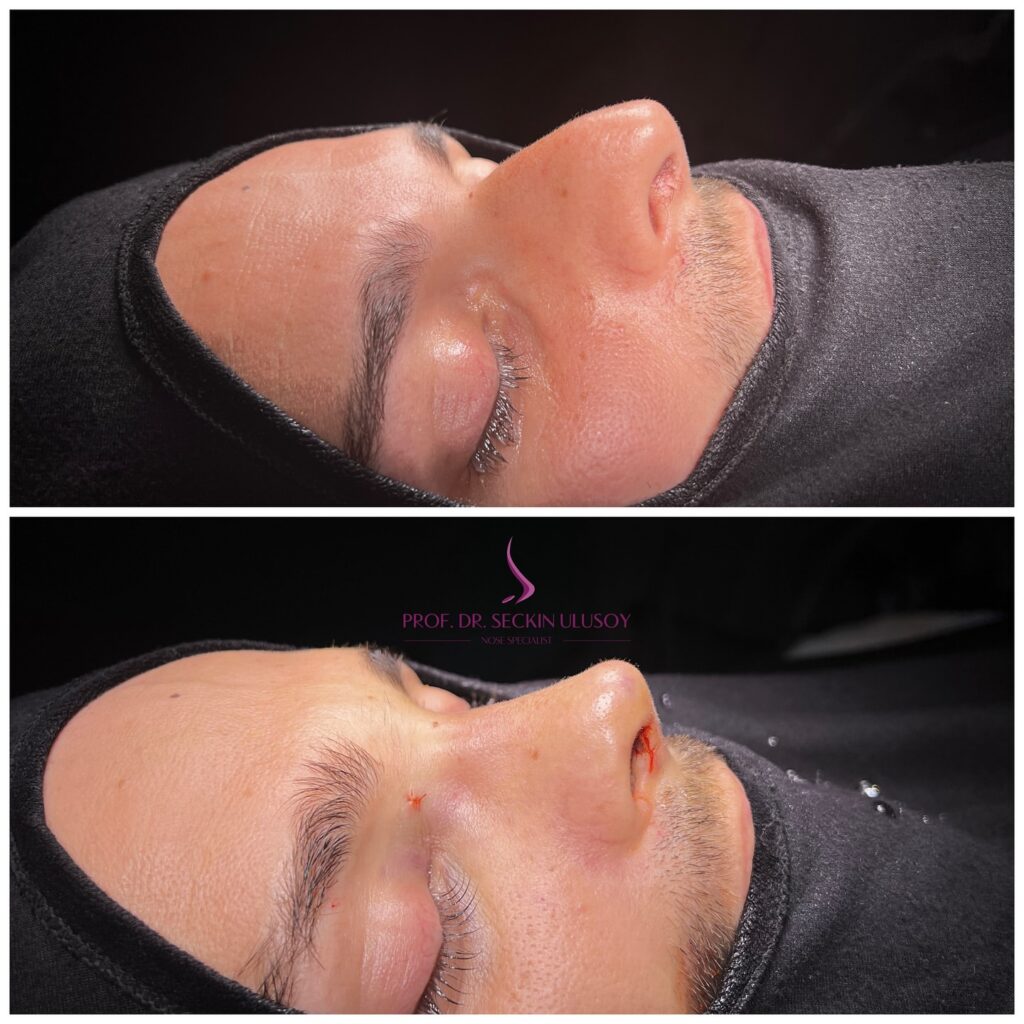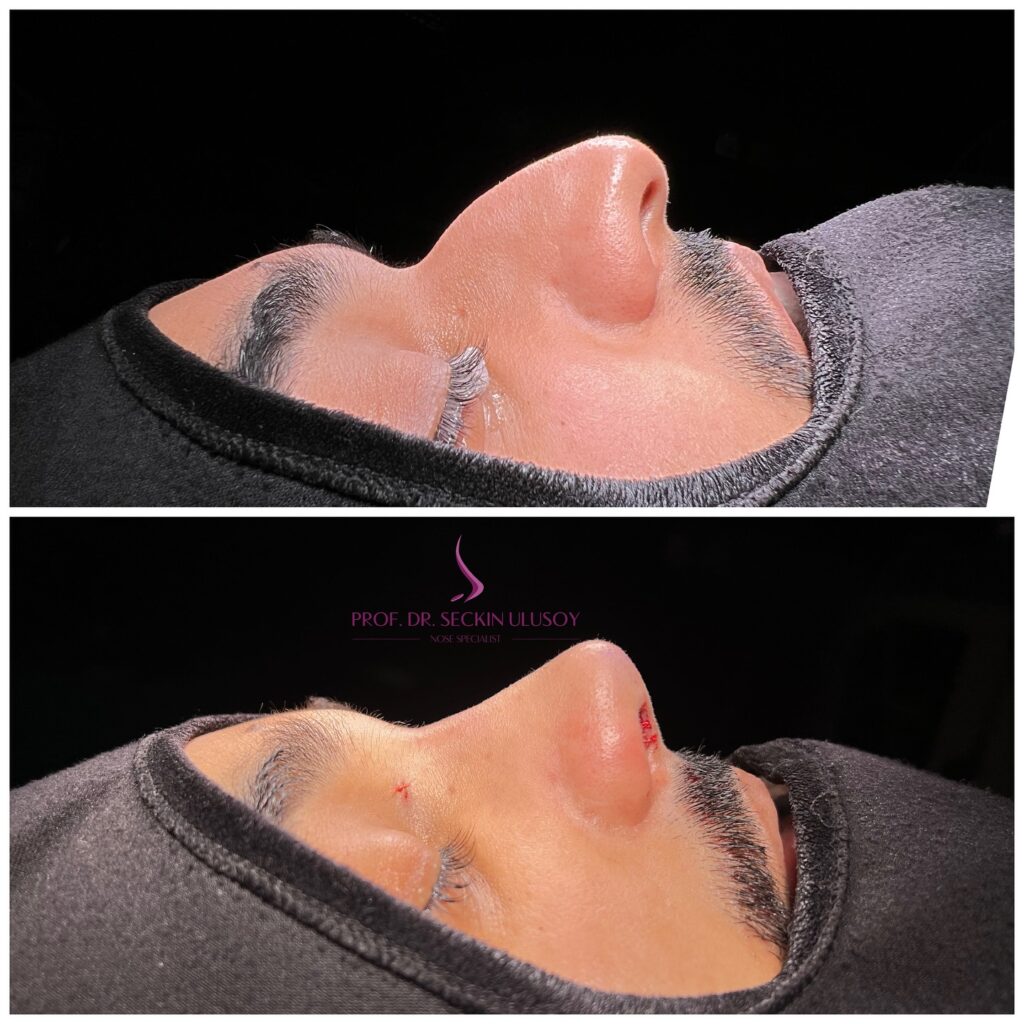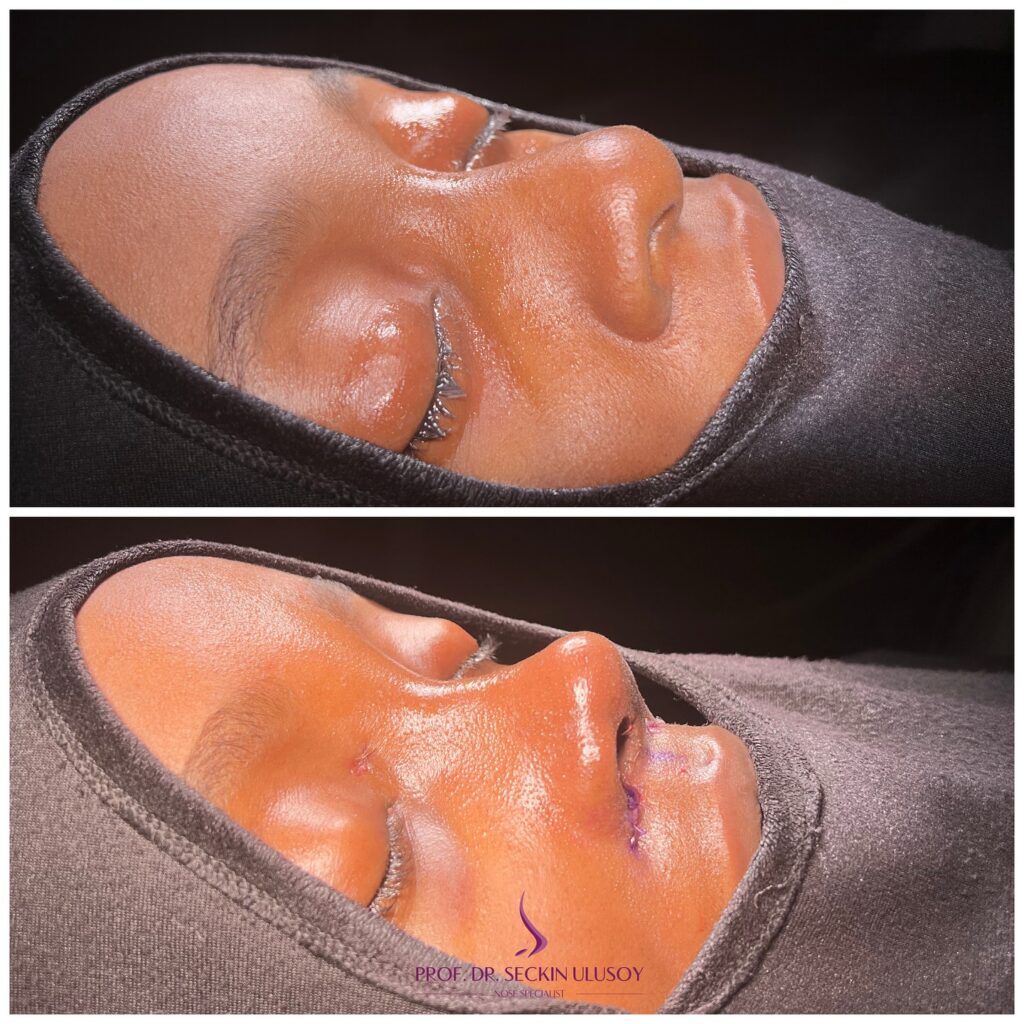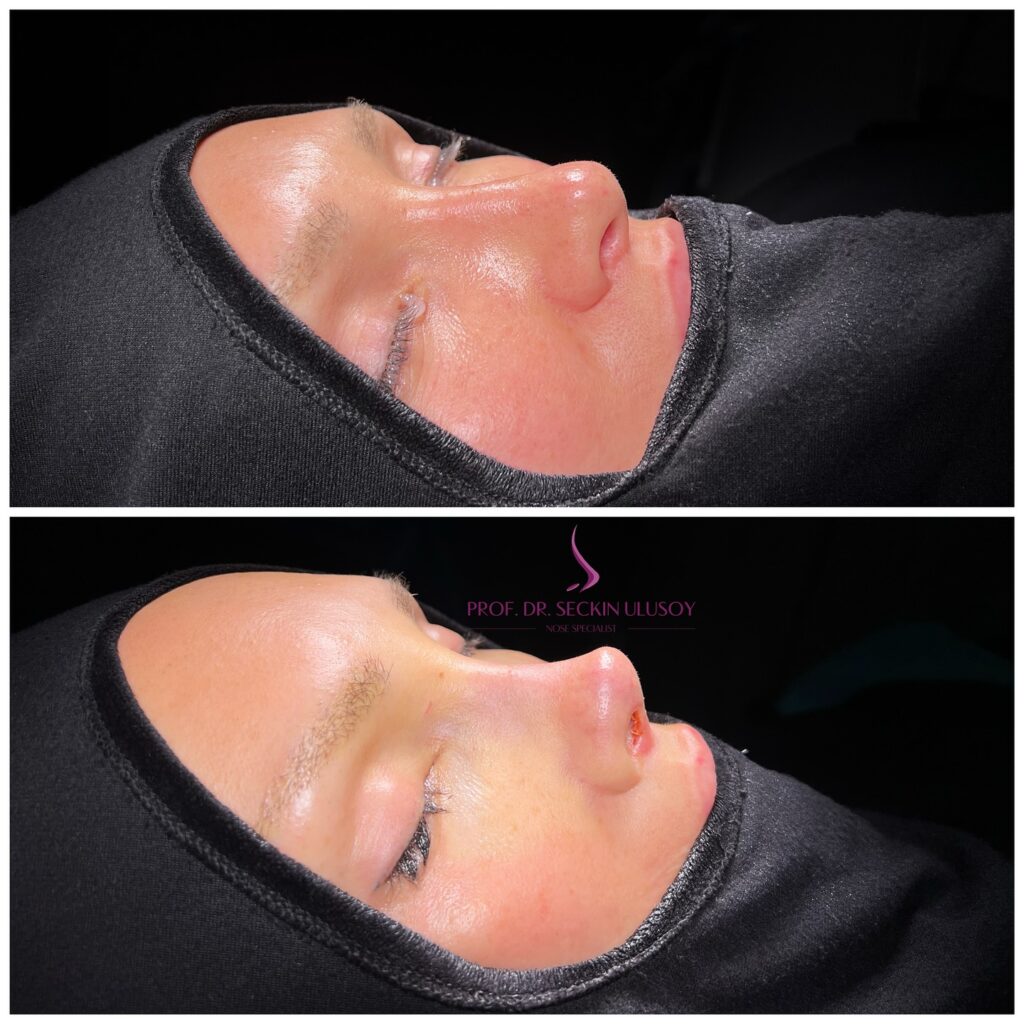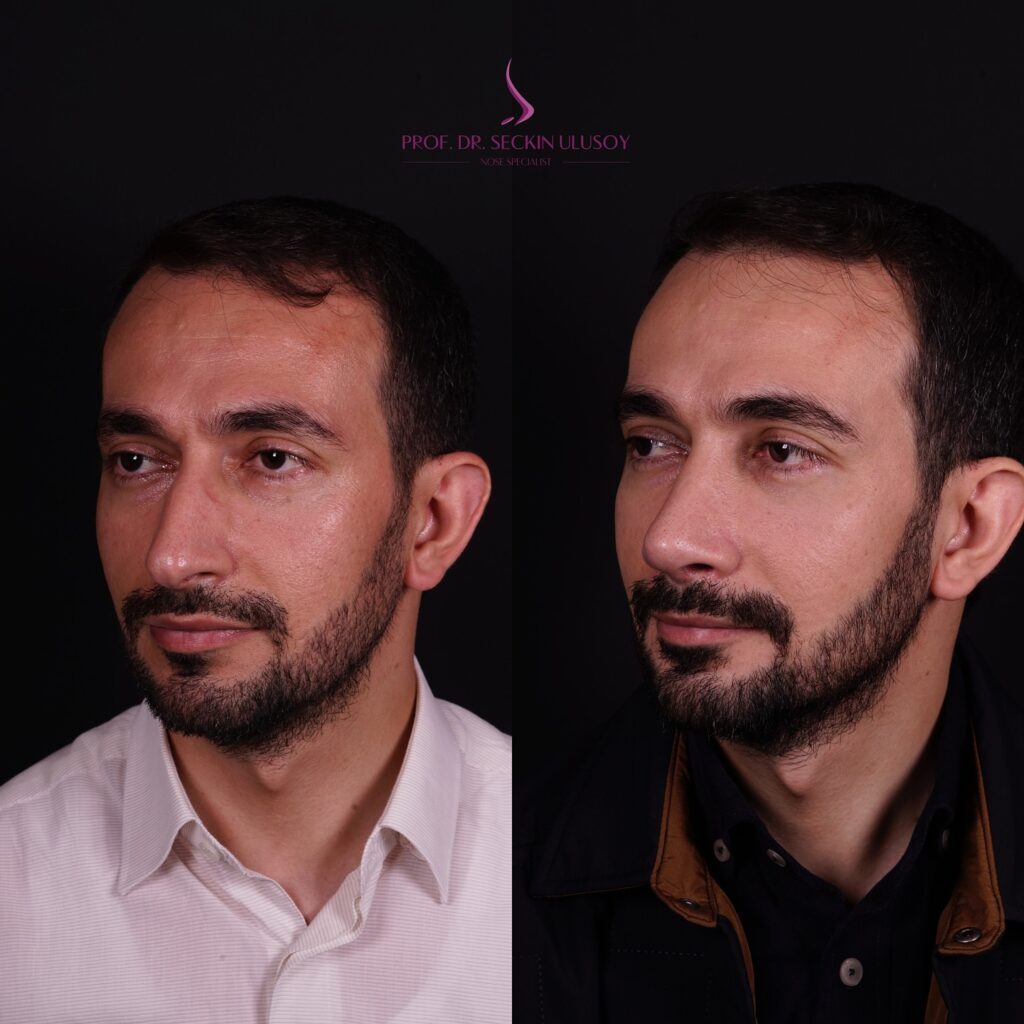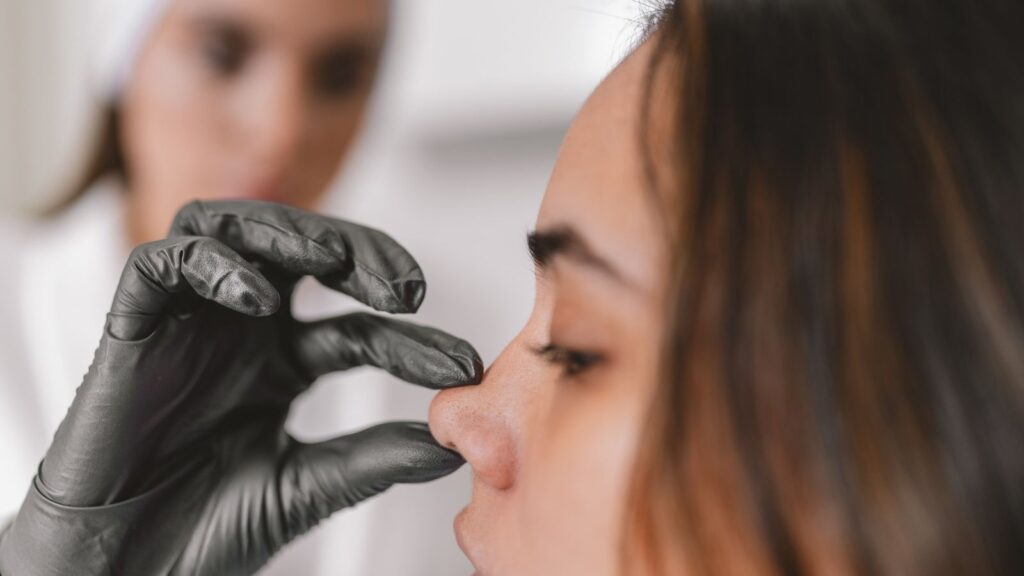
Swelling that develops on the nasal dorsum after rhinoplasty is considered a natural part of the operation. Edema in this area is especially common in patients whose bone and cartilage tissues have been treated. The swelling decreases over time, and the nasal dorsum becomes more defined.
During the first weeks, swelling on the nasal dorsum may be more noticeable and may not appear symmetrical. This is caused by the uneven distribution of edema. Applying a cold compress and sleeping with the head elevated help control this swelling.
Swelling of the nasal dorsum generally decreases significantly within 3-6 months. However, this period may vary from person to person depending on skin type, thickness, and the extent of the procedure performed. In individuals with thick skin, it may take longer for the edema in this area to resolve completely.
If the swelling persists for a long time or remains in the form of firm nodules, a physician’s evaluation is required. If deemed necessary, interventions such as corticosteroid injections may be planned. Appropriate treatment should be determined according to the source of the swelling.
Why Does Swelling Occur After Rhinoplasty?
Rhinoplasty is a surgical procedure performed on the nasal bones, cartilage structures, and soft tissues. During this intervention, the natural integrity of the tissues is temporarily disrupted. The body’s response to this occurs in the form of edema, meaning fluid accumulation.
The main causes of swelling on the nasal dorsum include:
- Tissue reaction caused by surgical trauma
- Temporary slowing of blood and lymphatic circulation
- Interventions performed on the bones or cartilage
- Surgical techniques used during the operation
Especially in cases where the nasal bones are treated, it is common for edema on the nasal dorsum to be felt more prominently.
Is Swelling the Same in Every Patient?
The amount and duration of swelling after rhinoplasty vary from person to person. This difference is related to skin structure, nasal anatomy, healing capacity, and the individual’s response to surgery.
While swelling on the nasal dorsum may be felt for a longer period in people with thick skin, edema may become noticeable and decrease earlier in patients with thin skin. In addition, the healing process of the tissues may progress differently in people who have previously undergone nasal surgery.
How Long Does Swelling on the Nasal Dorsum Take to Resolve?
Noticeable edema on the nasal dorsum during the first weeks after surgery is generally expected. Although the shape of the nose becomes visible after the cast or splint is removed, this does not represent the final appearance.
- First 1–2 weeks: Swelling is more noticeable, and the nasal dorsum may feel firm.
- First 1–3 months: Edema gradually decreases, and the contours of the nose begin to become more defined.
- 3–12 months: The remaining swelling on the nasal dorsum gradually resolves.
In some patients, it is considered normal for very mild edema to be felt for up to one year. This process is related to the nose’s own tissue adaptation.
Is Firmness on the Nasal Dorsum Normal?
After surgery, not only swelling but also a feeling of firmness may be described on the nasal dorsum. This condition is generally associated with the tissues repairing themselves during the healing process.
Following procedures performed on bone or cartilage, the tissues may temporarily feel firmer. As the edema decreases over time and the tissues regain their flexibility, this firmness also decreases. Whether the firmness is permanent can only be evaluated through follow-up examinations over time.
Does Swelling Permanently Affect the Shape of the Nose?
One of the most frequently asked questions by patients is whether swelling on the nasal dorsum will cause a permanent deformity. In most cases, swelling observed in the early period does not reflect the permanent shape of the nose.
While edema is present, the nasal dorsum may appear wider or irregular. However, this appearance changes as healing is completed. The final shape of the nose generally emerges over several months, and this process requires patience.
Factors That May Increase Swelling After Rhinoplasty
During the healing process, certain conditions may cause swelling on the nasal dorsum to last longer. These include:
- Sleeping face down or on the side during the first weeks
- Excessive consumption of salty foods
- Beginning intense physical activity too early
- Prolonged exposure to sunlight
- Smoking
These factors may increase fluid retention in the tissues and make the edema more noticeable.
How Is Swelling on the Nasal Dorsum Evaluated?
Not every swelling after surgery is considered normal. The shape and firmness of the swelling and findings such as accompanying pain or redness are important for evaluation.
- Soft edema that decreases over time is generally part of the healing process.
- One-sided, increasing, or painful swelling may require specialist evaluation.
Therefore, it is important for patients not to neglect their follow-up appointments and to share the changes they observe with their physicians.
Do Massage and Additional Applications Reduce Swelling?
In some cases, physicians may recommend applications such as massage or taping to help reduce edema on the nasal dorsum. However, such applications are not suitable for every patient and must be planned with specialist evaluation.
Uninformed self-massage may damage the healing tissues. Therefore, the postoperative care process should be handled individually.
When Should a Specialist’s Opinion Be Sought?
Although swelling after rhinoplasty is often considered normal, certain situations require prompt evaluation. In particular:
- The swelling increases over time
- Severe pain or redness accompanies it
- An asymmetrical and firm mass sensation develops
- A color change is noticed in the nasal skin
In such cases, a specialist’s opinion is important. Clinical decisions are always made by taking the patient’s individual condition into consideration.
Why Is Patience Important During the Process After Rhinoplasty?
Rhinoplasty is not a procedure whose results can be evaluated immediately. Swelling on the nasal dorsum is considered an indication that healing is taking shape over time. It is important for patients to keep their expectations realistic during this process and avoid making definitive judgments in the early period.
Every nose changes according to its own anatomical structure and healing rate. Therefore, swelling on the nasal dorsum after rhinoplasty is considered a temporary process for most patients and naturally decreases over time.
Frequently Asked Questions
Is It Normal to Feel a Bony Protrusion on the Nasal Dorsum After Rhinoplasty?
In the early postoperative period, firmness or a small protrusion may be felt on the nasal dorsum due to edema and healing tissue. It is usually temporary and decreases within months. A surgeon’s evaluation is required for persistent prominent protrusions.
What Should Be Done for Swelling After Rhinoplasty?
To reduce swelling, it is important to sleep with the head elevated, limit salt intake, and use the medications recommended by the physician regularly. Cold application is beneficial during the first days. Trauma and strenuous exercise should be avoided.
Where Is the Nasal Dorsum?
The nasal dorsum is the bone and cartilage region along the upper midline that begins between the two eyes and extends to the nasal tip. It is one of the most important anatomical areas determining the profile appearance.