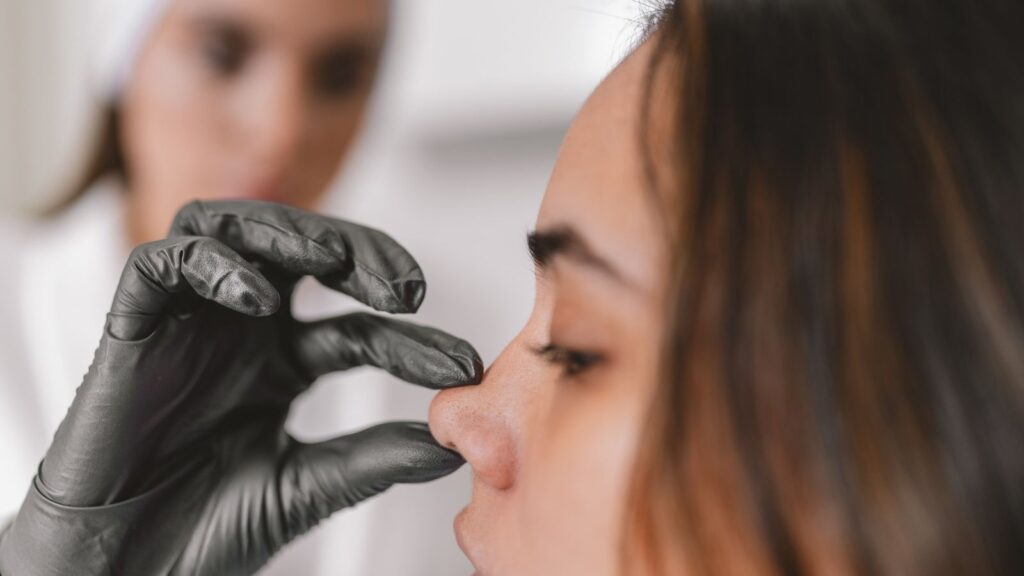
Nosebleed, medically known as “epistaxis,” is a condition that occurs when the blood vessels on the inner surface of the nose are damaged for various reasons. The inside of our nose, especially the area just inside the nostrils, is covered with a dense network of blood vessels. These vessels are both numerous and located very close to the surface. You can think of them like veins beneath a thin sheet of paper—even the slightest trauma can easily start bleeding.
When you experience a nosebleed, you generally encounter one of the following scenarios: Blood may drip from one nostril, come from both nostrils at the same time, or flow more discreetly toward the back of your throat, causing you to notice a metallic taste when swallowing. The amount of bleeding may vary from a few drops to a flow intense enough to fill a glass. This variability depends both on the size of the bleeding vessel and the underlying cause.
Why Are Nosebleeds Such a Common Condition?
The internal structure of our nose is actually an extraordinary feat of engineering. It not only enables us to smell the odors around us but also warms, humidifies, and filters the cold, polluted, and dry air we inhale from outside before delivering it to our lungs within seconds. To perform this demanding and continuous air-conditioning task perfectly, the nose requires tremendous energy and therefore an extremely rich blood supply.
To meet this need, there is an incredibly dense and complex network of capillaries immediately beneath the mucosal layer lining the inside of the nose. These vessels are positioned very close to the surface so that they can perform their functions. Because the nose is constantly in direct contact with the external environment, wind, dry air, and physical contact, these thin-walled vessels located near the surface become extremely sensitive and fragile against all kinds of external factors. Even the slightest trauma or loss of moisture may cause these vessels to rupture and bleeding to begin.
What Are the Differences Between Anterior and Posterior Nosebleeds?
Nosebleeds are basically divided into two different groups according to the area from which the blood originates. This distinction is the most important factor determining the seriousness of the condition and the treatment method to be applied.
Bleeding originating from the front part of the nose is called anterior bleeding in medicine. Almost all cases fall into this group. There is a very special vascular network in the front and lower part of the nasal septum where four different arteries meet. Because this area is the first point struck by air entering through the nostrils, it is highly prone to drying and cracking. It is generally easy to stop and does not pose a life-threatening risk.
Posterior bleeding originates from much deeper parts of the nasal cavity, close to the nasopharynx. The vessels in this area have a much larger diameter and carry blood at a much higher pressure. Therefore, posterior bleeding is much more severe. Instead of flowing out through the nostrils, the blood runs directly toward the back of the throat. It is mostly seen in older individuals and definitely requires specialist intervention.
Which Factors Cause Anterior Nosebleeds?
There are many local factors that disrupt the integrity of the sensitive vascular network in the front part of the nose and cause bleeding.
Local factors include:
- Dry air
- Nose picking
- Forceful nose blowing
- Upper respiratory tract infections
- Allergic rhinitis
- Facial trauma
- Nasal deviation
- Foreign objects
- Chemical irritants
It is useful to look in more detail at how these factors affect the nose. Dry air occurs especially during the winter months when heating systems used indoors remove moisture from the environment. The mucosa loses moisture, dries out, forms crusts, and loses its elasticity. Even the slightest facial movement may cause these crusts to tear the capillaries beneath them and lead to bleeding. The habit of nose picking, which is very common in children, also mechanically damages the delicate vessels on this surface.
During allergy seasons or infections such as influenza, the tissues inside the nose swell and blood flow increases. During these periods, repeated sneezing or blowing the nose very forcefully to relieve nasal congestion may cause already tense vessels to rupture. In addition, deviations in the cartilage in the middle of the nose disrupt airflow and create turbulence in certain areas. This turbulence causes localized excessive drying of the mucosa, creating a basis for chronic and recurrent bleeding at that point.
Which Systemic Problems Are Associated with Posterior Nosebleeds?
Conditions that disrupt the body’s general circulatory system, vascular structure, or the blood’s clotting balance especially cause bleeding from the large vessels in the back of the nose.
Systemic factors include:
- High blood pressure
- Blood-thinning medications
- Hardening of the arteries
- Low platelet count
- Hemophilia
- Liver failure
- Kidney failure
High blood pressure continuously applies strong internal pressure to vessel walls. Although a sudden rise in blood pressure may not rupture a healthy vessel, it may trigger bleeding from a vessel that is already weakened or slightly damaged. More importantly, high pressure makes it extremely difficult for the bleeding to stop because it mechanically prevents blood from clotting at that point.
Blood-thinning medications used to protect cardiovascular health also prolong the natural clotting process. In people taking these medications, a small leak that would normally stop within seconds may turn into persistent bleeding lasting for hours. As age advances, the vessels also lose elasticity and harden, eliminating their ability to constrict and stop bleeding.
What First Aid Steps Should Be Applied at Home During a Nosebleed?
The biggest mistake made when bleeding begins is to panic. Panic increases the heart rate, raises blood pressure, and makes the bleeding worse. Remaining calm and applying the correct steps in order is usually sufficient to resolve the problem at home.
First aid steps include:
- Sitting upright
- Leaning the head forward
- Pinching the sides of the nose
- Breathing through the mouth
- Applying a cold compress
There is a very common but extremely incorrect and dangerous habit in society: tilting the head backward. Tilting the head backward does not stop the bleeding. The blood merely changes direction and begins to flow toward the nasopharynx and throat. Swallowed blood severely irritates the stomach and may cause intense nausea and vomiting. Even more dangerously, there is a risk that the blood may enter the windpipe and reach the lungs. Therefore, the head should always be tilted slightly forward.
Another mistake made while applying pressure is pinching the hard bone at the upper part of the nose. Pinching the bone provides no benefit to the bleeding vessels. Pressure should be applied firmly to the soft cartilage wings in the lower part of the nose from both sides, as though squeezing a clothespin. This pressure should be maintained continuously for at least ten minutes. Releasing the fingers repeatedly to check whether the bleeding has stopped disrupts the newly forming clot and restarts the process. Meanwhile, applying ice to the nasal bridge, cheekbones, or back of the neck helps slow blood flow by taking advantage of the cold’s vessel-constricting effect.
When Is It Necessary to Visit the Emergency Department for a Nosebleed?
In most cases, bleeding is completely controlled within fifteen to twenty minutes using the correct pressure method. However, certain warning signs indicate that the condition is too serious to be resolved at home and requires professional evaluation.
Emergency symptoms include:
- Prolonged bleeding
- A feeling of excessive blood loss
- Dizziness
- Shortness of breath
- Darkening of vision
- Continuous blood flow into the throat
- Bruising on the body
- Bleeding gums
- Blood in the urine
- Severe facial trauma
Active bleeding lasting longer than twenty minutes despite pressure should not be waited out any further. It is dangerous to lose time, especially if the patient begins experiencing cold sweating, severe weakness, palpitations, or an inability to stand because of blood loss. In addition, if the patient has a known clotting disorder or uses strong blood-thinning medications, the likelihood of the bleeding stopping at home is very low. In cases of bleeding after a severe blow to the face, a fall, or a traffic accident, medical imaging and intervention are essential because there is a high possibility of an underlying bone fracture.
How Is a Nosebleed Diagnosed in the Clinic?
The primary aim in a patient presenting to the emergency department or an ear, nose, and throat specialist is to secure the patient’s general condition. Blood pressure and pulse are measured, and if there is excessive blood loss, an intravenous line is established to replace the lost fluid. After the patient’s condition has stabilized, a detailed examination begins to identify the source of the bleeding.
First, the inside of the nose is widened with special instruments and examined under a strong light. Clots inside the nose are gently removed using special suction devices. This is because the area must be completely cleared to see the actual bleeding vessel. If the bleeding is not in the front parts or its source cannot be clearly identified, an endoscopic examination is performed. Endoscopes, which are thin, long devices with cameras, allow the most remote corners of the nasal cavity, the nasopharynx, and the posterior regions to be examined in detail on a monitor. In this way, deeply hidden bleeding, benign or malignant masses, or structural abnormalities are definitively detected. When considered necessary, blood tests are requested for a complete blood count and clotting tests.
Which Medical Procedures Are Applied for a Nosebleed That Does Not Stop?
After the location and severity of the bleeding are identified, various methods are used in the clinic to close and seal the bleeding vessel. The choice of these methods depends entirely on the characteristics of the bleeding.
Treatment methods include:
- Chemical cauterization
- Electrocauterization
- Anterior nasal packing
- Posterior nasal packing
- Absorbable packing
If the doctor can clearly see the exact location of the bleeding capillary, the most effective and rapid method is cauterization. This procedure is generally performed using special sticks tipped with silver nitrate. After the inside of the nose is numbed, the stick is touched to the bleeding point for several seconds. The substance reacts with the blood, creating a chemical seal in that area and instantly closing the vessel. In more extensive bleeding, electrical energy is used to heat and coagulate the vessel ends, sealing them together.
If the bleeding area is very wide, cauterization is considered insufficient, or the exact source cannot be identified, packing is placed inside the nose. Today, instead of the long gauze strips used in the past that were very painful to remove, soft sponges that swell when they come into contact with fluid after being placed in the nose or silicone balloons inflated with air are used. These packings apply strong mechanical pressure from inside onto the vessels and stop the bleeding. Absorbable packing, which has become much more widely used in recent years, has a cotton-like structure, is placed over the bleeding area, and gradually dissolves in body fluids without needing to be pulled out. This completely eliminates the risk of reopening the wound when the packing is removed.
Which Surgical Methods Are Used for Persistent and Severe Nosebleeds?
If the patient’s bleeding continues despite packing or restarts with the same intensity as soon as the packing is removed, more advanced surgical or interventional methods become necessary to solve the problem at its source.
Advanced methods include:
- Endoscopic artery ligation
- Angiographic embolization
- Open surgical vessel ligation
In modern medicine, endoscopic vessel ligation surgery is the most commonly used method for persistent posterior nosebleeds. Under general anesthesia, cameras are used to reach the rearmost wall of the nasal cavity. The point where the main artery causing the bleeding exits the bone is identified. Special titanium clips are used to compress and close this vessel. It is almost like closing the main valve to stop water from a burst pipe. This procedure is an extremely comfortable surgical solution with a very high success rate and saves the patient from having to remain hospitalized for days with uncomfortable nasal packing.
If the patient’s general health is too risky to tolerate surgery, embolization may be performed by interventional radiology specialists. In this procedure, very thin wires are inserted through a vessel in the groin, advanced upward through the neck, and special blocking materials are injected into the vessels supplying the nose.
Is Nosebleed Expected After Aesthetic Nose Surgery (Rhinoplasty)?
Rhinoplasty or functional nasal surgery directly involves shaping the cartilage, bone, and mucosal structures of the nose. Because these tissues are naturally manipulated during the procedure, a certain amount of postoperative drainage is considered completely normal.
Modern aesthetic surgery now uses highly tissue-respecting techniques known as atraumatic methods. When intervening in the bone and cartilage, surgery is performed beneath the main membranes that nourish the tissues. In this way, the vascular networks are preserved, there is almost no bleeding during the operation, and postoperative bruising is minimized. In addition, vasoconstrictive substances in the medications applied to the area during surgery help keep the surgical field free of bleeding.
During the first one or two days after surgery, watery discharge that is light pink or very pale red and mixed with tears and nasal secretions may come from the nostrils. This is an expected condition. It is not active bleeding but drainage from the tissues during the healing process. However, if this discharge turns dark and bright red and begins to flow continuously drop by drop, this is a sign of bleeding. The grooved silicone sheets placed inside the nose at the end of surgery, which allow breathing, support the nasal septum while also applying gentle and balanced pressure to the mucosa, playing a major role in preventing serious bleeding. Keeping the head elevated and applying ice during this period also helps control drainage.
How Does Nasal Deviation (Septal Deviation) Affect Nosebleeds?
Deviations of the nasal septum, which are very common in society, are not only a cause of nosebleeds but also a structural problem that must be surgically corrected in cases of frequently recurring bleeding.
This deviation in the middle of the nose narrows the air passage in that area. Air that should normally spread over a wide area and flow slowly is forced to pass through this narrow region at very high speed and with turbulence. This rapid and irregular airflow continuously dries the mucosa it strikes. Crusts form in the dry area, and when the patient tries to remove these crusts, the vessels beneath them tear. This cycle continues repeatedly. In these patients, merely stopping the bleeding does not provide a permanent solution. The real solution is to correct the cartilage deviation surgically and restore the internal airway to an even and regular shape. When airflow returns to normal, the mucosa regains its natural moisture, crusting ends, and the bleeding problem is permanently eliminated.
Can Enlarged Nasal Turbinates Cause Nosebleeds?
The nasal turbinates located on the side walls of the nasal cavity and responsible for warming the air may become much larger than normal and swollen in some people because of allergies, air pollution, or genetic predisposition.
The inside of these tissues is completely covered with a spongy vascular network. When the turbinates are chronically swollen, the mucosal layer and capillaries covering them also become excessively stretched. This tense structure becomes thin, like the membrane of an overinflated balloon, and may bleed easily with even the slightest change in pressure or touch. The most commonly preferred treatment for this condition today is radiofrequency energy. This energy, delivered into the turbinate, heats and shrinks the internal vascular bed without damaging the mucosal surface. The tissue gradually becomes smaller from within. Because no incision is made, there is no bleeding during or after the procedure. As the vascular network shrinks and tension disappears, the risk of future nosebleeds is also significantly reduced.
What Should Be Considered During the Recovery Period After Nosebleed Treatment?
Whether it is a simple bleeding episode stopped at home or a serious bleeding episode cauterized or operated on in the clinic, the damaged vessel needs a certain amount of time to heal completely. Small lifestyle changes made by the patient during this period are vitally important in preventing the bleeding from recurring.
Points to consider during the recovery period include:
- Moisturizing the inside of the nose
- Using seawater spray
- Applying moisturizing ointments
- Avoiding forceful nose blowing
- Avoiding nose picking
- Avoiding strenuous exercise
- Avoiding hot showers
- Avoiding hot drinks
- Avoiding straining
- Avoiding blood thinners
The first weeks after treatment are very critical. The protective clots and crusts that form inside must remain in place. Therefore, the nose should never be blown forcefully. If cleaning is necessary, it should only be done by gently drawing water into the nose over the sink. Preventing the mucosa from drying out is the most important detail; for this purpose, saline sprays and ointments that create an intranasal barrier should be used frequently throughout the day.