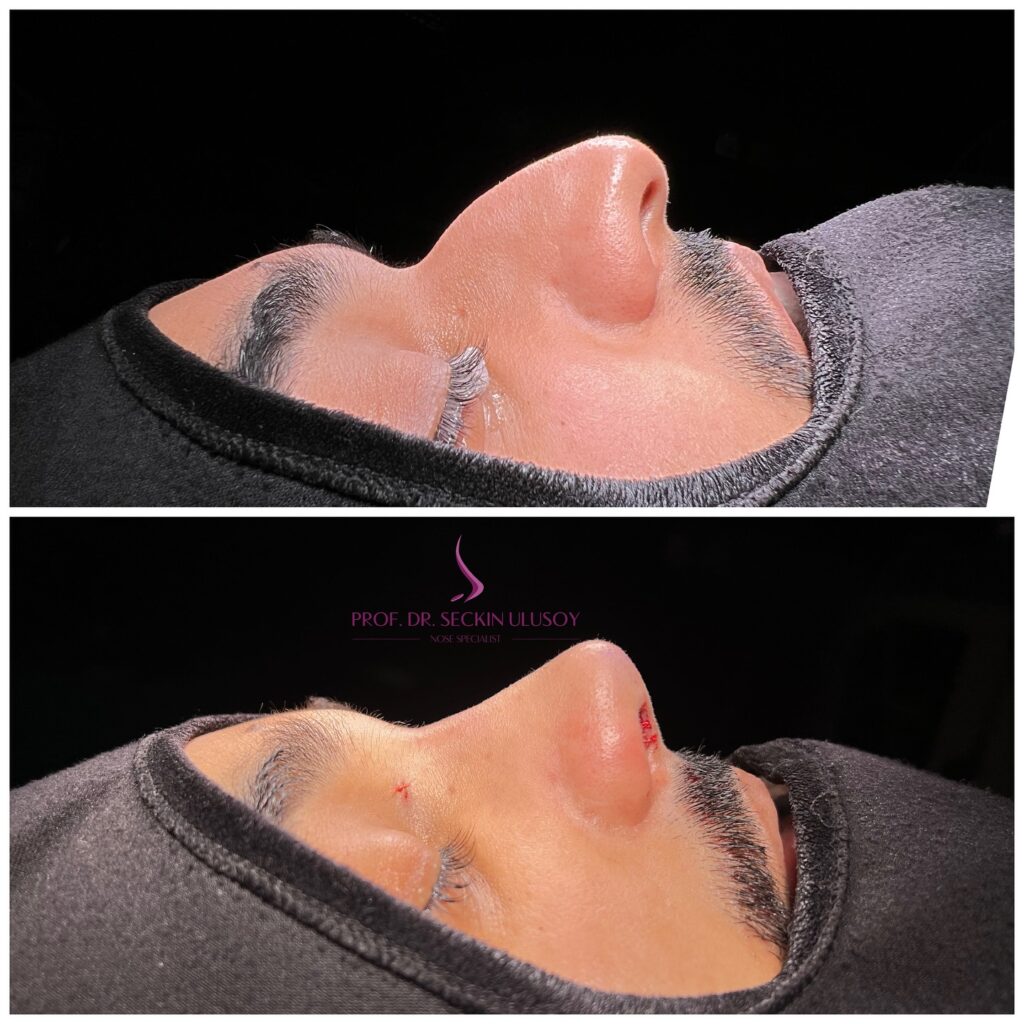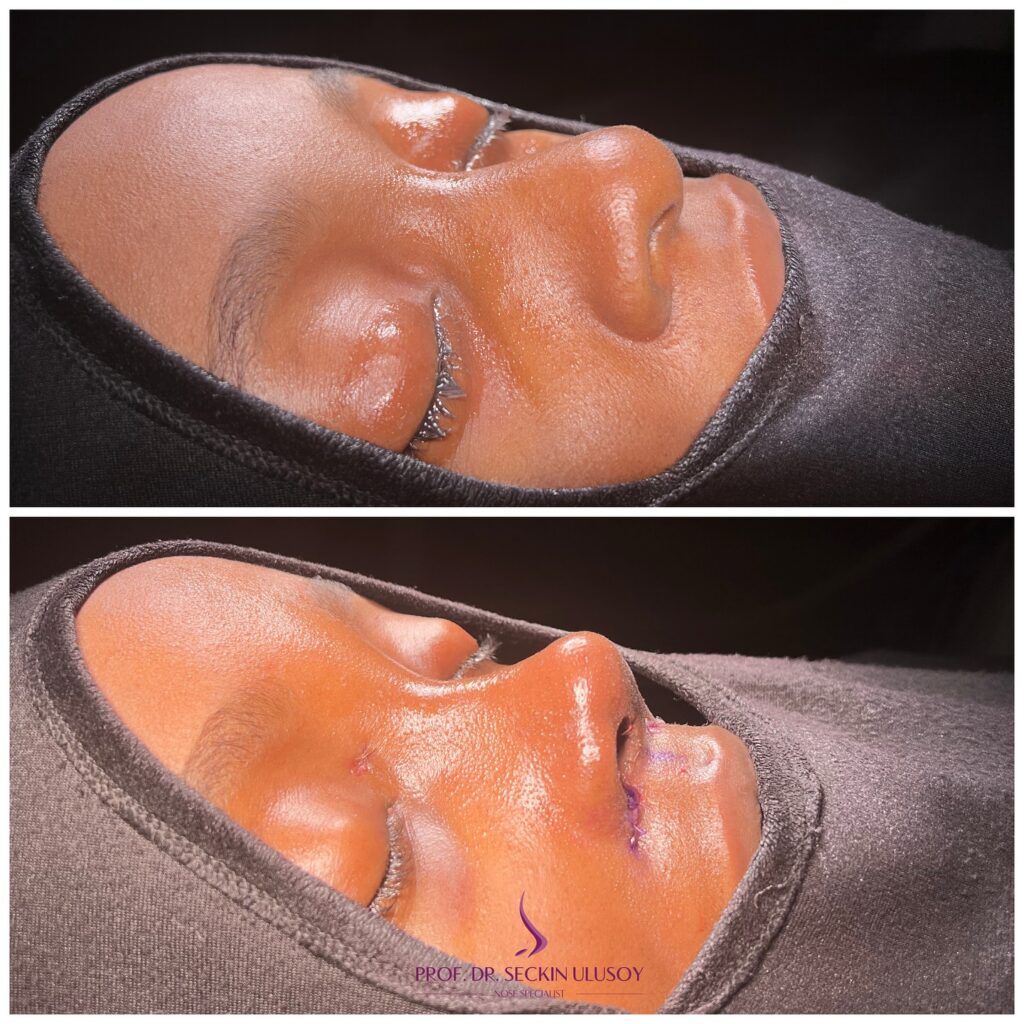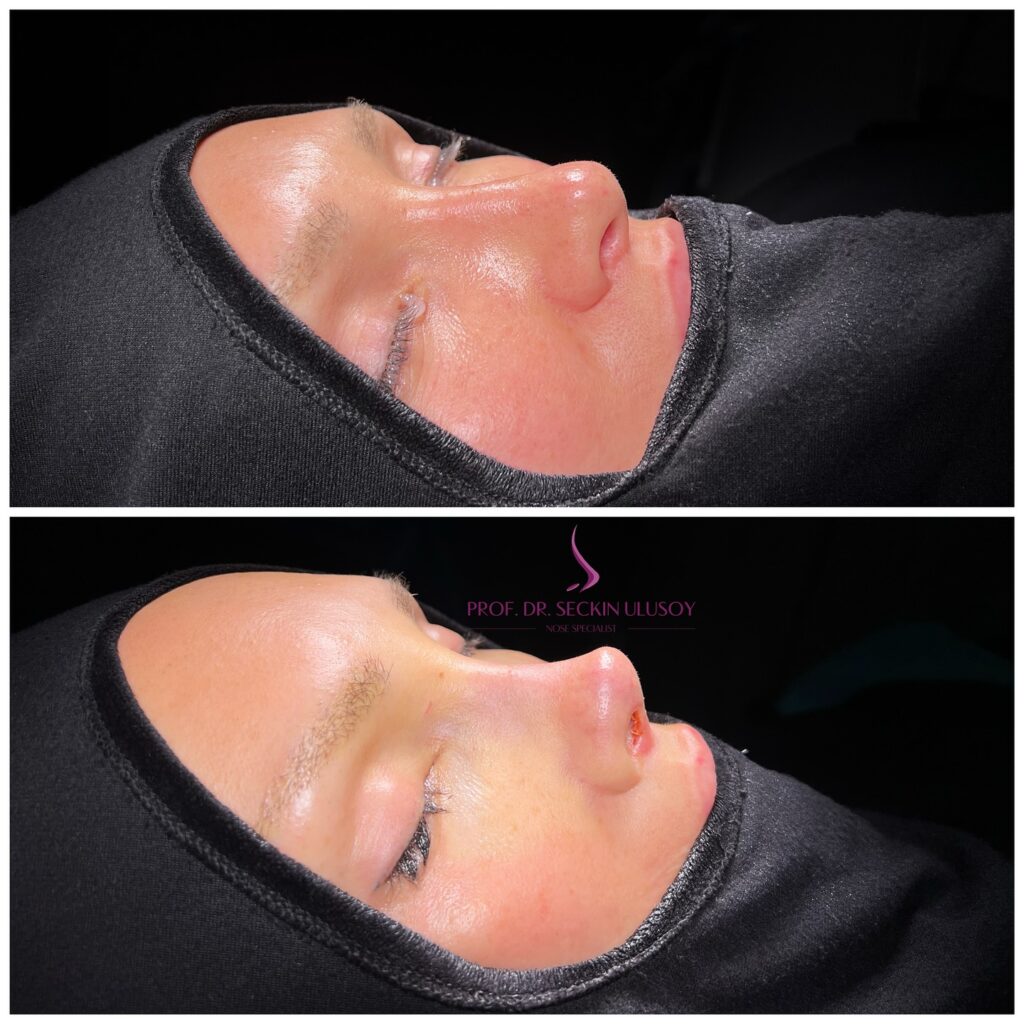
Endoscopic Lacrimal Sac Surgery:
The lacrimal sac and tear ducts carry the tears secreted by the lacrimal gland to the nasal cavity. Blockage of these ducts for various reasons causes the problem of watery eyes called “epiphora.” Blockage of these ducts for various reasons causes the problem of watery eyes called “epiphora.” The symptom in patients with blocked tear ducts is the continuous overflow of tears. This surgery is performed externally, endoscopically from the inside, and with laser methods. The external method is a classic operation that has been performed for approximately one hundred years (Toti surgery). However, with developments in technology, endoscopes have introduced the internal method as an option. In the method called “endoscopic endonasal dacryocystorhinostomy,” the inside of the nose is entered with telescopes 4 mm in diameter, and the nasal mucosa and bony wall are removed in an area where the lacrimal sac is in close proximity to the nasal cavity. With an incision made in the lacrimal sac, a new pathway is opened so that tears can drain into the nasal cavity. Silicone tubes are placed in the tear ducts to keep this new pathway open, and these tubes are kept there for approximately 2 – 6 months. You can contact us to obtain information about Endoscopic DCR.
Advantages of endoscopic surgery:
- Since no skin incision is made, there is no external surgical scar.
- Since only limited intervention is made to the lacrimal sac, the pump function of the sac is not impaired
- Patients can return home on the same day as the operation
- The duration of the surgery is very short
- Problems inside the nose such as cartilage, nasal turbinates, and sinusitis can also be treated
Frequently Asked Questions
What Is Endoscopic DCR (Lacrimal Sac Surgery)?
Endoscopic DCR (Dacryocystorhinostomy) is a surgical procedure performed using an endoscope through the nose to eliminate a blockage in the tear duct. The surgery aims to enable tears to flow into the nasal cavity again.
In Which Cases Is Endoscopic DCR Performed?
This method is preferred in cases of tear duct obstruction, persistent watery eyes, recurrent lacrimal sac infections, and cases that do not respond to medication treatment.
How Is Endoscopic DCR Performed?
The surgery is performed through the nose with the help of an endoscope. A new passageway is created between the lacrimal sac and the nasal cavity, allowing tears to flow naturally.
What Are the Advantages of Endoscopic DCR?
Since it is performed through the nose, it leaves no scar on the skin, causes less tissue trauma, and the recovery process is generally more comfortable.
How Long Does Endoscopic DCR Surgery Take?
Although the duration of the surgery varies according to the patient’s condition, it is generally completed within 30 to 60 minutes.
What Is the Recovery Process Like After Endoscopic DCR?
Patients can often return to their daily lives within a short time. Using the medications recommended by the doctor and performing regular nasal care support the recovery process.
Is the Success Rate of Endoscopic DCR High?
Yes, when performed by experienced surgeons, the success rate of Endoscopic DCR is quite high, and the complaint of watery eyes improves significantly in the majority of patients.
Is There Pain After Endoscopic DCR?
Mild pain or discomfort may generally occur after surgery. These complaints can usually be controlled with the prescribed medications.
Are There Risks of Endoscopic DCR?
As with every surgical procedure, there may be risks such as bleeding, infection, or recurrence of the blockage. However, these risks can be minimized with appropriate surgical technique and regular follow-up.
What Should Be Considered After Endoscopic DCR?
During the recovery period, movements that may strain the nose should be avoided, the medications recommended by the doctor should be used regularly, and follow-up appointments should not be neglected.