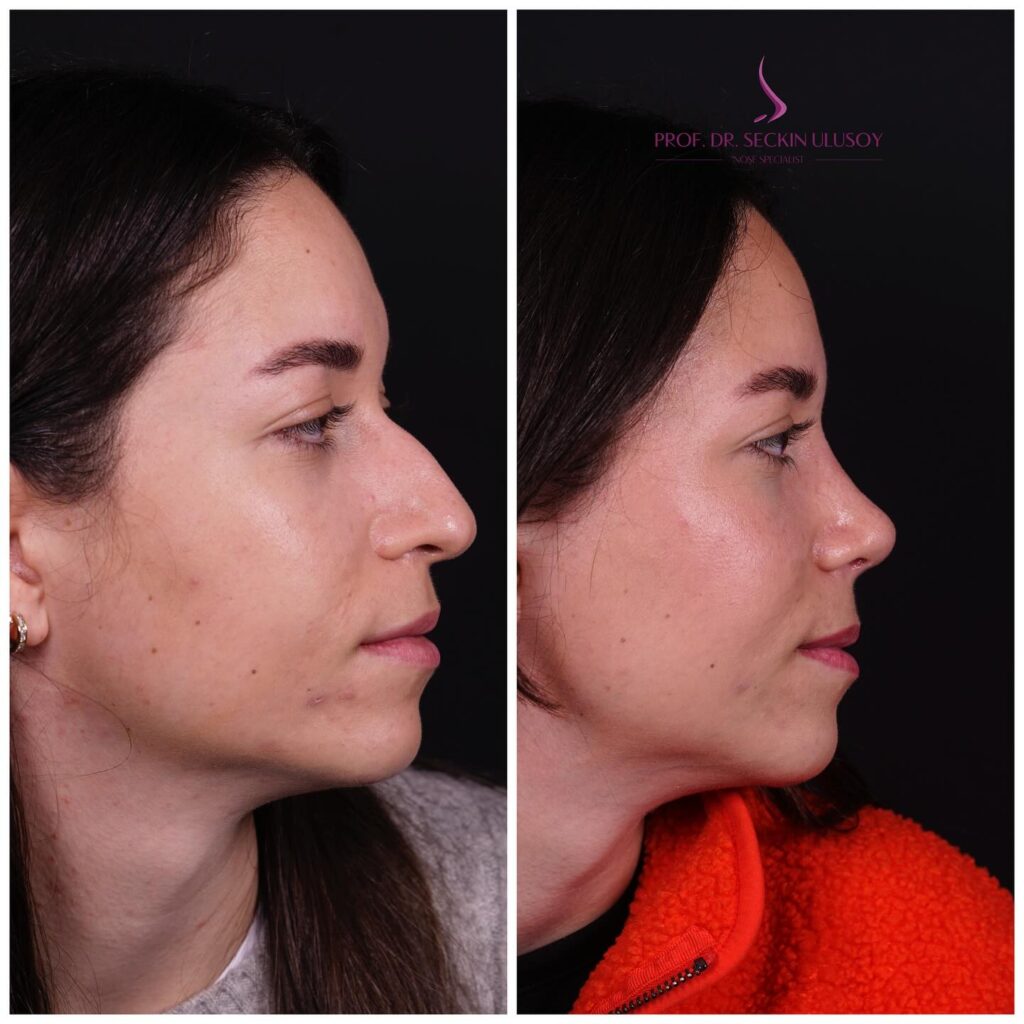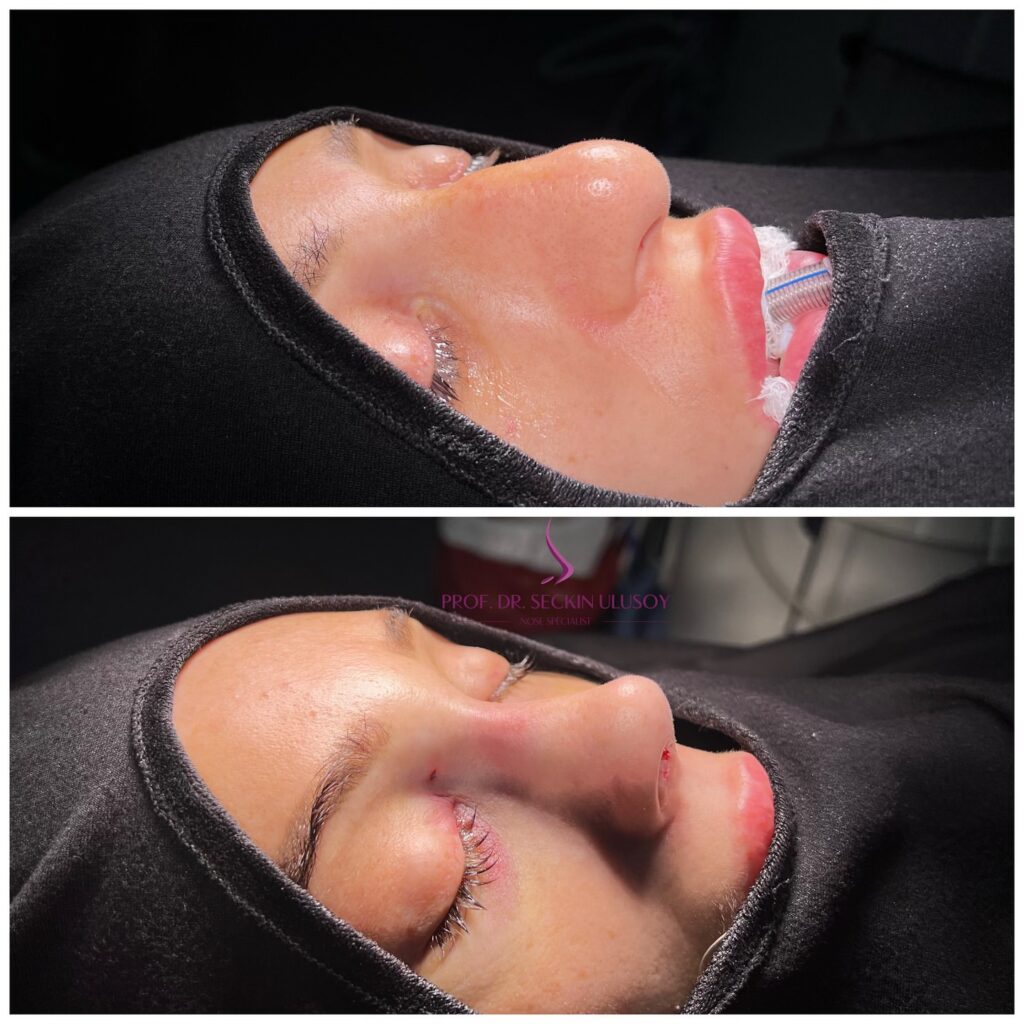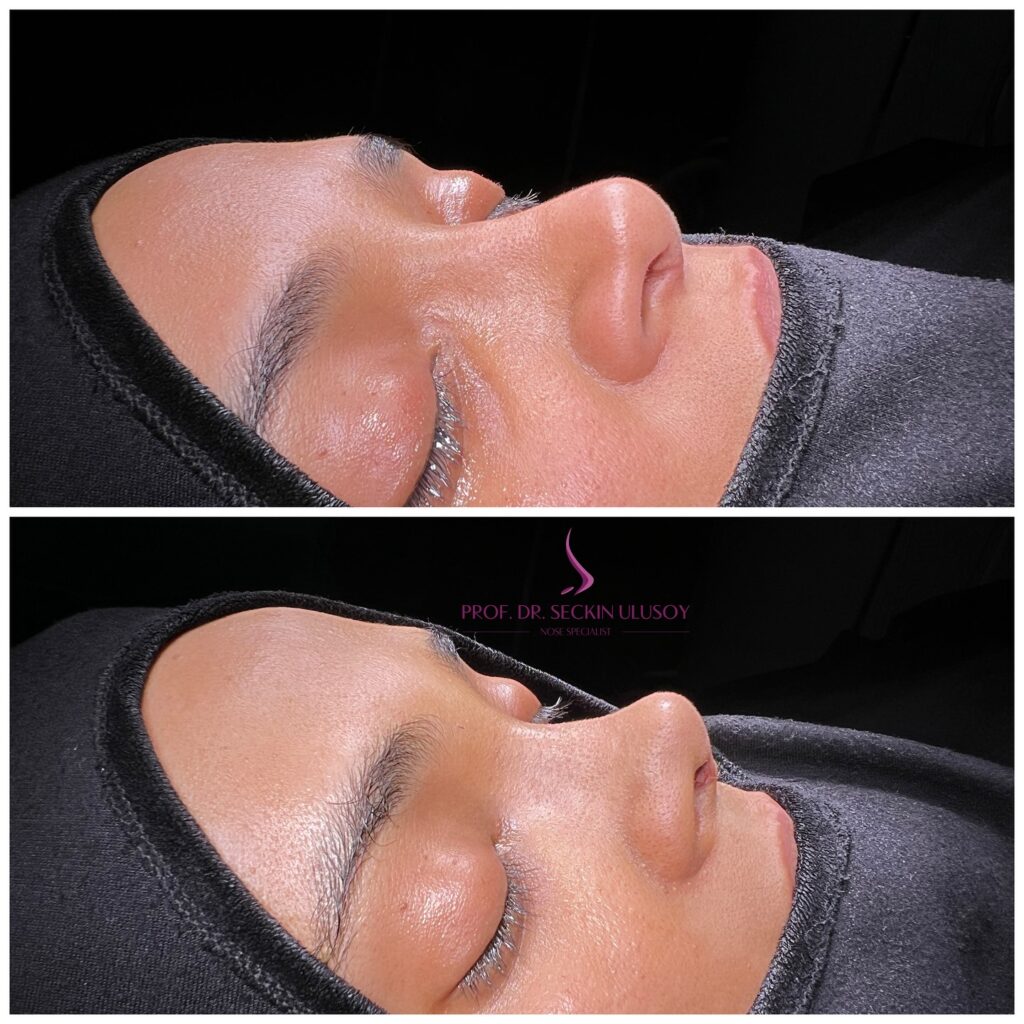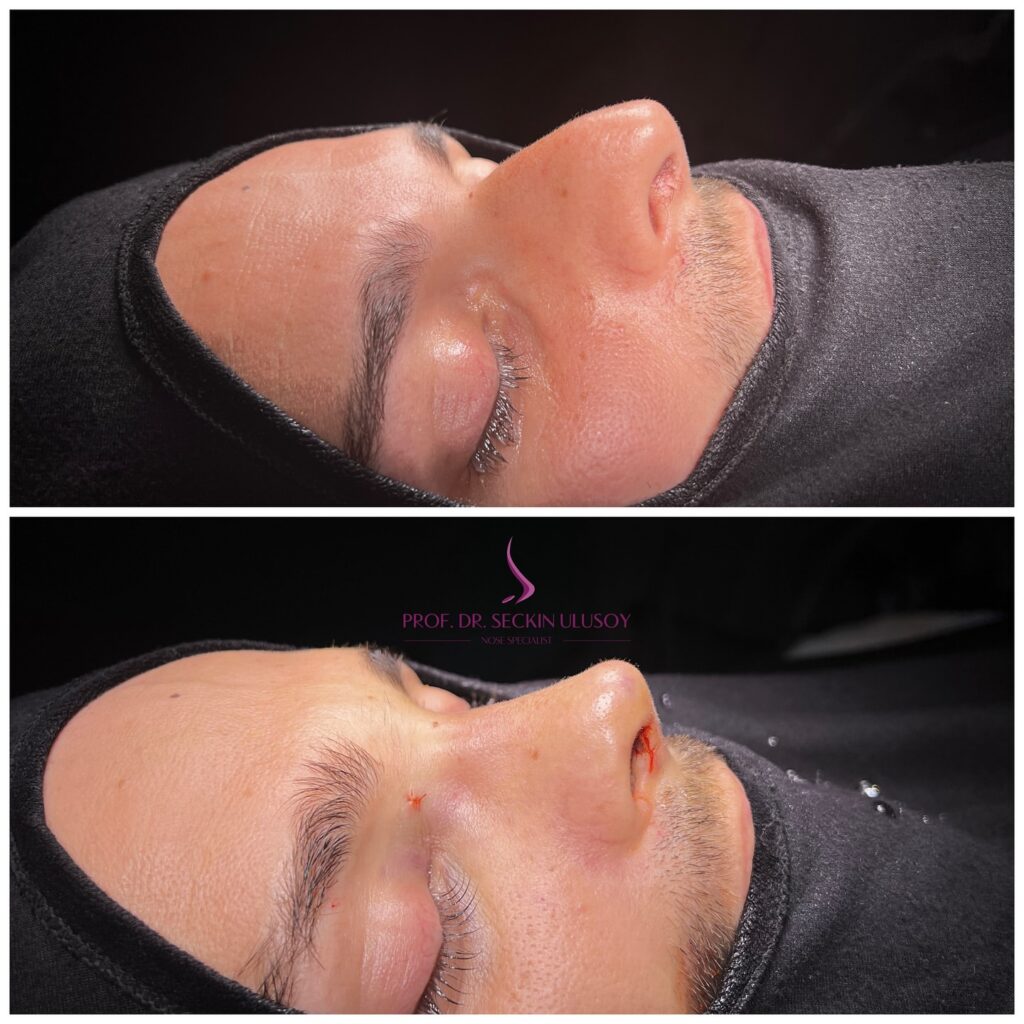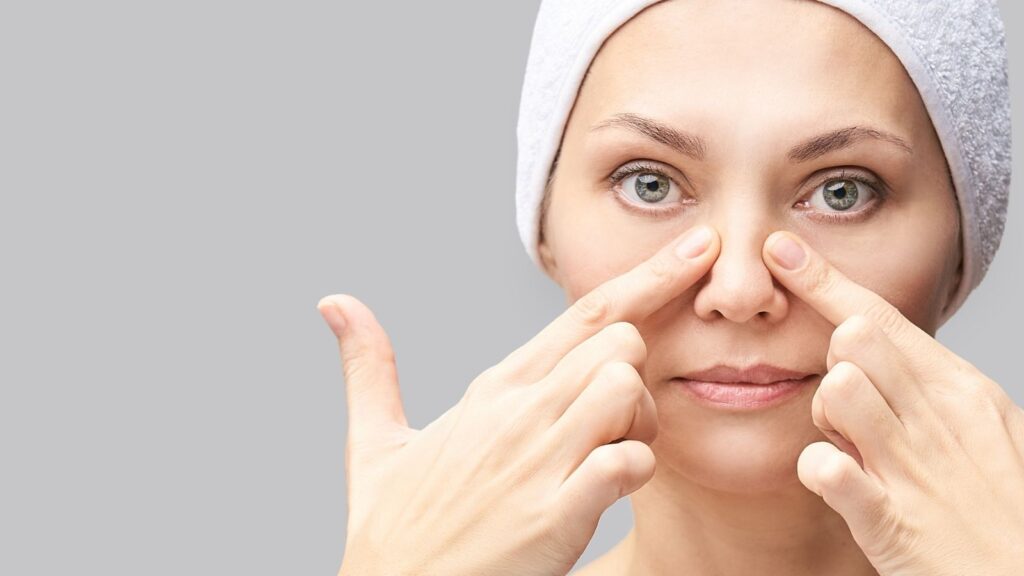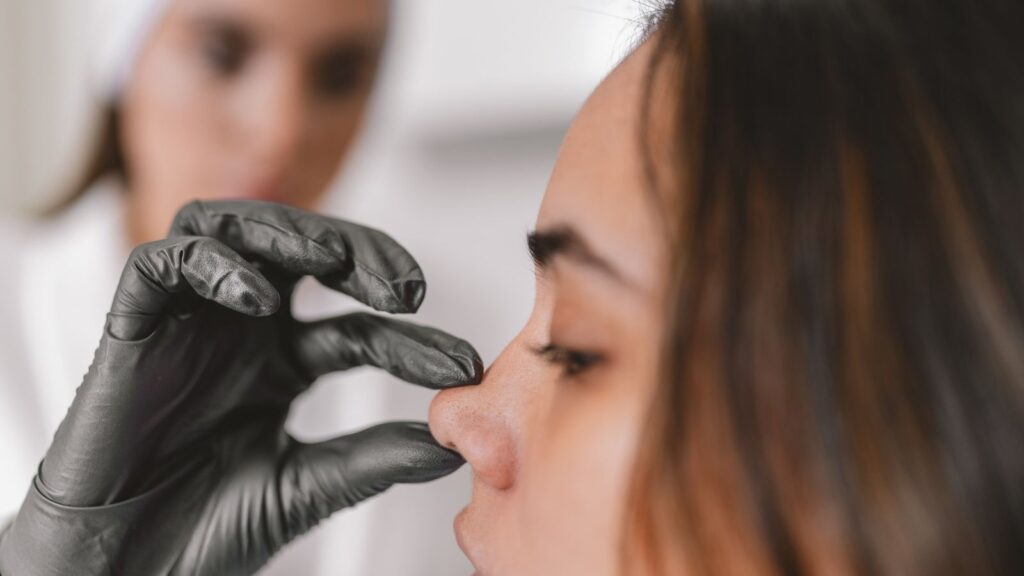
Nasal shaping devices, commercial products such as nose clips or clamps, do not have the ability to permanently alter the complex bone and cartilage framework of the nose; on the contrary, they are completely ineffective tools that can cause serious pathological damage to nasal tissues. Marketed as an effortless alternative to surgery, these devices act contrary to the biomechanical principles of human anatomy and apply only superficial and harmful pressure. Uncontrolled external force does not aesthetically correct the nose; instead, it disrupts tissue nutrition and may trigger irreversible health problems such as pressure necrosis. These methods, which have no scientific basis, directly harm the natural form of the nose and respiratory physiology rather than providing aesthetic improvement.
Do Nasal Shaping Products Sold Online Really Work?
The operating principle of these devices, which are sold very cheaply on digital platforms and claimed to create miraculous results, is based entirely on unscientific foundations. The human body, especially the facial region, is equipped with a flawless defense mechanism designed to preserve its integrity against external impacts, pressure, and compression. The tissues on our face are not simple modeling clay or inorganic plastic that takes shape when heated. They form a living ecosystem composed of continuously renewing cells, blood vessels, nerve networks, and very strong connective tissues. Therefore, it is biologically impossible for a product attached externally to the skin and working solely by compression to permanently redesign the deep and complex anatomical framework beneath the skin. Although these devices may create temporary contractions lasting seconds or minutes due to the displacement of fluids within the tissue while they are being used, the tissue returns to its original state very quickly. Moreover, during this return, many forms of cellular damage may already have begun because of the abnormal pressure applied.
What Is Cartilage Memory, the Greatest Obstacle to Nasal Shaping Clamps?
The most fundamental cellular reason why these products do not work is the remarkable biological property known in medicine as “cartilage memory.” The cartilages forming the lower half and tip of the nasal framework contain high amounts of collagen fibers and are covered by a highly nourishing, strong membrane called the “perichondrium.” The three-dimensional arrangement of collagen fibers gives cartilage the ability to behave like a high-quality spring or flexible steel. When weight or pressure is applied, it bends and appears to change shape; however, the moment that pressure is removed, it springs back to its former position with the tremendous repelling force created by its molecular bonds. When a clamp compressing the nasal tip is worn for hours, cellular water within the cartilage tissue shifts and the tissue is temporarily crushed. When you remove the clamp, your nose may look thinner in the mirror, but this is only an illusion. Within a few minutes, the tissue fills with fluid again, the collagen bonds tighten, and the cartilage returns to its genetically encoded original memory. Permanently changing the shape of cartilage requires erasing that memory, which can only be achieved by cutting and reshaping the cartilage with surgical instruments and suturing it again.
Is It Possible to Thin or Straighten the Nasal Bone with Plastic Nasal Shaping Clips?
Problems such as a hump, projection, or width on the nasal bridge originate directly from bone tissue. The nasal bones are an integral, extremely hard, and durable part of the skull. In an adult whose development and ossification process are complete, dissolving, filing, or narrowing bone tissue with low-intensity external mechanical pressure is contrary to the laws of physics. Just as you cannot shrink a stone by squeezing it with your hand, you cannot narrow your skull bone with a plastic clip. Bone cells, osteoblasts and osteoclasts, respond only to the body’s internal metabolic processes or to very severe trauma. Aesthetic bone reshaping necessarily requires the bone to be cut in a controlled manner with surgical instruments, repositioned by millimeters, and fixed at a new angle. Devices sold with promises such as “it gradually thins the bone” or “it flattens the hump” are dangerous commercial traps built entirely on false claims. The only effect these devices create on bone is to crush the thin skin over the bone against it, causing unbearable pain.
What Destructive Damage Can the Use of Nasal Shaping Devices Cause to Skin Tissue?
Unfortunately, the greatest price of using these uncontrolled devices in pursuit of an aesthetic dream is paid by the skin tissue. The skin over the nose, especially as it approaches the tip, becomes very thin, tight, and almost glued to the cartilage structure beneath it. Blood circulation in this region is provided by capillaries as thin as strands of hair. The moment you place a tight clamp on your nose, these tiny vessels are completely compressed and blocked. Fresh blood, and therefore oxygen and nutrients, cannot reach the tissues. When the cells begin to suffocate, the area first becomes red, then turns purple, and pain begins. If this pressure continues for a long time, a very frightening condition known in medicine as “pressure necrosis” develops. Skin cells deprived of oxygen begin to die rapidly. Irreversible blackened tissue, deep depressions, and non-healing wounds occur on the skin. There are countless people who, while dreaming only of a thinner nasal tip, suddenly experience permanent tissue loss and erosion of flesh at the tip of the nose.
What Mucosal Damage Is Caused by Nasal Lifting and Shaping Devices Placed Inside the Nostrils?
In addition to devices attached externally, hidden plastic rods are also sold that are placed inside the nostrils and attempt to lift the nasal tip upward from within like a tent. The level of danger posed by these products is entirely different. The inner surface of the nose is not as hard and durable as the external skin. It is covered with a tissue called the “mucosa,” which must remain constantly moist, is extremely thin, richly vascularized, and highly vulnerable to external effects. As these hard, low-quality plastic rods bend and move, they scratch this sensitive mucosa like razor blades. The mucosa tears, the vessels underneath become exposed, and serious chronic bleeding begins. Moreover, these open wounds provide an excellent breeding ground for bacteria inside the nose. Severe and painful intranasal infections develop within a very short time. There is also always a risk that these small devices may suddenly become dislodged, enter the airway through aspiration, and cause suffocation.
What Allergic Symptoms May Occur with the Use of Low-Quality Nasal Shaping Products?
These products are generally manufactured from cheap plastics, silicone, or industrial-grade rubber of uncertain content that have not undergone any medical or dermatological testing. Prolonged contact of these chemical materials with sensitive facial skin may trigger very serious dermatological reactions. Some allergic reactions that may occur include:
- Severe itching
- Skin redness
- Skin rash
- Flaking
- Blistering of the skin
- Burning sensation
- Skin thickening
- Dark discoloration
What Are the Definite Clinical Risks Caused by Different Nasal Shaping Devices Sold on the Market?
Although the design and targeted area of each product differ, the severity of the damage they cause to the human body is shared. The most common types of products on the market and the definite medical risks they directly cause are as follows:
- Cartilage crushing
- Skin necrosis
- Breathing difficulty
- Mucosal tearing
- Nosebleeds
- Local infection
- Foreign body aspiration
- Allergic contact dermatitis
- Permanent skin irritation
- Bone fracture
- Permanent asymmetry
- Tissue inflammation
For What Actual Purpose Is the Only Medically Approved Nasal Shaping Device in the Medical Literature Used?
There is only one medical product known in the medical community as a “nasal shaper” (Nostril Retainer) whose use is approved by specialists. However, the purpose of this product is definitely not to beautify a healthy and natural nose, eliminate a hump, or lift the tip. The purposes of these special silicone tubes are as follows:
- Supporting operated cartilage
- Protecting sutures
- Preventing wound contraction
- Keeping the airway open
- Controlling edema
- Preventing nostril asymmetry
- Ensuring that tissues heal at the correct angle
What Are the Real Surgical Solutions That Should Be Preferred Instead of Fake Nasal Shaping Products?
If you desire a permanent, healthy, and aesthetically natural change that is harmonious with your face, the solution is not to rely on plastic devices but to turn to reliable surgical methods offered by modern medical science. Today, technology has advanced to such an extent that completely individualized surgical plans can be made according to the patient’s anatomical structure, skin thickness, and breathing problems. The main scientific and modern techniques used in this process are as follows:
- Ultrasonic rhinoplasty
- Preservation rhinoplasty
- Closed rhinoplasty
- Open rhinoplasty
- Tipplasty
- Revision rhinoplasty
- Functional rhinoplasty
- Septorhinoplasty
How Does the Ultrasonic Piezo Method Provide the Natural Result That Nasal Shaping Tapes Promise but Cannot Deliver?
In the past, shaping the bones on the nasal bridge was performed using traumatic instruments such as chisels and hammers, which caused significant bruising and swelling in patients. Sellers of shaping tapes or clips also exploit people’s fear of surgery to market their products. However, today, thanks to ultrasonic devices called “Piezo,” all of these fears have become a thing of the past. Instead of breaking the bones, Piezo technology uses high-frequency sound waves to cut and shape bone tissue delicately at the microscopic level, much like a sculptor carving marble. The greatest advantage of this device is that it is sensitive only to hard bone tissue. Even if it accidentally comes into contact with cartilage, nerves, or blood vessels, it does not cut or damage them. Because the surrounding tissues are protected so well, postoperative bruising is almost nonexistent in patients, and swelling subsides very quickly. Since the bones are shaped with millimetric precision, the resulting aesthetic outcome is flawless, smooth, and permanent to a degree that no plastic clamp could ever achieve.
How Is the Preservation Rhinoplasty Technique Applied Without the Need for Nasal Shaping Clamps?
One of the most revolutionary surgical approaches of recent years is “Preservation Rhinoplasty.” In traditional methods, when the hump on the nasal bridge was removed, the natural roof of the nose was completely disrupted, and an attempt was then made to reconstruct a new roof using cartilage and bone. The preservation technique is based on an entirely different philosophy. In this method, the naturally smooth and even upper dorsum of the nose is left untouched. Instead, the underlying foundational structure that causes the problem is addressed. Small strips of tissue are removed from the cartilage and bone walls beneath the nose. Since tissue is reduced from below, the preserved natural nasal bridge descends as a whole, like an elevator. In this way, the hump disappears, while the nose’s light reflections and the natural integrity beneath the skin remain completely intact. Once the patient has healed, no one looking from the outside can tell that the nose has been operated on. This method, which preserves naturalness at the highest level, provides a definitive and artistic solution instead of wasting effort with fake devices.
How Is Nasal Tip Drooping Targeted by Nasal Shaping Devices Corrected with Tipplasty?
Many people have no problem at all with their nasal bones; their only complaint is that the nasal tip is wide, bulbous, drooping, or falls downward when they smile. Plastic lifting devices exploit the hopes of precisely this group. However, the only scientific way to permanently and aesthetically correct these cartilage deformities at the nasal tip is “Tipplasty,” meaning nasal tip surgery alone. This surgery is much lighter than other methods because the bones are not involved. No bone breaking, filing, or sound wave procedure is performed. The focus is entirely on the alar cartilages at the nasal tip. Weak connections between the cartilages are strengthened with special medical sutures, excess bulky tissue is gently removed, and the cartilages are repositioned and fixed upward. Since the bones are not touched, bruising does not occur on the face, and the patient returns to daily life very quickly. The problem of nasal tip drooping is permanently resolved so that it does not recur, and the entire tired expression of the face is instantly brightened.
Are Nasal Shaping Filler Procedures Really Effective for Those Seeking a Non-Surgical Solution?
If the deformity in your nose is not very significant, if you are hesitant about undergoing surgery, or if you do not have time for a recovery period, there is a genuine non-surgical alternative offered by medicine: Liquid Rhinoplasty performed with hyaluronic acid-based dermal fillers. However, this is not something you can do by yourself at home; it is a serious medical procedure that must be performed in a clinical setting by a specialist physician with a thorough knowledge of anatomy. Filler treatment cannot make the nose smaller or remove bone; its purpose is to create a kind of optical illusion and provide “camouflage.” For example, if there is a small hump on the nasal bridge, millimetric filler injections can be made immediately above and below the hump to create a completely straight nasal profile. Alternatively, a small injection at the nasal tip may support and lift it upward. The procedure takes only 15-20 minutes, and the result is visible in the mirror immediately. Depending on the body’s structure, it lasts between 8 and 12 months and can be safely repeated once its effect wears off.
What Possible Medical Complications May Be Encountered in Nasal Shaping Filler Applications?
Although liquid rhinoplasty is a practical and scalpel-free procedure, it carries serious risks because of the incredibly dense and complex vascular network in the nasal region. Therefore, it must never be performed by unauthorized individuals or in environments such as hair salons or beauty centers. Complications that may occur as a result of an incorrect filler injection include:
- Vascular occlusion
- Skin tissue necrosis
- Temporary or permanent blindness
- Asymmetrical appearance
- Severe tissue edema
- Persistent bruising
- Chronic infection
- Filler migration
- Allergic reaction
- Circulatory impairment