Skin thickness in rhinoplasty is one of the factors that directly affects the outcome of the surgery. While thin skin clearly reveals the changes made, thick skin may make the results more difficult to become apparent. Therefore, the surgeon’s approach differs according to the skin structure.
In thin-skinned rhinoplasty, even the smallest changes in shape can be noticed from the outside. Although this provides an advantage, it may also be a disadvantage because millimetric imperfections can become visible. It is important for the surgeon to work with precision and meticulousness.
In thick-skinned rhinoplasty, changes beneath the skin become apparent later, and the resolution of swelling may take a long time. Patience and proper expectation management play a critical role in such patients. The final result usually becomes apparent months later.
Evaluating the skin structure in rhinoplasty is one of the most important stages of preoperative planning. Applying techniques suitable for the patient’s skin thickness helps achieve a natural and balanced appearance.
What Is a Thin- and Thick-Skinned Nose?
A Thin- and Thick-Skinned Nose refers to the classification made according to the thickness of the nasal skin. While the bone and cartilage structures appear more prominent in thin-skinned noses, details are less noticeable in thick-skinned noses.
Both skin types require different approaches when planning aesthetic nose surgery:
Thin-Skinned Nose:
A thin-skinned nose is a type of nose in which the skin layer over the nose is thin and the underlying bone and cartilage structures can be seen clearly. Although it may appear advantageous from an aesthetic surgery perspective, there is a risk that irregularities may become more noticeable after the procedures performed. Therefore, surgical planning should be carried out meticulously, and precise techniques should be used, especially when shaping the bone and cartilage.
Thick-Skinned Nose:
A thick-skinned nose is a type of nose in which the nasal skin is structurally denser, oilier, and thicker. In this skin structure, the underlying bone and cartilage details are less prominent. It is common for swelling to subside more slowly and for the results to appear later after aesthetic surgery. The nasal tip usually appears wide and rounded; therefore, surgical techniques should be specially planned to support the subcutaneous structure.
What Is the Importance of the Skin in Rhinoplasty and What Does This “Skin Envelope” Mean?
We can compare rhinoplasty surgery to creating a sculpture. The surgeon carefully sculpts the underlying bone and cartilage framework to create a new form. However, there is a “covering” that covers this sculpture and presents its final appearance to the world. In medical terminology, we call this the “skin-soft tissue envelope” (S-STE). This envelope is not merely a passive covering; on the contrary, it is a dynamic structure that is alive, breathes, and responds to surgery with its own characteristics.
We can simply think of the layers of this envelope as follows:
- At the top is the visible surface of the skin (epidermis).
- Immediately beneath it is the dermis, which determines the thickness and quality of the skin.
- Deeper down are fatty tissue, thin muscles, and connective tissues involved in nasal expressions.
Although surgical techniques focused more on the skeletal structure in the past, the modern understanding of rhinoplasty clearly accepts the following: No matter how perfect the underlying framework is, the quality of the skin determines how much of this perfection will be reflected externally. While thick skin may conceal the fine details underneath, thin skin may reveal even the slightest irregularity. The skin’s responses during the healing process—such as how much it will swell, how much scar tissue it will produce, and how it will adapt to the new framework—are the final brushstrokes that define the ultimate shape of the nose. Therefore, the surgical plan should fundamentally differ according to the patient’s skin type. This means understanding how the most aesthetic and natural result can be achieved within the limits of your own biological structure, rather than simply “wanting a new nose.”
How Is Skin Thickness Evaluated Before Surgery?
During the first consultation with a patient, the foundations of a successful surgical plan are laid. One of the most important steps in this process is accurately analyzing skin thickness. This analysis includes both experience-based observation and objective data provided by modern technology.
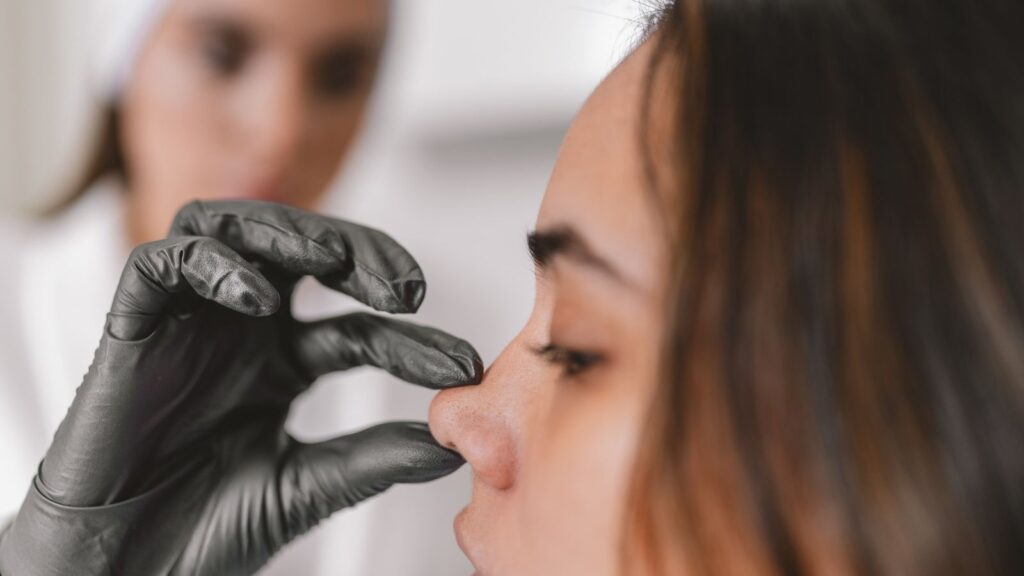
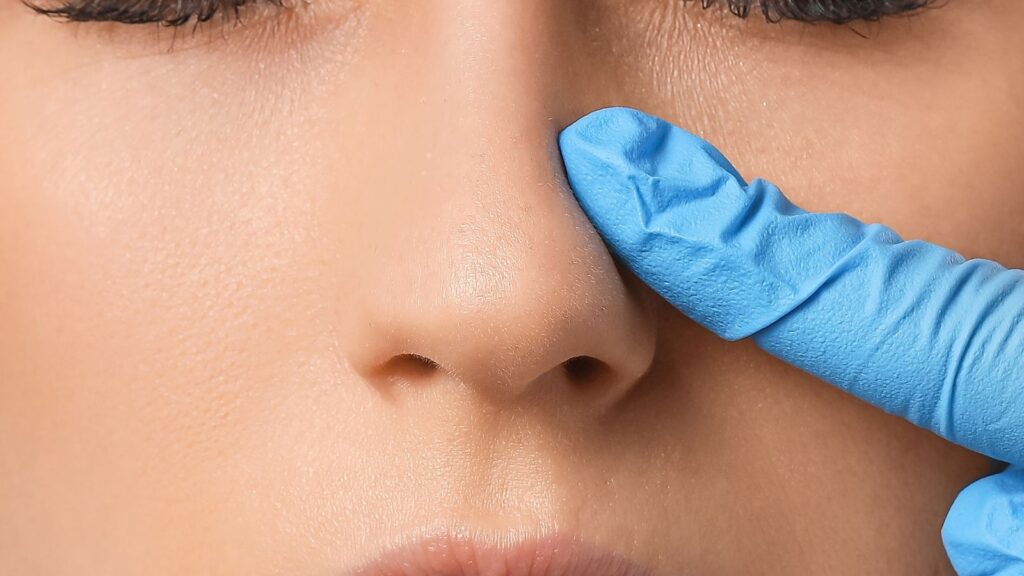
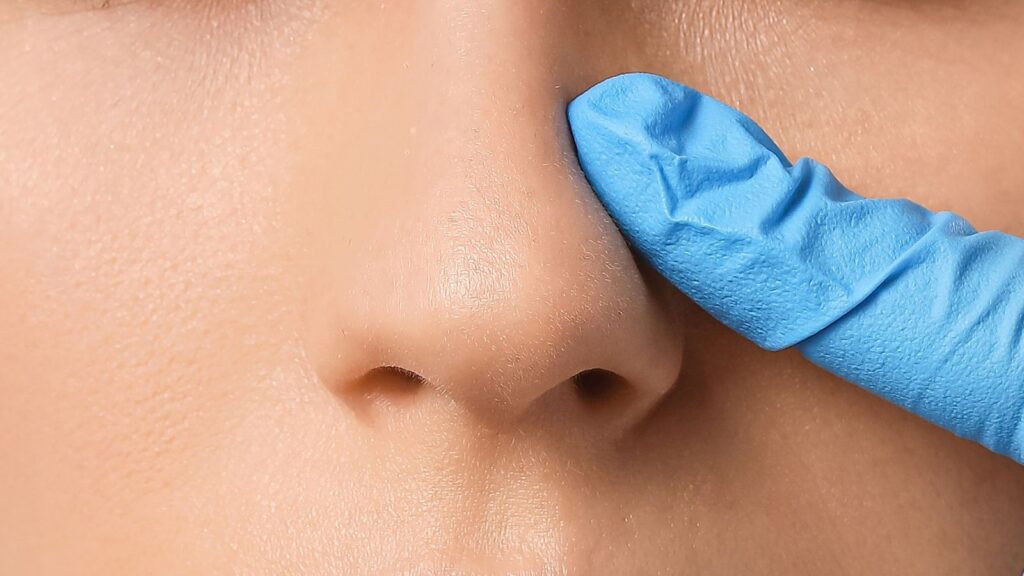
The evaluation generally begins with a manual examination. In the method known as the “pinch test,” the nasal skin is gently pinched between two fingers to assess its thickness, oiliness, and elasticity. This simple touch provides invaluable information about the character of the skin. In addition, there are also some visual clues regarding the skin structure.
For example, some common features indicating thick skin are as follows:
- An oily and shiny skin surface
- Enlarged pores
- Prominent small blood vessels on the skin surface (telangiectasias)
- Generally a darker skin tone
In contrast, signs suggesting thin skin are generally as follows:
- Prominent contours and edges of the underlying cartilage
- Presence of freckles
- Generally a lighter skin tone
Of course, factors such as gender and ethnic background also play a role in this evaluation. Men’s nasal skin is generally thicker than women’s. Similarly, while thicker and oilier skin is common in some ethnic backgrounds, such as African, Hispanic, or Asian populations, thinner skin is frequently seen in people of Northern European origin.
However, there is no room for guesswork in today’s modern rhinoplasty approach. It is best to support the assessment of an experienced eye with scientific data. Imaging methods such as high-resolution ultrasound allow us to measure skin thickness at critical points such as the nasal bridge and nasal tip in fractions of a millimeter. This enables the surgeon to offer you a clear and concrete plan such as, “The skin thickness at your nasal tip was measured as 2.8 mm, which falls into the thick-skin category. Therefore, the strategy that will provide the best result for you will be to support the nose internally with strong cartilage,” instead of saying, “Your skin appears thick.” This detailed diagnostic process maximizes the chance of success by increasing the predictability and safety of the surgery.
What Are the Advantages and Challenges of Thin-Skinned Rhinoplasty Surgery?
Performing rhinoplasty in patients with thin skin requires an extremely delicate balance. The greatest advantage of thin skin is its transparency. Like a display window, it clearly reveals even the most delicate and subtle changes made to the underlying framework. This feature allows the surgeon to create highly detailed, sharply defined, and refined results. In addition, the recovery process is generally faster and more comfortable; postoperative swelling and bruising are less pronounced.
However, this transparency is also the greatest challenge: Thin skin is unforgiving. We can compare it to a thin silk sheet spread over a bed. Even the slightest bump or wrinkle beneath the sheet immediately becomes visible from the outside. Similarly, thin skin may mercilessly reveal even the smallest asymmetry or irregularity in the underlying framework or the edge of a cartilage patch (graft) used during surgery. This requires the surgeon to work with the meticulousness of a sculptor and produce a nearly flawless result. Otherwise, there is a risk of creating an artificial or “operated” appearance, as though the nose has been pinched with a clothespin.
To overcome these challenges, the surgical philosophy is based on two fundamental principles: precise shaping and intelligent camouflage. The first step is to make the underlying bone and cartilage framework as smooth and symmetrical as possible. However, because it is impossible to guarantee absolute smoothness in living tissue, the second and more critical step, “camouflage,” comes into play. The surgeon places certain materials between the framework and the thin skin to act as a softening “inner lining.” This is like a biological insurance policy that conceals possible irregularities.
Some camouflage materials used for this purpose are as follows:
- Temporalis fascia (a thin membrane taken from the temple muscle)
- Diced cartilage grafts (the patient’s own cartilage turned into a paste-like form)
- Perichondrium (cartilage membrane)
- Fat grafts
During the healing process, the issue that thin-skinned patients should pay the most attention to is the sun. Nasal skin that becomes sensitive after surgery is vulnerable to UV rays. Intense sun exposure may lead to permanent discoloration (hyperpigmentation). Therefore, using high-factor sunscreen and wearing a hat are vitally important for protecting the beautiful result achieved.
Why Is Thick-Skinned Rhinoplasty Surgery More Different and Difficult?
The only advantage of thick skin in rhinoplasty is that it conceals minor imperfections. Like a thick quilt, it covers and camouflages small irregularities in the underlying framework. However, the cost of this advantage is significant challenges and the need for a different approach for both the surgeon and the patient.
Thick, heavy, and generally oily nasal skin masks the delicate details and sharp contours created by the surgeon underneath. Achieving a refined and well-defined result, especially at the nasal tip, is quite difficult due to this “covering” nature of thick skin. The refinements created by the surgeon tend to disappear beneath the thick skin.
However, the real challenge begins during the healing process. Thick skin is prone to much more pronounced and prolonged postoperative swelling (edema). This swelling may last for months, or even 1-2 years or longer. This persistent swelling creates a “dead space” between the skin and the reshaped framework. The body produces dense and firm scar tissue (fibrosis) to fill this space. This condition may cause undesirable fullness, especially in the area where the nasal tip meets the bridge, resulting in a rounded, poorly defined, and aesthetically unappealing appearance known as “pollybeak deformity” (parrot-beak nose). This is the most common reason for revision surgery in thick-skinned patients and the complication that should be avoided most.
Why Is “Structural Rhinoplasty” Preferred in Thick-Skinned Noses?
In the past, large amounts of cartilage were removed to make thick-skinned noses smaller. However, this approach further weakened the support beneath the already heavy skin, resulting in more dead space and a more shapeless, “ball-like” nasal tip. Modern surgical philosophy has learned from this mistake and adopted the exact opposite strategy, known as “structural rhinoplasty.”
The secret lies here: Since our skin is thick and heavy, we must build an internal framework strong enough to carry it and force it into a new shape. We can compare this to using thicker and stronger tent poles to stretch a large and heavy tarpaulin. Instead of reducing the nose, the surgeon strategically strengthens and redefines the framework using strong cartilage pieces (grafts) taken from the patient’s own body, usually from the nasal septum, ear, or rib.
Some fundamental structural grafts used in this technique are as follows:
- Columellar strut (strengthens the support between the nostrils)
- Tip grafts (shape and elevate the nasal tip)
- Septal extension grafts (project and support the nasal tip)
This strong cartilage framework stretches the heavy skin like a tent, giving it a more elegant, refined, and well-defined contour. This approach is the key to achieving natural and lasting results in thick-skinned patients over the long term.
How Should Surgery Be Managed for Thick-Skinned Patients?
Successfully managing a thick-skinned nose is more like a long-term “project” requiring patience and cooperation between the surgeon and the patient than a single-session operation. This project begins before surgery and continues for months afterward.
Preoperative Skin Preparation: Approximately 4-6 weeks before surgery, a preparation process may be recommended to reduce the skin’s oil production and improve its quality. Some methods that may be used during this process are as follows:
- Creams containing a vitamin A derivative (tretinoin)
- Salicylic acid-based cleansers
- Very low-dose oral isotretinoin use under medical supervision
Postoperative Management: Proactively managing the healing process is critically important for the quality of the result. The aim is to keep swelling under control and prevent excessive scar tissue formation. Our aids during this process are as follows:
- Long-term taping and splint use
- Special massage techniques taught by the surgeon
- Steroid or 5-FU injections to prevent excessive scar tissue
This holistic approach requires the patient’s active participation in the process. The patient’s compliance with preoperative and postoperative care instructions and having realistic expectations that this process will take a long time are just as important as the surgeon’s skill. For thick-skinned patients, the key word in recovery is patience. The final result emerges over 1.5-2 years, or sometimes even longer, as the swelling at the nasal tip subsides and the skin settles onto its new framework.
What Are the Risks of Rhinoplasty According to Skin Type?
Like every surgical procedure, rhinoplasty has general risks. However, your skin type directly affects certain specific aesthetic risks you may encounter. The task of an expert surgeon is not only to create a beautiful nose but also to anticipate and proactively manage these individualized risks.
Potential Risks Specific to Thin Skin:
- Even the smallest irregularity or asymmetry in the underlying framework becoming visible
- The edges of the cartilage grafts used becoming noticeable over time
- The skin adhering excessively to the framework and creating an artificial, “vacuum-sealed” appearance (shrink-wrap effect)
- Impairment of the skin’s blood circulation, although very rare (skin necrosis)
Potential Risks Specific to Thick Skin:
- Persistent and severe swelling lasting for months or even years
- Uncontrolled and firm scar tissue (fibrosis) accumulating between the skin and framework
- Development of the previously mentioned “pollybeak deformity”
- Failure to achieve the expected definition, especially at the nasal tip, leaving a rounded appearance
Knowing these risks is important not to create fear but to understand how they can be managed with the correct strategies. While risk management in thin skin is based on “flawless craftsmanship and camouflage,” in thick skin it is based on “strong support and long-term monitoring of the healing process.”