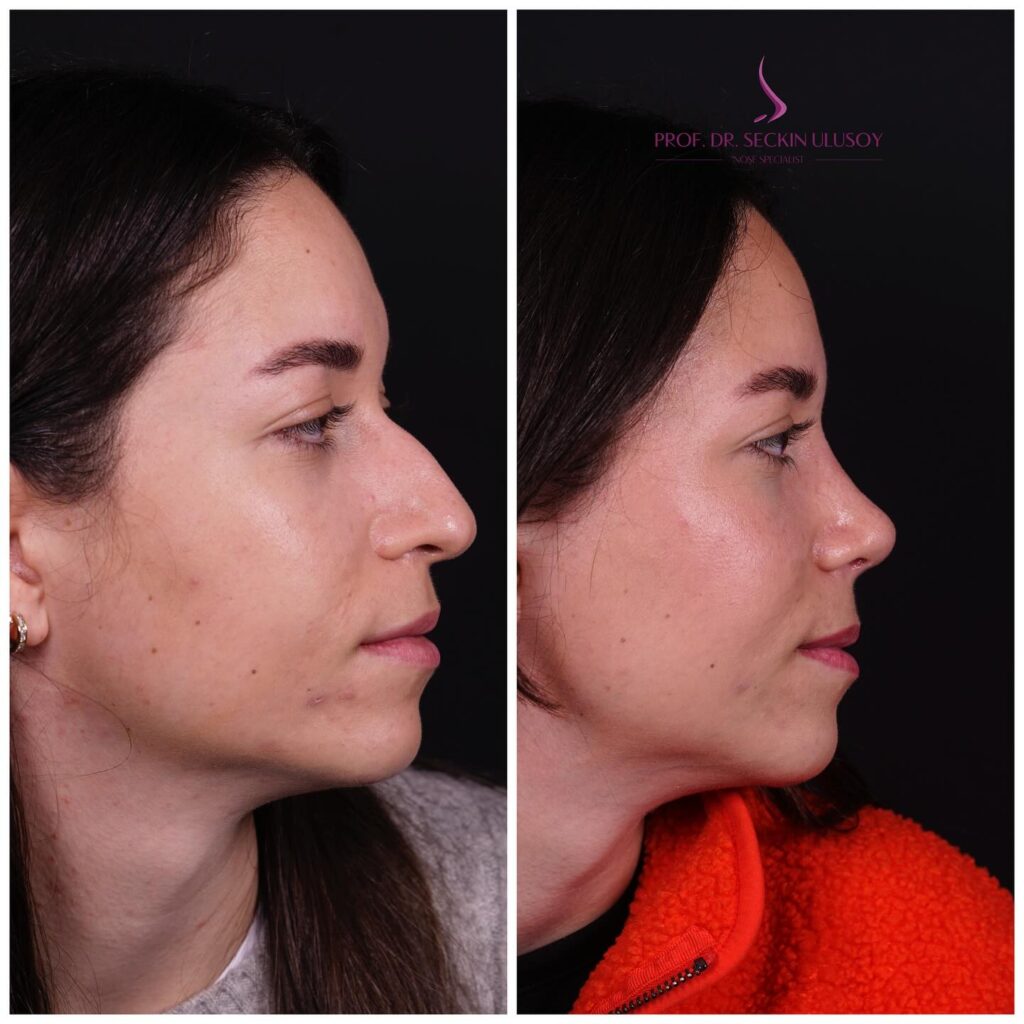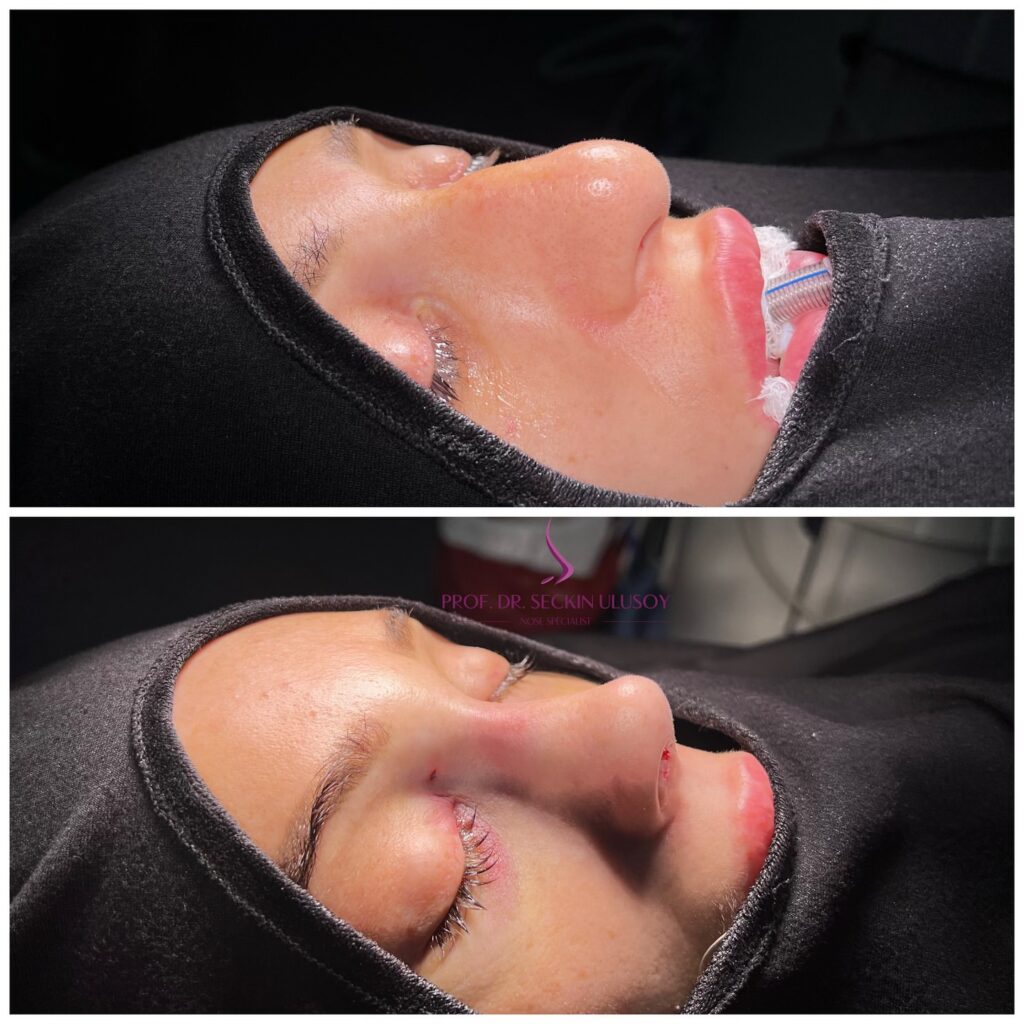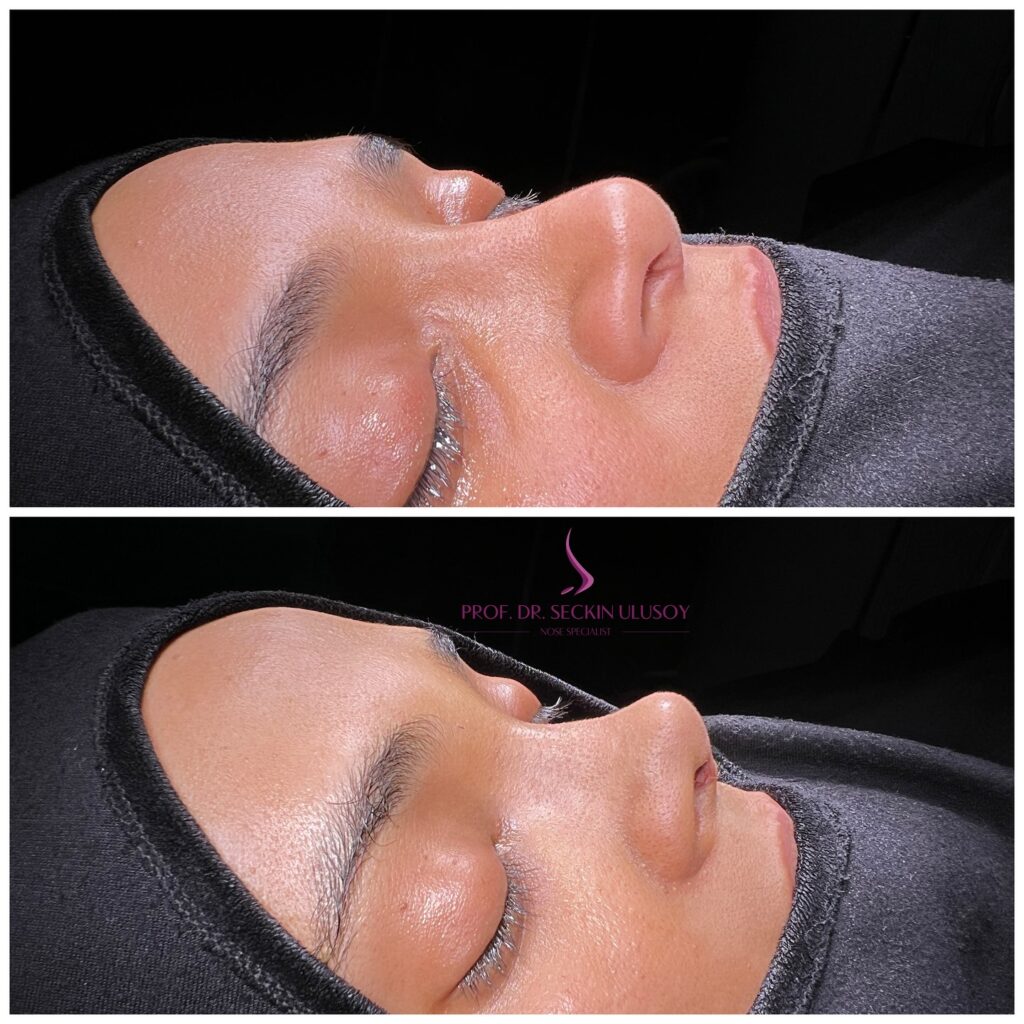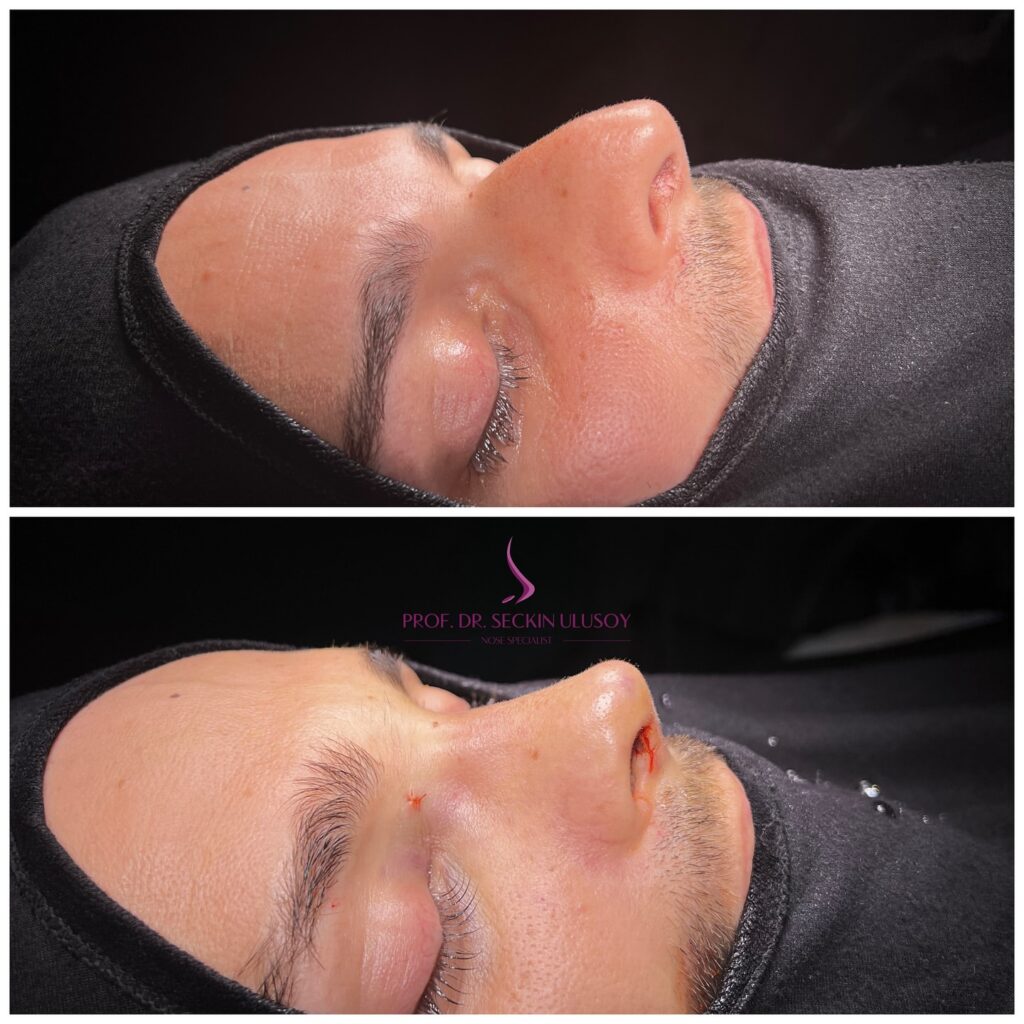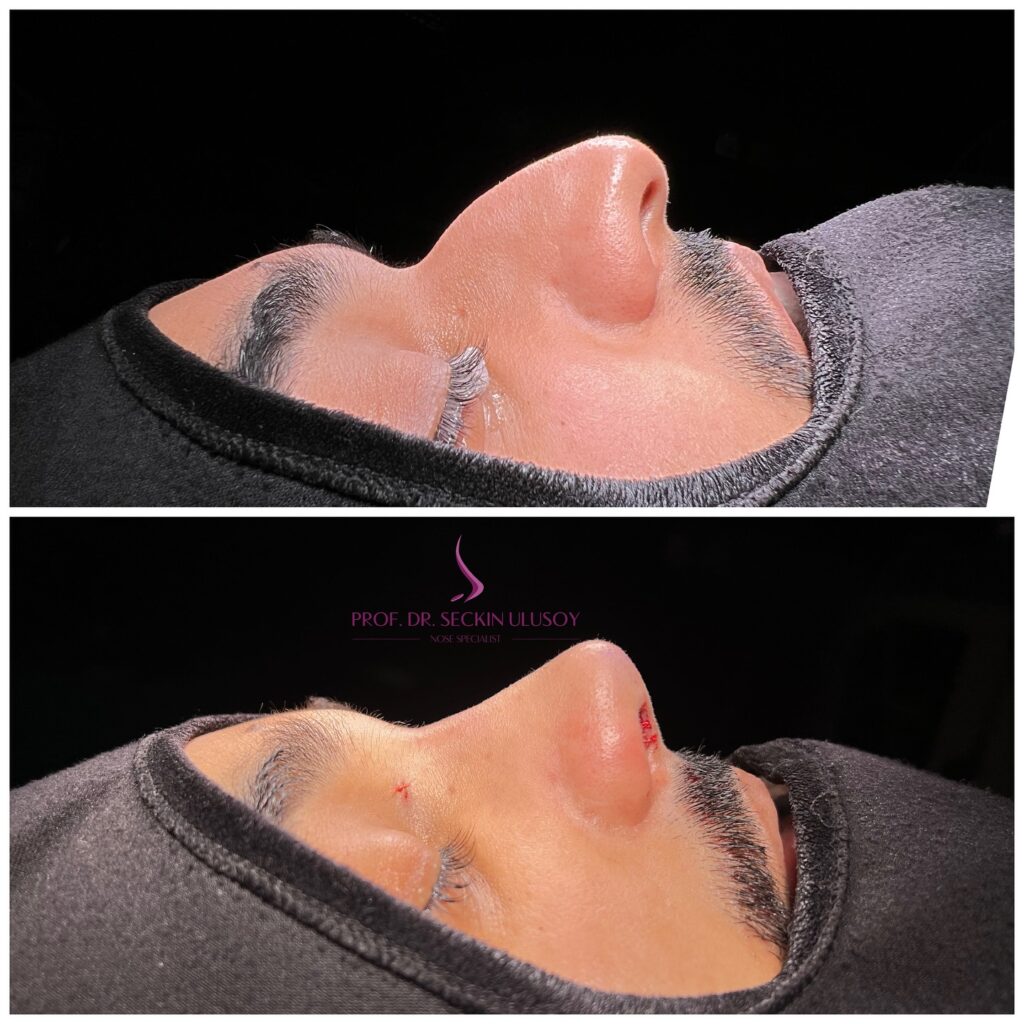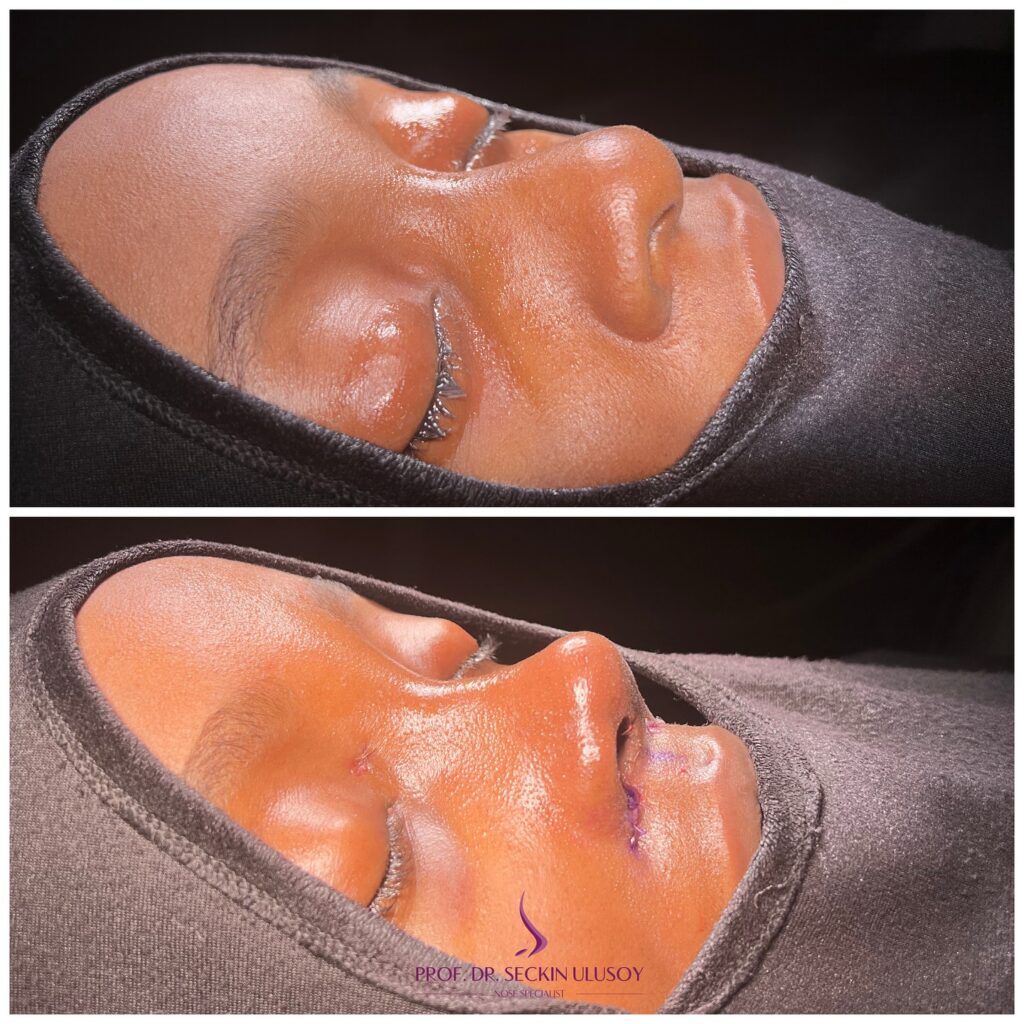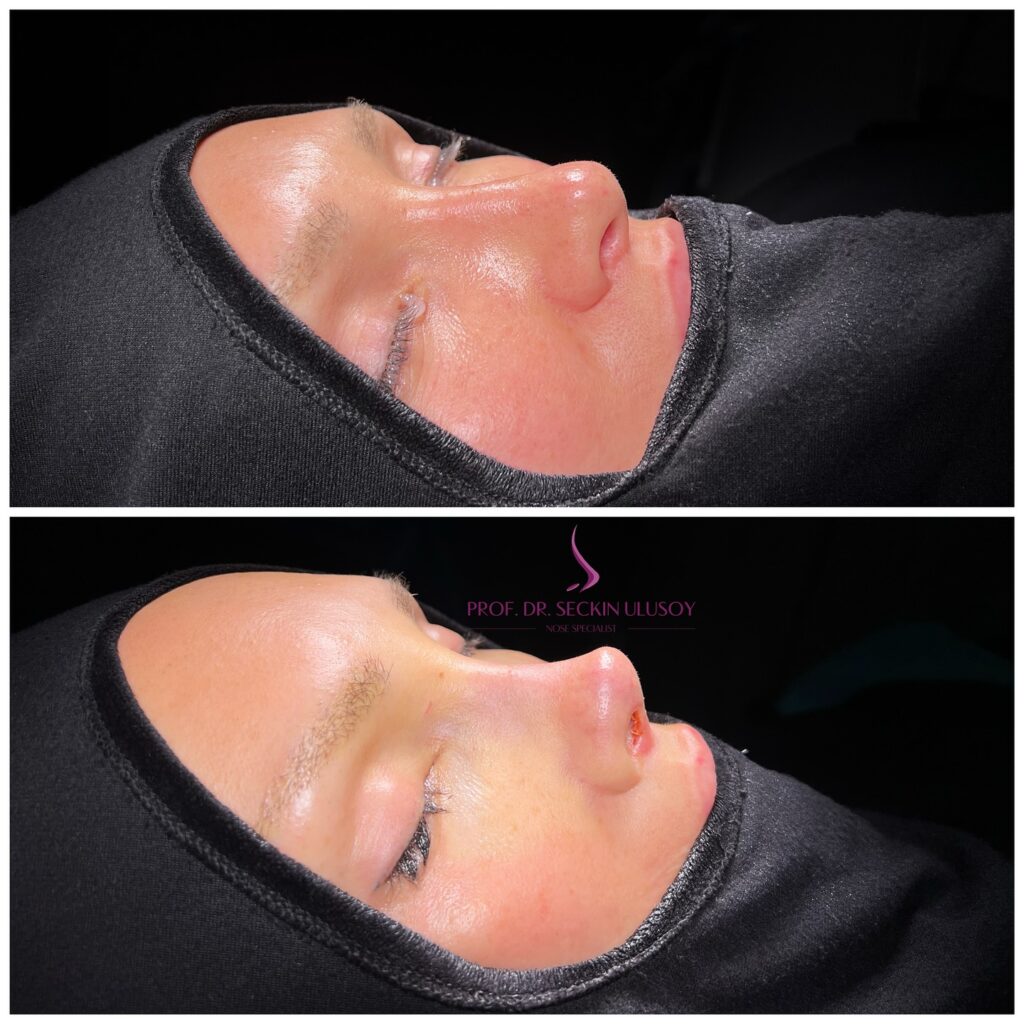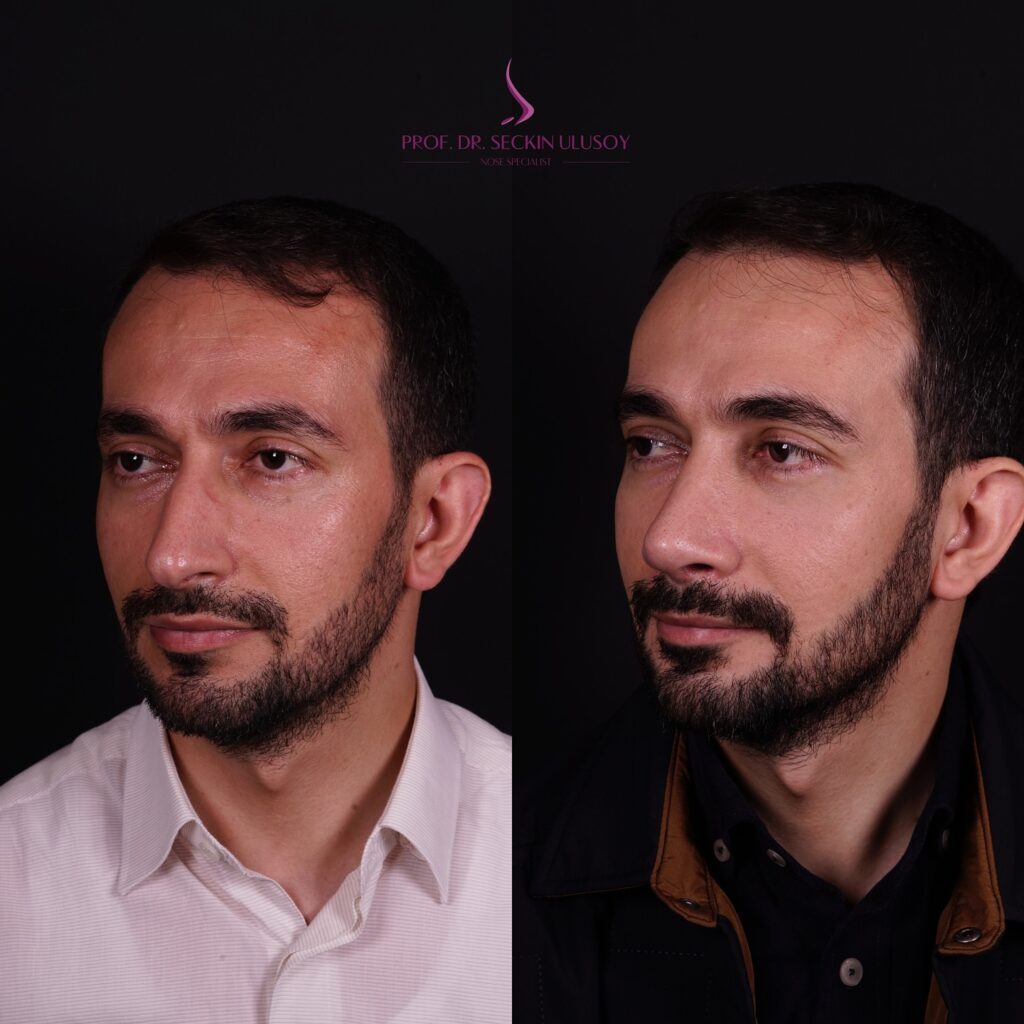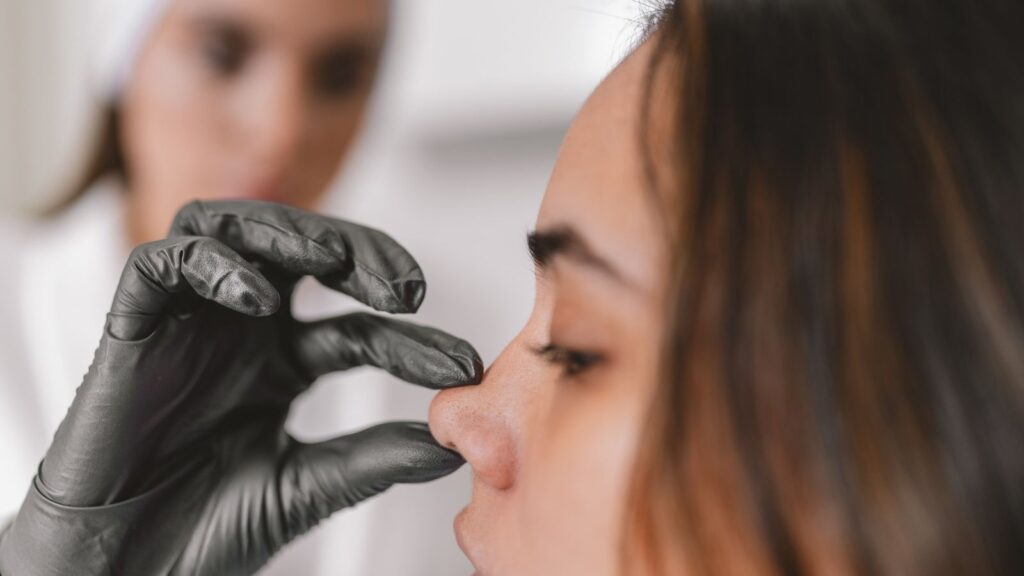
Shaping the nose in aesthetic nasal surgery is the process of resizing the bone and cartilage structures, which are the main supporting elements of the nose, with millimetric precision in accordance with the patient’s facial proportions and securing them with special surgical sutures. During this process, the skeletal structure reached through open or closed surgical approaches is precisely shaped with ultrasonic technologies such as piezo surgery, while the angle, height, and breathing function of the nose are simultaneously optimized with cartilage grafts and suture maneuvers. Modern rhinoplasty is a discipline that creates a functional, permanent silhouette harmonious with the face without disrupting the natural anatomy, based on the principle of tissue preservation.
How Is the Nasal Skeleton Accessed for Nasal Shaping in Aesthetic Nasal Surgery?
In order to give the nose the desired aesthetic appearance, it is first necessary to reach the bone and cartilage skeletal structure hidden beneath the skin, which determines the actual shape. You can think of the skin tissue of the nose like a thick tent fabric stretched over poles. If you want to change the externally visible shape of the tent, you need to change the length, angle, and placement of the supporting poles underneath rather than cutting the fabric. To reach this supporting system, a stage called “exposure” in medicine is performed. In this process, the route through which the surgery approaches the anatomical structures determines the fundamental philosophy of the entire operation. There are two generally accepted methods. The choice of these methods is made meticulously according to whether the patient’s nose has previously undergone any surgical intervention, the degree of complexity of the existing deformity in the nose, and the extent of the intended change.
How Is Nasal Shaping Performed with Open Technique Rhinoplasty?
Open technique rhinoplasty is a method initiated with a fine incision only a few millimeters in size made externally over the narrow area called the columella, which is the central partition between the nostrils. This small incision is connected with invisible incisions made inside the nostrils, and in this way, the nasal skin is completely lifted from over the bone and cartilage structure like a cover. The greatest strength of this technique is that the internal structure is fully exposed.
The ease of visualization provided by the open technique during the surgical process is similar to opening the hood of a car and seeing all the details of the engine with both eyes at the same time. Thanks to this binocular view with complete depth perception, even the smallest asymmetries on the nasal tip or bridge, cartilage deviations, and tissue deficiencies can be detected with millimetric precision. Securing the supportive tissues to be placed in the nose at exactly the desired points with sutures is performed with extremely high control using this method. Especially in difficult cases involving severe trauma, advanced deviation, or previous aesthetic surgery, this wide field of view offers an indispensable advantage.
What Advantages Does Closed Rhinoplasty Offer for Nasal Shaping?
Closed rhinoplasty, as the name suggests, is a method in which all the maneuvers required for shaping are performed entirely through the nostrils without making any externally visible incision. In this approach, which leaves no physical scar on the outer surface, the skeletal structure is resized by working through the natural spaces inside the nostrils. This method, which requires working in a narrow area mainly through tactile sensation and three-dimensional mental mapping, demands highly refined maneuvering ability.
The main advantages offered by the closed method are as follows:
- Leaving no external incision scar
- Faster progression of the healing process
- Less postoperative swelling
- Preservation of lymphatic flow to a large extent
The main reason for the rapid healing process is that the lymphatic channels extending upward from the nasal tip and carrying excess fluids remain uncut. Since this system is preserved, the amount of fluid accumulating beneath the skin after surgery is much lower, and the tissues return to their original state much more quickly. Patients can generally adapt to their social lives in a shorter period, and numbness at the nasal tip resolves more quickly compared with other methods.
How Is the Hump Structure on the Nasal Bridge Shaped?
A very large proportion of applications for aesthetic purposes involve correcting the humped, high, and prominent bridge structure that directly disrupts the profile appearance of the nose. Removing the hump plays a key role in redesigning the facial profile. In older-generation surgical schools, this hump was regarded almost as an excess and completely cut away from the upper part. However, this procedure resulted in a gap called an “open roof,” leaving the nasal bridge flat and the sides open, like a house whose roof had been blown away. The nasal bones were then fractured from the sides and pushed inward to close this opening and narrow the roof. Today, however, these approaches have been completely transformed by modern philosophies that attach much greater importance to and preserve natural tissue integrity.
What Are the Nasal Shaping Methods in Preservation Rhinoplasty?
The concept of preservation rhinoplasty is based on the principle of reducing hump height without cutting the naturally present and smooth nasal bridge lines in any way and without disrupting this flawless structure. The procedure is performed from the lower parts, as though working from the foundation of the building rather than from the roof of the nose.
The main strategies used are as follows:
- Push-down method
- Let-down method
In the push-down method, the nasal bones are gently released from the lateral points where they connect with the facial surface. Then, a thin piece is removed from the base of the internal central cartilage, the septum, to create a space. Thanks to this space, the entire nasal roof is lowered downward like an elevator without losing its form. In the let-down method, in cases where the hump is much higher, small triangular bone pieces are removed from the lateral walls of the nasal bones extending toward the cheeks, and the roof is seated into this space. The greatest advantage of both methods is that even years later, when the patient touches the nasal bridge, no cut, roughness, or irregularity is felt.
How Do Ultrasonic (Piezo) Devices Shape the Nasal Bones?
The stage of shaping the bony skeleton is perhaps one of the most delicate points of the operation. For many years, surgical hammers and chisels were widely used to narrow, rasp, or reposition the nasal bones. Since this generally required the application of mechanical force, it could cause bruising around the eyes after surgery. With the integration of technology into medicine, these mechanical hand instruments have been replaced by piezoelectric ultrasonic systems powered by sound waves.
The critical advantages offered by piezo technology are as follows:
- High cutting precision
- Soft tissue protection
- Significantly reduced bruising
- Smooth bone tissue
The most remarkable feature of these devices is their selectivity. High-frequency ultrasonic vibrations cut or rasp only mineralized hard bone tissue. Even if the moving tip of the device accidentally comes into contact with subcutaneous tissues, mucosa, capillaries, or cartilage during the operation, it automatically stops without causing any damage. Since the vessels and muscle tissues are not injured, patients experience an incredibly comfortable recovery period, and bruising around the eyes is reduced to almost none. In addition, the bone surfaces are made as smooth as if they had been sanded, achieving a flawless external appearance even in thin-skinned faces.
How Is Nasal Tip Shaping Performed?
The nasal tip is the most mobile and dynamic region of the nose, containing no bone and consisting entirely of cartilage and soft tissue. This region, which constantly moves while speaking, laughing, and making facial expressions, depends on the resistance of the underlying cartilage to preserve its form. The modern principle applied while aesthetically refining the nasal tip is not to cut away the cartilage, but to preserve the existing cartilage volume while changing its direction, position, and angle relative to one another. Since excessive removal of cartilage may lead over the years to weakening of the tissue, retraction of the nostrils, and an appearance as though the nose has been pinched with a clip, the preservation philosophy is applied at the highest level here as well.
Which Suture Techniques Are Used When Shaping the Nasal Tip?
To give the nasal tip cartilage an entirely new form without damaging it, tissue-friendly surgical sutures that are completely absorbed by the body over time are used. Thanks to these sutures, the cartilage is skillfully folded, narrowed, and attached together like origami paper to create a new three-dimensional structure.
The main preferred suture maneuvers are as follows:
- Transdomal sutures
- Interdomal sutures
- Cartilage sliding sutures
- Setback sutures
Transdomal sutures are used to narrow the highest points of the nasal tip and give that area an elegant and distinct light reflection. Interdomal sutures bring the right and left cartilages, which are positioned far apart, together at the midline, eliminating the wide and boxy appearance of the nasal tip. Cartilage sliding is a very powerful method that pulls the lateral cartilage tissue toward the central partition to naturally rotate the nasal tip upward and make it more prominent in profile. In cases where the nose projects excessively forward relative to the face, the cartilage is intelligently folded backward to create a more balanced profile.
How Is the Cartilage Inside the Nose Shaped Without Cutting It?
In some cases, patients’ cartilage structures may be structurally extremely thick, hard, and resistant to shaping. Just as trying to bend thick cardboard using only thread would not work, it may not be possible to shape such rigid cartilage using sutures alone. To overcome the natural resistance of the cartilage and make it flexible, mechanical interventions that soften its structure are applied instead of cutting and reducing the tissue.
The main tissue-weakening strategies applied are as follows:
- Making superficial scoring incisions
- Cartilage crushing procedure
Very light, non-full-thickness scores are made on the cartilage surface to reduce tissue tension and allow the cartilage to bend easily to the desired angle. In addition, small cartilage pieces that must be removed internally are never wasted; they are crushed with the help of special surgical instruments and turned into a paste-like consistency. This crushed organic material works wonders as a natural filler, especially in patients with very thin skin, to soften bone-cartilage transitions, fill minor gaps, and provide perfect camouflage.
How Does Breathing Function Progress Together with Nasal Shaping?
While aesthetic processes are being designed, the fact that the nose is a respiratory organ must never be overlooked. A nose that looks highly aesthetic and flawless but does not allow its owner to breathe comfortably is not considered medically successful. For this reason, the art of nasal shaping is also an extensive restoration performed internally. While the septal cartilage forming the midline of the nose is corrected to eliminate internal deviations, its contribution to making the nose appear straight externally is simultaneously achieved. External beauty and internal function are two inseparable parts that complement one another.
How Is the Nasal Valve Shaped?
Inside the nose, there is a special angle called the “nasal valve,” which is the narrowest anatomical area through which air enters. When a hump on the nasal bridge is removed, this roof angle carries a risk of narrowing, and if precautions are not taken, permanent postoperative nasal obstruction may occur. Special cartilage support systems are constructed both to open these airways and to give the nasal bridge a highly aesthetic, smooth light line when viewed externally.
The structural support methods used are as follows:
- Spreader cartilage grafts
- Self-folded tissues
Spreader cartilage grafts are placed as long, thin rectangular rods between the septum and the lateral walls, keeping the airway open like a tent. In cases where adding cartilage from another area is unnecessary, the upper ends of the patient’s own lateral cartilages are folded inward and sutured, providing flawless widening and aesthetic support without disrupting natural tissue integrity. During all these procedures, preserving the cartilage support framework called the “L-strut,” measuring at least fifteen millimeters and supporting the nasal bridge and tip, is vital for preventing future collapse.
From Which Areas Are Support Cartilages (Grafts) Obtained in Aesthetic Nasal Surgery?
When giving the nose a new shape or strengthening weak tissues, the existing structure’s own material may not always be sufficient. Additional cartilage grafts are needed to support the skeleton, define the shape, or complete missing parts. Since there is no risk of the body rejecting foreign material, these supports are obtained entirely from the patient’s own tissues.
The main preferred sources are as follows:
- Nasal septal cartilage
- Ear cartilage
- Rib cartilage
The first and most preferred material is the nasal septal cartilage located within the same surgical field. Its straight structure makes it an excellent material for support columns. If insufficient material remains inside the nose, a certain amount of cartilage is taken from the inner hollow of the ear. These soft and curved cartilages, which do not impair the external appearance of the ear or hearing function in any way, are ideal for shaping the nasal wings. In patients who have undergone multiple surgeries and exhausted the other sources, the seventh rib cartilage in the chest comes to the rescue. Rib cartilage is available in very large quantities and is incredibly strong; it is shaped using special methods to prevent warping over time, making it possible to reconstruct the entire nose from the beginning.
What Are the Challenges of the Reshaping Process in Revision Nasal Surgery?
Revision rhinoplasty, performed for patients who have previously undergone aesthetic surgery but require another surgical intervention for aesthetic or functional reasons, has dynamics that are very different and more complicated than those of primary surgeries. The hard scar tissues left beneath the skin by the previous intervention, adhesion of the skin to the skeleton, and loss of normal anatomical planes create obstacles requiring patience and high expertise during the shaping process.
The most common structural problems encountered are as follows:
- Parrot beak appearance
- Nasal wing collapse
- Asymmetrical tissue loss
Insufficient reduction of the height of the nasal bridge during the first operation or thickening of the scar tissue over the nasal tip cartilage may cause the profile of the nose to appear beak-shaped. In addition, inward collapse of the nasal wings during breathing indicates that the lateral cartilages have weakened, and these wings must be tightened again with strong supports added externally. Filling missing tissues and achieving symmetry are the main focus of these operations.
Why Are Preoperative 3D Simulations Important for Nasal Shaping?
In the age of modern medicine, nasal shaping has ceased to be an action decided only at the operating table and has become an engineering project designed with millimetric precision in a computer environment before surgery. The process begins with scanning the patient’s face using high-resolution cameras and creating an exact three-dimensional model in a digital environment.
Patients’ abstract expectations open to interpretation, such as “I do not want it too upturned” or “I want a slight curve,” are converted into concrete angles and millimeters in these simulation programs. Concepts such as the angle between the lip and nasal tip and the transition between the forehead and nasal bridge are presented visually to the patient. Rather than providing a definite guarantee document, this digital planning functions as a transparent communication map in which the surgical goal and expectations meet at the same point. Skin thickness and anatomical limitations are explained to the patient through this realistic model.
How Does the Nasal Shape Settle and Become Permanent After Aesthetic Nasal Surgery?
When the operation ends and the shaping process is completed on the operating table, everything has actually just begun. The integration of that flawless form created surgically with the body, the adaptation of the skin to its new skeleton, and the tightening of the tissues constitute a biological marathon lasting for months. Therefore, during surgery, every maneuver is performed with forward-looking foresight by calculating how the scar-healing tissue that will continue for months may pull the nose.
The factors determining the speed of healing and the settling of the shape are as follows:
- Degree of skin thickness
- Splinting and medical taping
- Rate of lymphatic fluid dispersion
The molds placed on the outer surface of the nose and the special medical taping applied at the end of the operation both help the bones heal at the correct angle and suppress edema formation. The time required for the nasal shape to settle completely is closely related to the characteristics of the skin. In patients with thin skin, all the delicate details of the framework become visible around the sixth month, while in patients with thick and oily skin, the complete resolution of the underlying edema and the nose taking its true form may become a journey of patience lasting up to two years.