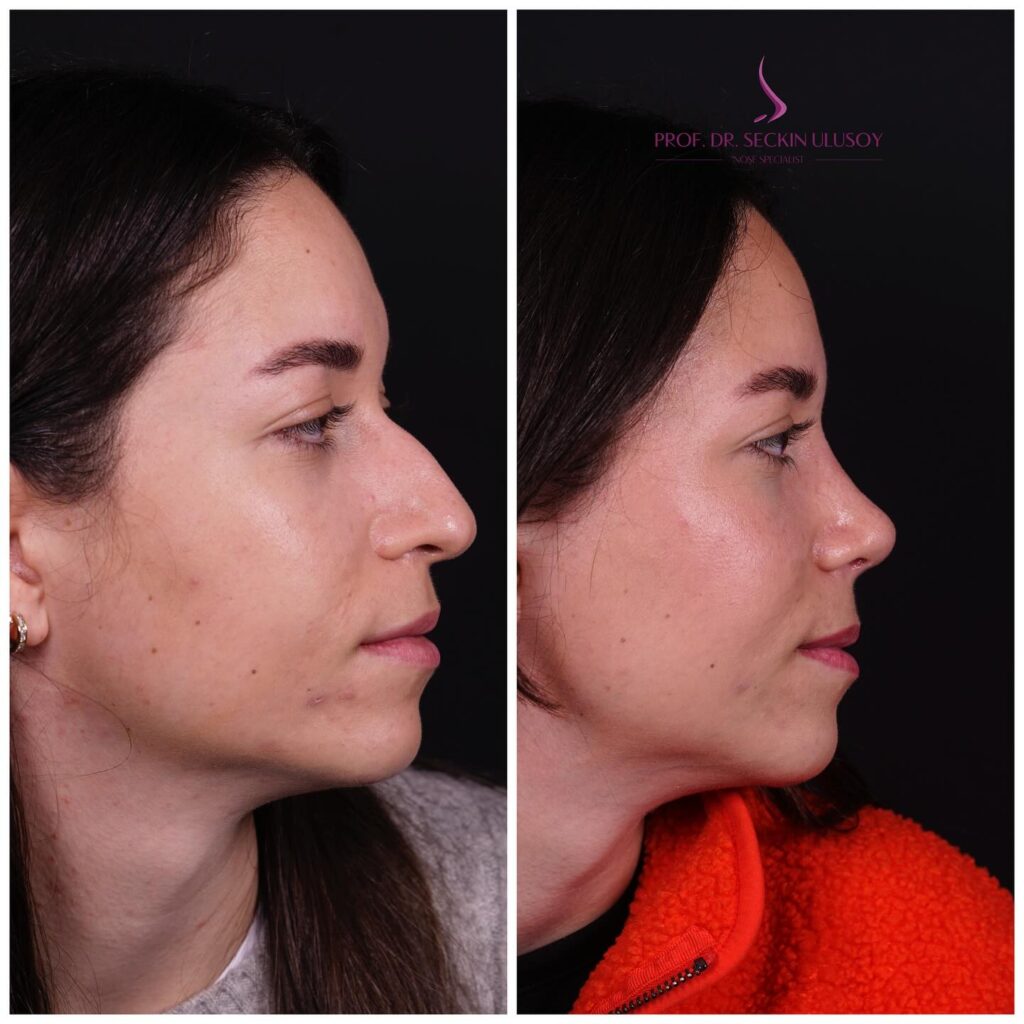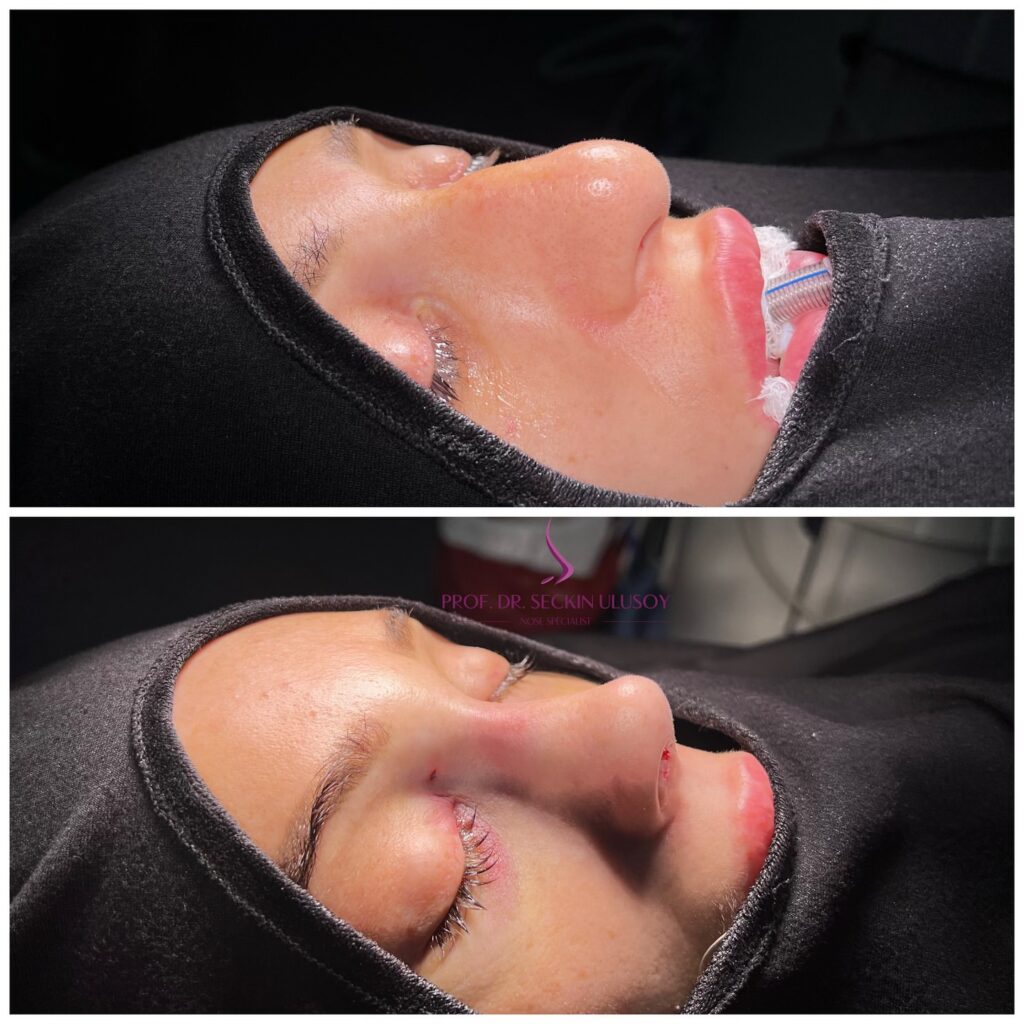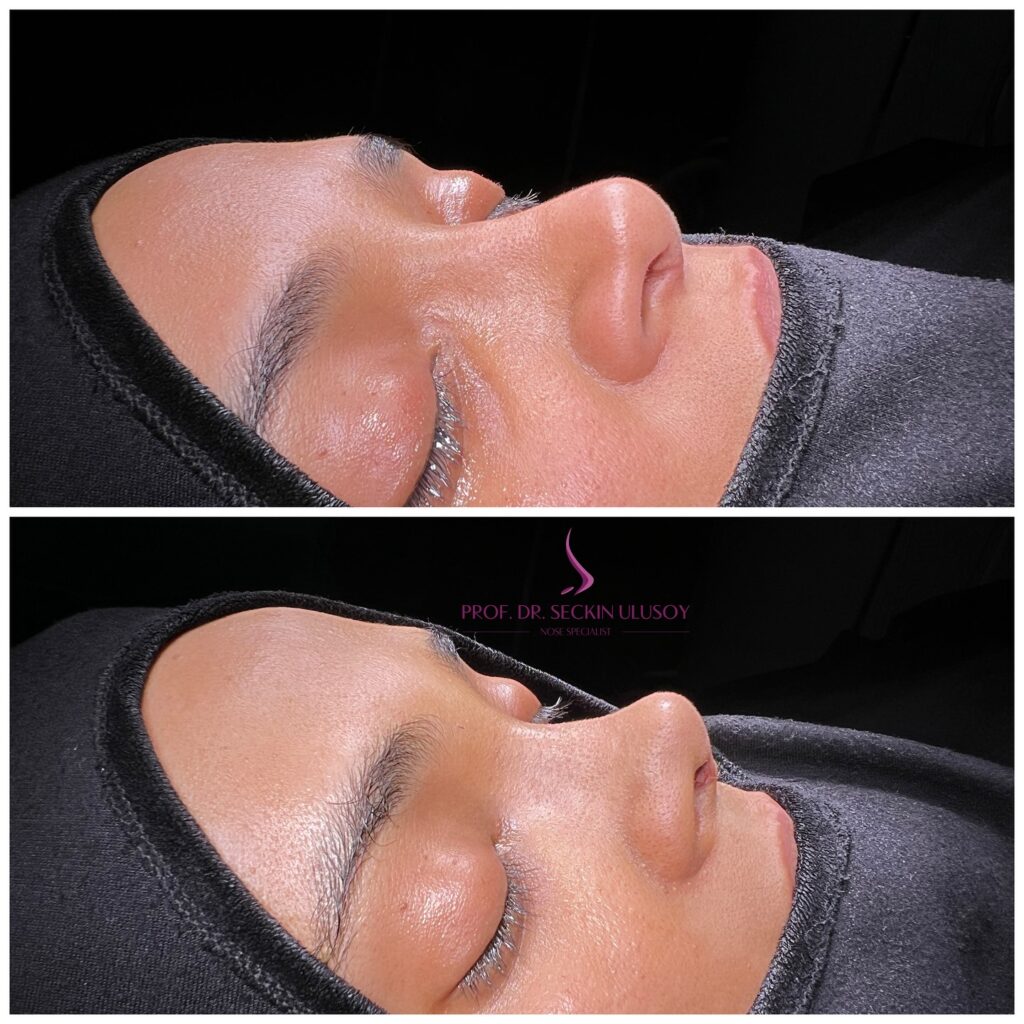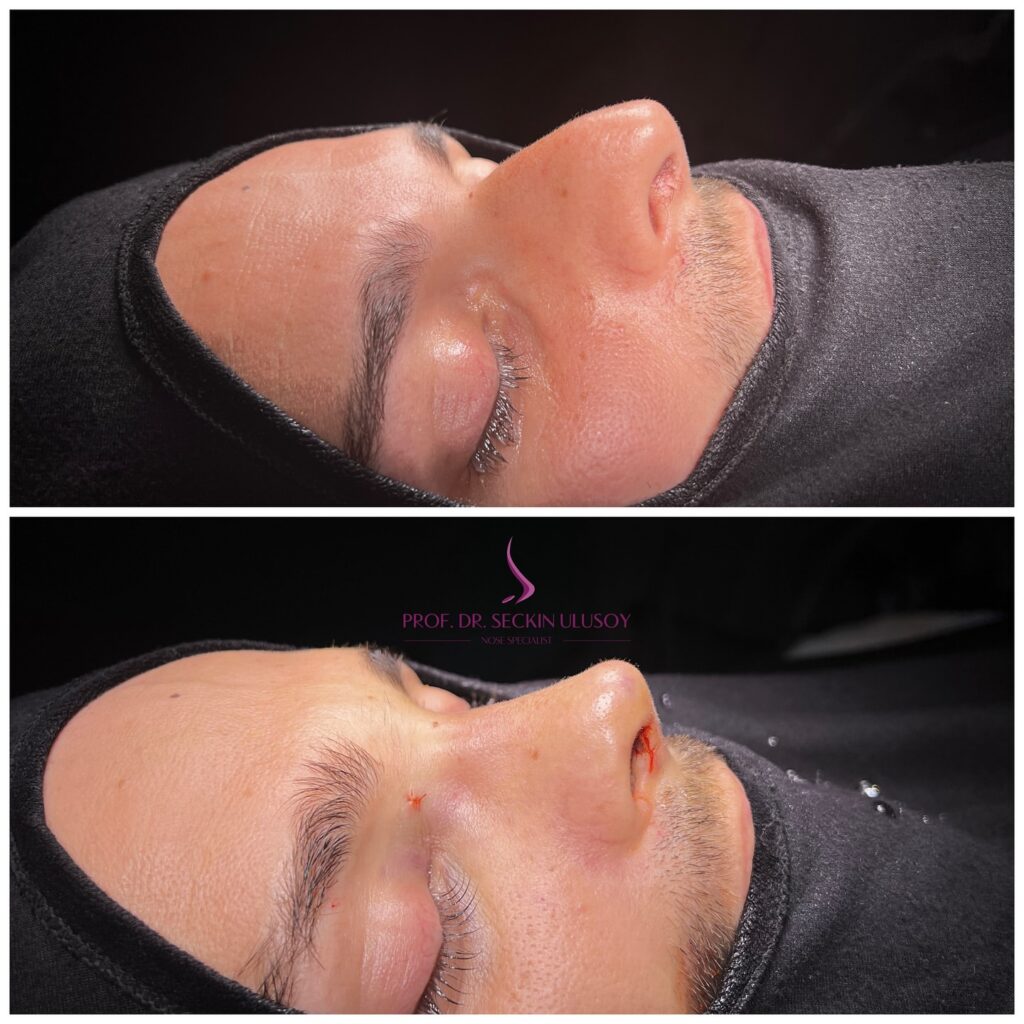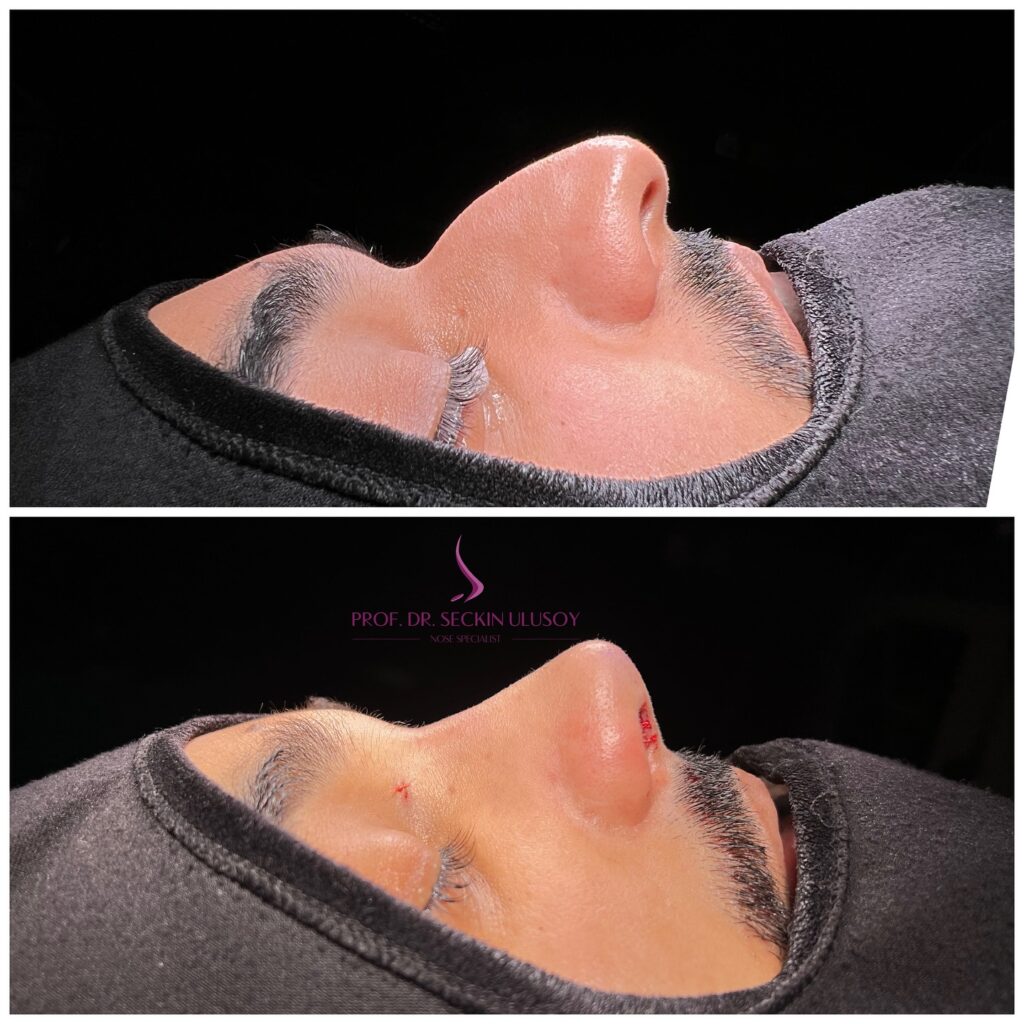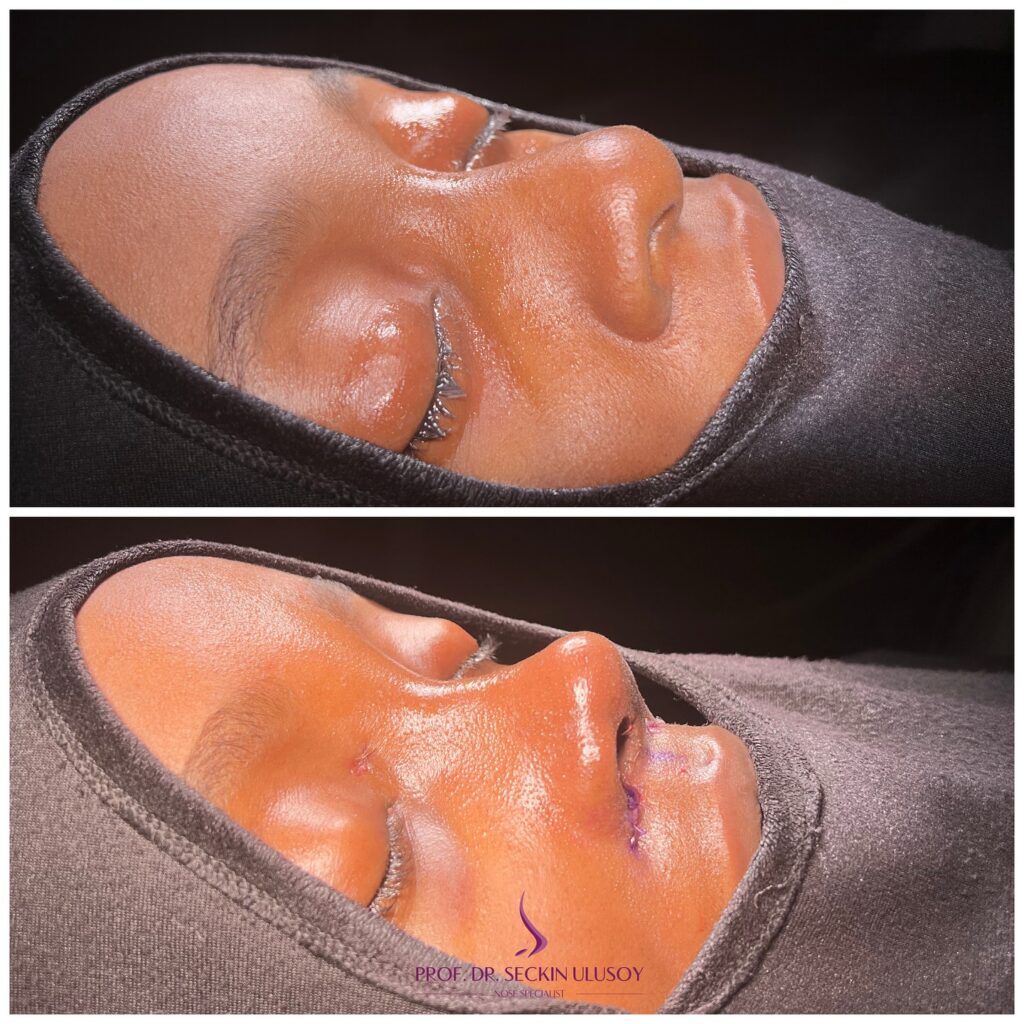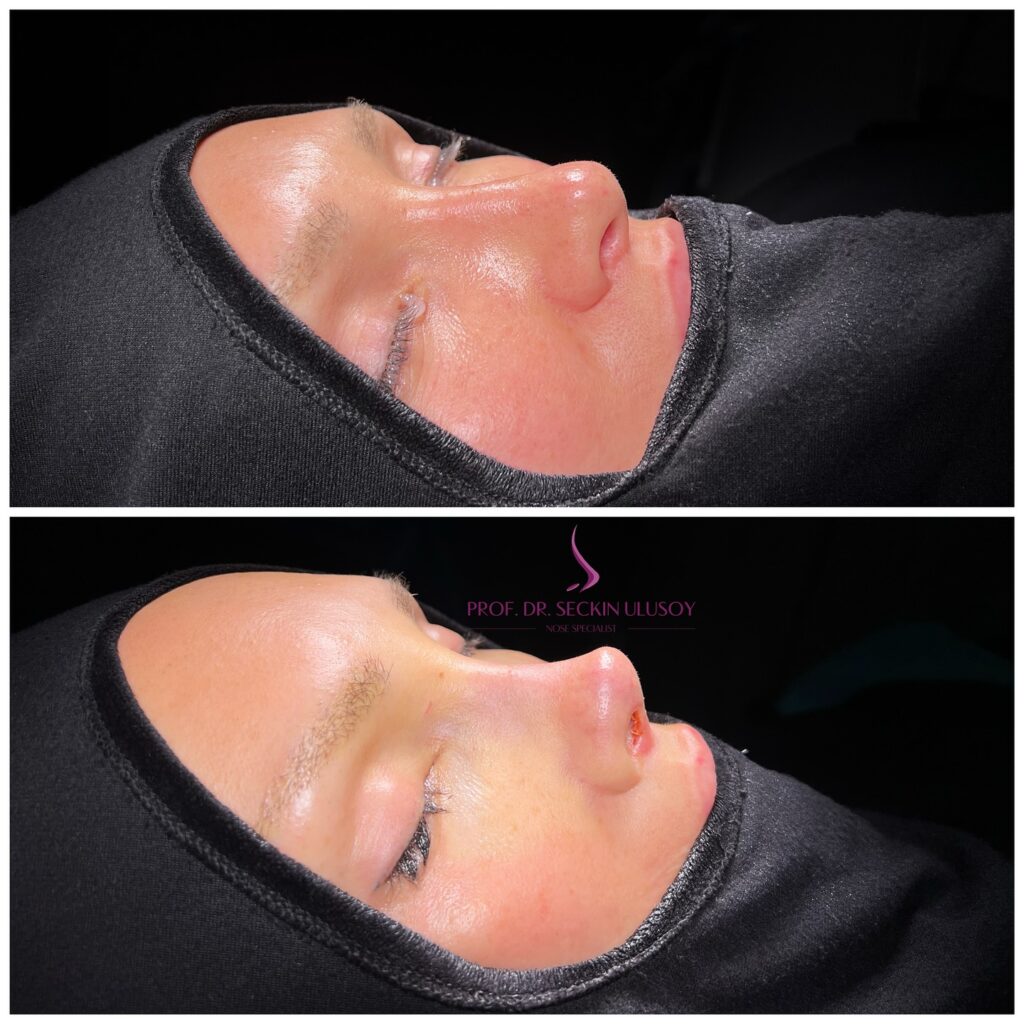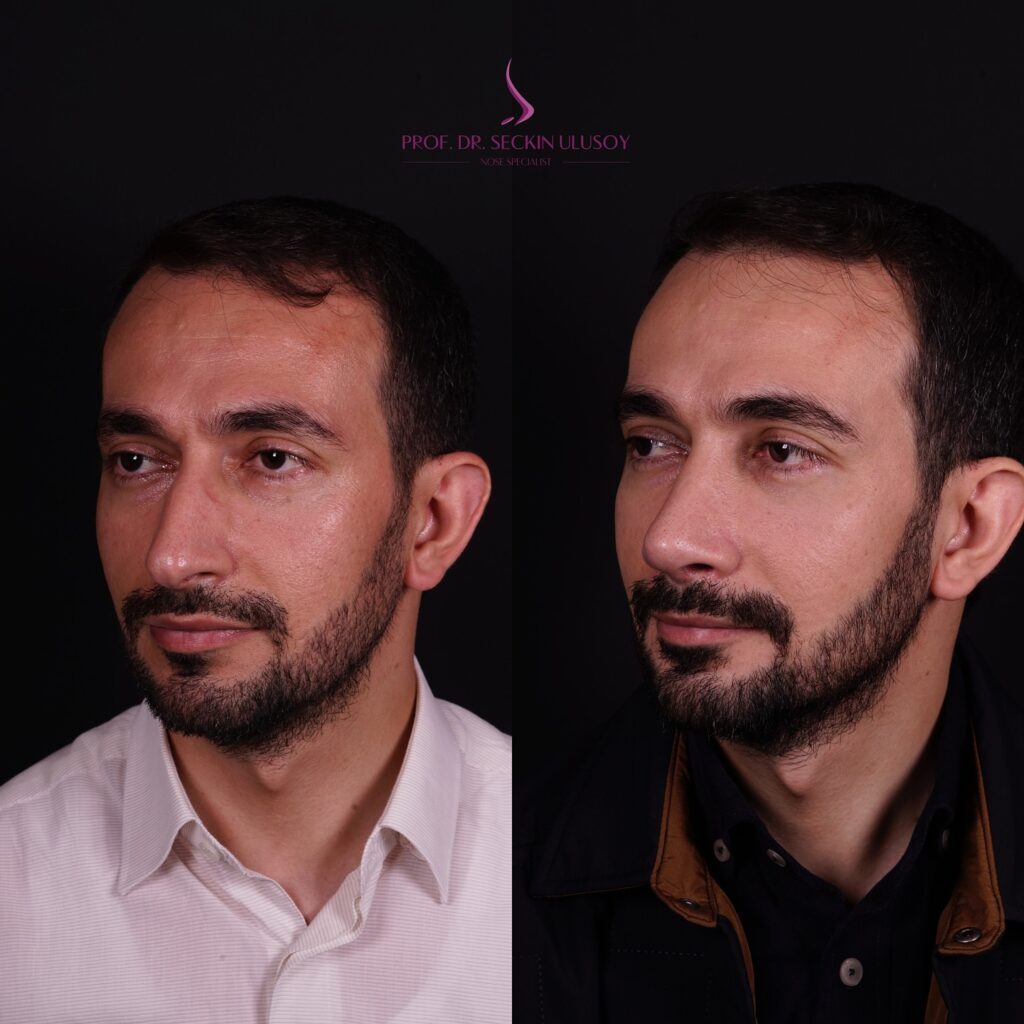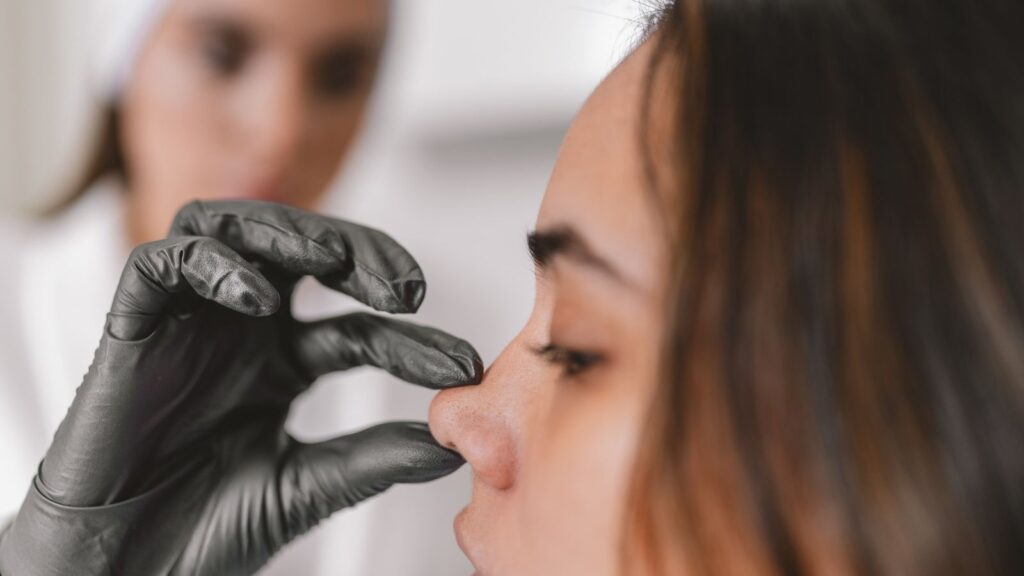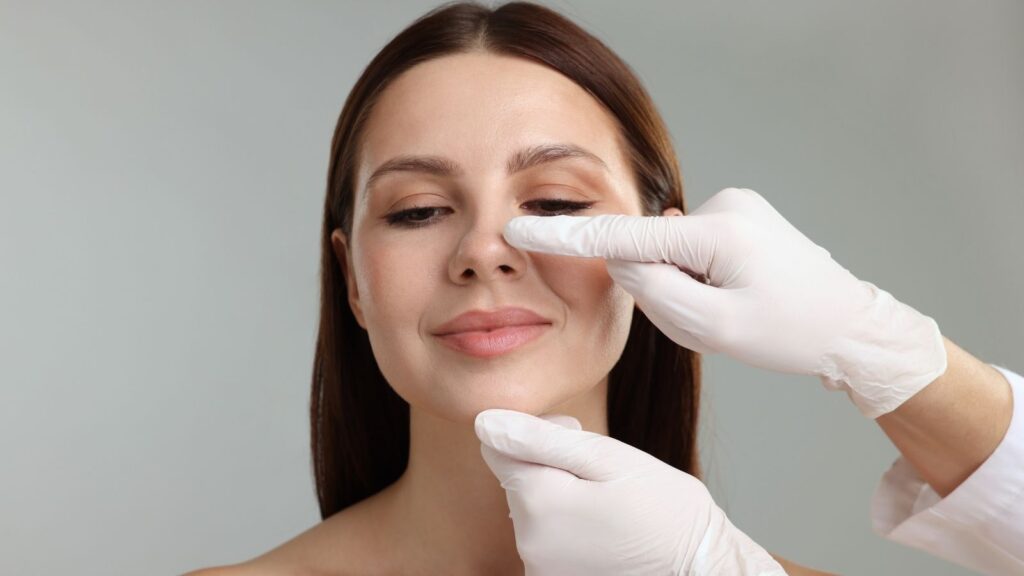
The types of rhinoplasty encompass a broad range of surgical procedures categorized today according to the application technique, the technology used, and the patient’s anatomical needs. While open and closed rhinoplasty methods form the basis of this diversity, specific approaches such as piezo (ultrasonic) surgery, preservation techniques, revision (secondary) corrections, and tipplasty focusing only on the nasal tip stand out in modern medical literature. For those seeking an alternative to surgery, medical aesthetic solutions such as liquid rhinoplasty are available. While all these methods aim to provide the aesthetic form most compatible with the person’s facial characteristics, they also seek to optimize respiratory functions simultaneously.
What Are the Differences Between Open and Closed Techniques in Rhinoplasty Operations?
The most fundamental decision to be made when beginning the nasal reshaping process is whether the nasal framework will be accessed externally or entirely from within. This decision changes many things, from the recovery process to the details of the operation. In medical terminology, we call these two basic approaches the open technique and the closed technique.
Open rhinoplasty begins with a tiny incision made in the thin central pillar area located between the nostrils, which you can feel by touching it, called the columella. Thanks to this very small incision, the nasal skin is gently lifted upward from the underlying cartilage and bone structure like a covering. We can compare this to opening the hood of a car. When the hood is opened, all the engine components, cables, and connections inside become clearly visible. This is exactly what happens with the open technique. Asymmetries of the cartilage inside the nose, curvatures in the bones, and depressions caused by previous trauma can be seen with the naked eye without any hidden areas remaining. The surgeon can use both hands very comfortably to place sutures in the delicate cartilage and make millimetric calculations.
The situations in which the open technique is most commonly preferred are as follows:
- Severe curvatures
- Serious asymmetries
- Previous operations
- Complex cartilage problems
Of course, every method has its own characteristics. Since some delicate connections at the nasal tip are cut in the open technique, it may take a little longer for the swelling at the nasal tip, meaning the edema, to subside completely after surgery and for the nose to achieve its final shape.
Closed rhinoplasty, on the other hand, is a highly refined method in which there is no visible incision from the outside and all procedures are performed through the nostrils. In this method, the skin is not lifted upward. All procedures are carried out by advancing through the narrow tunnels inside the nose. The most appealing aspect of the closed method is that a very large portion of the natural ligaments, support points, and vascular network of the nose are preserved. Since these tissues are preserved, swelling and bruising on the face are much less after surgery, and the recovery process accelerates remarkably. People can return to their daily lives within a very short period. However, because this method requires working in a confined area, it demands very high manual dexterity, tactile sensitivity, and three-dimensional thinking ability.
The main advantages provided by the closed technique are as follows:
- Fast recovery process
- No visible incision scar
- Less nasal tip edema
- Preservation of natural ligaments
Why Is Piezo (Ultrasonic) Technology Important in Bone Shaping During Rhinoplasty?
In the past, when rhinoplasty operations were described, the stage that frightened people the most was the breaking of the bones. Indeed, for many years, small hammers and chisels were used to remove the nasal hump or narrow the nose. No matter how carefully these mechanical interventions were performed, they could cause small unwanted cracks in the bone, damage to surrounding tissues, and the intense under-eye bruising that we all know after surgery. Fortunately, ultrasonic rhinoplasty, namely Piezo technology, has now completely eliminated this frightening scenario.
The Piezo device works with sound waves vibrating at a frequency too high for the human ear to hear. The tiny tips at the end of the device gently erase, rasp, and cut the bone tissue like an eraser through the power of these sound waves. The most fascinating aspect of this technology is that it is intelligent. The device recognizes only bone, which is a hard tissue, and shapes it. If the tip of the device accidentally touches a delicate blood vessel, nerve, cartilage, or skin inside the nose, it stops immediately and does not harm these soft tissues.
The differences this precise technology creates for patients are remarkable. Since the uncontrolled fractures seen with traditional methods do not occur, bone damage is minimized. Straight and smooth bone contours are obtained as if drawn with a pencil. Small bone protrusions or irregularities that may be felt on the nasal dorsum after surgery are largely prevented thanks to Piezo technology.
The comfort elements offered to patients by Piezo technology are as follows:
- Minimal bruising
- Much less pain
- Smooth bone healing
- Protection of surrounding tissues
What Is Preservation Rhinoplasty That Does Not Disrupt the Natural Structure?
One of the greatest revolutions in the philosophy of rhinoplasty in recent years is the preservation rhinoplasty approach. To understand this, let us consider the old method. In a person with a high nasal hump, that hump used to be removed as if the roof of a house were cut off from the top. After the roof was opened, the side walls were broken and brought together again. However, this procedure permanently disrupted the smooth natural texture of the nose. Preservation rhinoplasty emerged with the logic of, “Why should we disrupt this beautiful roof?”
In this technique, the person’s natural, smooth nasal dorsum tissue, which cannot be recreated exactly by any operation, is not touched at all. Instead, very thin pieces are removed from the lowest part of the side walls of the nose and from beneath the central cartilage partition. Since the support underneath is released, the entire nasal dorsum is lowered to the level of the face as a single unit, as if descending in an elevator. The beautiful roof above is completely preserved.
The greatest benefit of this approach is the preservation of the nose’s flexibility and natural appearance. When smiling, the nasal tip moves in harmony with the lip, and an artificial or frozen expression does not develop on the face. Even as the years pass, collapse or irregularities do not occur on the nasal dorsum.
The characteristics of the most suitable candidates for preservation rhinoplasty are as follows:
- A smooth but high nasal dorsum
- Those undergoing surgery for the first time
- Sufficient cartilage flexibility
- Those without severe curvature
Of course, not every nose is suitable for this delicate technique. Unfortunately, this method cannot be used in people with severely traumatized or markedly crooked noses or in those who have previously undergone surgery and whose dorsum tissue has been disrupted.
Who Is Suitable for Nasal Tip Aesthetics (Tipplasty) Only?
When looking directly at our face, the nasal tip is the first place that attracts attention and where the light shines most. Even a millimetric drooping or asymmetry can make a person’s expression appear tired or sad. Procedures applied to people who do not have any hump or width problem in the bone structure and are only dissatisfied with the shape of the cartilage at the nasal tip are called tipplasty.
In the past, a large portion of the cartilage was cut out and removed to make the nasal tip smaller and more refined. Although this initially looked attractive, over the years the remaining cartilage succumbed to gravity, the nasal tip drooped, or an abnormal pinched appearance developed. In modern tipplasty, however, the philosophy has changed completely. Instead of cutting and weakening the cartilage, we now give it a new shape and memory with special suture techniques.
In a person with a wide nasal tip, these sutures bring the cartilage closer together and add refinement. In a person with a drooping nasal tip, the cartilage is rotated upward and made more upright. If the person’s own cartilage is very weak, an invisible framework is created with small supporting pieces taken from inside the nose. This framework prevents the nasal tip from being pulled downward while smiling permanently.
The main conditions for which nasal tip aesthetics provides a solution are as follows:
- Nasal tip drooping
- A wide and broad nasal tip
- Asymmetrical cartilage
- A pinched appearance
Why Is Revision Rhinoplasty Different in People Who Have Previously Undergone Surgery?
Sometimes things do not go as planned, and after the first operation, the person may be dissatisfied with the aesthetic appearance or the quality of breathing. The second, third, or sometimes fourth interventions performed in such cases are called revision rhinoplasty. Revision operations are very different from standard nasal surgery and are much more complex processes requiring serious surgical mastery.
The main reason for this is that the natural anatomy of the nose has been altered during the first operation. The smooth mobility between the tissues has disappeared and has been replaced by firm and inflexible healing tissue, or scar tissue. However, the greatest difficulty is the lack of material. In nasal surgery, our greatest aid is the cartilage wall located in the middle of the nose, called the septum. We always use this cartilage to change the shape of the nose and support the tip. However, in revision cases, this cartilage has generally been used up or damaged during the first operation.
When we need strong structural material to reconstruct the nose, we inevitably obtain support from other parts of the body.
Alternative cartilage sources used in revision operations are as follows:
- Rib cartilage
- Ear cartilage
- Muscle membranes (fascia)
Rib cartilage, in particular, is an exceptionally strong and reliable source for rebuilding collapsed noses that have completely lost their support. It is necessary to wait at least one year after the first operation before performing revision surgery. This waiting period is extremely important for the tissues to soften and for blood circulation to return to normal.
How Is Functional Rhinoplasty That Resolves Breathing Problems Performed?
You may have a very beautiful, delicate nose, but if you sleep with your mouth open at night, wake up tired in the morning, or become congested immediately while exercising, the aesthetic beauty of that nose has no meaning. The nose is, above all, the gateway to our respiratory tract. While beautifying the outside of the nose, we must also clear, open, and widen the complex air passages inside it.
In the very middle of the nose, there is a wall made of cartilage and bone that divides the nose into right and left sides. We call this the septum. Septal deviation, which is very common in society, not only makes breathing difficult but is also the main reason why the nose appears crooked from the outside. You cannot build a straight building on a crooked foundation. Therefore, correcting the internal curvature is an essential step for the external aesthetic result to remain permanent.
In addition, there are turbinates inside the nose that warm, humidify, and filter the air we breathe. These tissues may swell abnormally due to allergies or bone curvature. During surgery, these tissues are gently reduced using radio waves that cause no harm to the patient.
The main internal problems resolved during functional rhinoplasty are as follows:
- Septal deviation
- Turbinate enlargement
- Narrowing of the internal nasal valve
- Polyp formations
Following these procedures, the patient may enjoy, perhaps for the first time in their life, the cool and clean air reaching all the way into their lungs. Improved breathing quality positively affects sleep patterns, energy levels, and even psychological well-being.
Is Rhinoplasty with Filler (Liquid Rhinoplasty), a Non-Surgical Option, Possible?
Not everyone may feel ready for surgery, anesthesia, or a recovery period. Sometimes, people who have only a very small, millimetric irregularity in their nose may not want a surgical intervention. This is exactly where nasal filler, also known as liquid rhinoplasty, which has become increasingly popular in recent years, comes into play.
This method involves injecting fillers containing hyaluronic acid, which is already naturally present in the structure of our skin, into specific areas of the nose using very fine needles or blunt-tipped cannulas. It is performed in an office setting in as little as 10-15 minutes, and the person can immediately return to work, daily activities, or having coffee with friends. There is almost no bruising or swelling after the procedure.
Especially in people with a small depression on the nasal dorsum, it is quite possible to make the nose appear completely straight by filling that hollow, or to make the nose appear optically more elevated with a small touch to the nasal tip using filler.
Aesthetic imperfections that can be corrected with filler are as follows:
- Depression at the nasal root
- Minor asymmetries
- A mild hump appearance
- Small irregularities after surgery
However, this method has very clear limitations. It is physically impossible to make a nose smaller with filler because volume is being added to the nose from the outside. In addition, breathing problems can never be resolved with filler. Since the material used is gradually absorbed by the body, the results generally last around 1 year, depending on the person’s metabolic rate, and the procedure must then be repeated. Since the vascular network around the nose is very complex, this procedure must be performed only by specialists with a thorough knowledge of facial anatomy.
What Stages Are Experienced During the Recovery Process After Rhinoplasty?
Rhinoplasty is not a process that ends the moment the patient leaves the operating room. In fact, the real process is the recovery period that requires patience, during which the body repairs itself, the tissues heal together, and the new shape gradually emerges. Thanks to modern surgical instruments, unbearable pain is no longer experienced as it was in the past. Most people describe the postoperative period not as “painful” but simply as “slightly congested and pressured.”
During the first week, there is generally a protective splint over the nose and perforated silicone sheets inside that allow you to breathe. This first week is a time to rest at home and sleep with the head elevated. When the splints and silicone sheets are removed at the end of the first week, you see your new nose for the first time, but what you see is not the final result. The nose is quite swollen and edematous due to the effects of the operation.
From the first month onward, the bones begin to heal, and more than half of the major swelling subsides. The feeling of tightness in your face disappears, and people begin to notice the new shape of your nose much more clearly. However, it may take one year for the tissues to settle completely, millimeter by millimeter, for the slight firmness at the nasal tip to disappear, and for the skin to adhere to the cartilage. This is a completely natural and biological process.
The things that must definitely be avoided during the first months of the recovery process are as follows:
- Strenuous exercise
- Wearing glasses
- Direct sunlight
- Sleeping face down
- Activities involving impacts
During this process, keeping the nose clean with seawater sprays recommended by your physician, preventing crusting, and patiently allowing the body to repair itself are factors that directly affect the beauty of the result.