What Is a Mouth Sore That Appears in Our Body?
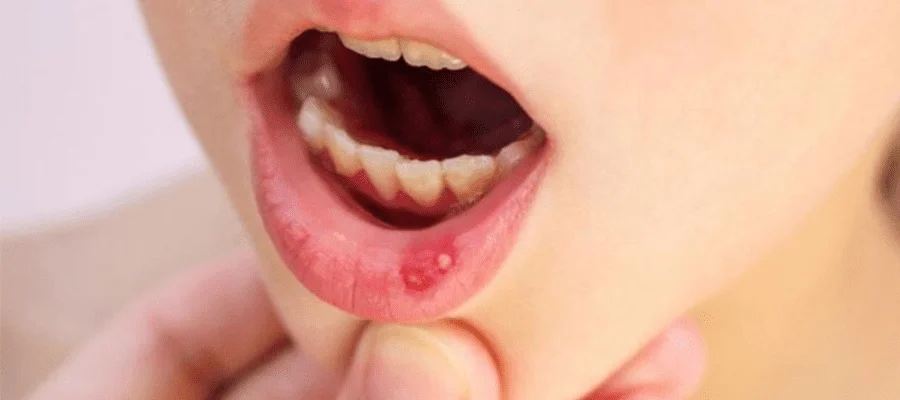
You can think of a mouth sore as a breakdown or erosion occurring in an area of the delicate, soft, and protective layer (mucosa) lining the inside of the mouth. This erosion causes the more sensitive tissue and nerve endings underneath to become exposed. This is why they are so painful and uncomfortable.
They usually resemble a small, shallow crater. While their centers are white, yellow, or gray, their edges are surrounded by a distinct red ring. It is important to know that aphthous ulcers, the most common type of mouth sore, are not contagious. In other words, they do not pass to another person by drinking from the same glass or by kissing. This is the most fundamental difference that distinguishes them from cold sores, which are a viral infection. Where a sore appears in your mouth and how it looks provide the most important clues for an accurate diagnosis. These sores usually appear in the following areas of the mouth:
- The inner parts of the cheeks
- The inner surfaces of the lips
- The top, underside, or sides of the tongue
- The gums
- The soft palate (the back part of the roof of the mouth)
How Are Different Types of Mouth Sores Classified?
When evaluating a mouth sore, a physician places it into certain categories to understand it better. This is like a roadmap for getting to the root of the problem and determining the most appropriate treatment path. This classification is generally made according to how long the sore has been present, its number, and most importantly, the actual underlying cause.
There are two main types according to how long the sores have been present:
- Acute Mouth Sore: It appears suddenly and usually heals within a short period of approximately two weeks.
- Chronic Mouth Sore: These are persistent sores that continue for longer than two to three weeks.
- A distinction is also made according to their number in the mouth.
- Single (Solitary) Mouth Sore: This means that there is only one sore in the mouth.
- Multiple Mouth Sores: This means that there is more than one sore in the mouth at the same time.
The most meaningful classification is based on the cause of the sore, namely its etiology.
- Traumatic Mouth Sore: It occurs due to physical causes such as accidentally biting the cheek, brushing the teeth too harshly, or eating something very hot.
- Infectious Mouth Sore: These are sores caused by microorganisms such as viruses, bacteria, or fungi.
- Immunological Mouth Sore: It occurs when the immune system mistakenly attacks the body’s own tissues.
- Neoplastic (Tumoral) Mouth Sore: These are non-healing sores that may be associated with cancer.
What Is an Aphthous Ulcer, the Most Common Type of Mouth Sore?
An aphthous ulcer is the most common, recurrent, and non-contagious mouth sore in society. It usually appears during periods when you are stressed or tired. Its typical appearance is a crater with a white-yellow center and red edges. Aphthous ulcers occur only on the mobile and soft tissues of the mouth, such as the cheeks, inner lips, and underside of the tongue. The fact that they do not occur on keratinized tissues such as the hard palate or the gums attached to the teeth is a distinguishing feature.
There are three main types of aphthous ulcers according to their severity and appearance.
- Minor Aphthous Ulcers: These are the most common type. They are usually smaller than 1 cm and disappear without leaving a scar within 1-2 weeks.
- Major Aphthous Ulcers: These are larger, deeper, and much more painful. They may take up to six weeks to heal and may leave a scar after healing.
- Herpetiform Aphthous Ulcers: These are rare. They are characterized by numerous tiny sores the size of a pinhead, sometimes close to 100, merging together to form a larger, irregular sore.
How Can We Tell the Difference Between a Mouth Sore and a Cold Sore?
The two conditions most commonly confused by patients are aphthous ulcers and cold sores. Making this distinction is very important in terms of both the precautions to be taken and social concerns. There is a vast difference between the two, and knowing these differences may reassure you.
What You Need to Know About Aphthous Ulcers:
- They occur inside the mouth.
- They are absolutely not contagious.
- They are not caused by viruses.
- Their appearance resembles a crater or depression.
What You Need to Know About Cold Sores (Fever Blisters):
- They are usually seen outside the mouth, on the lips.
- They are caused by the herpes simplex virus and are highly contagious.
- At first, they appear as small fluid-filled blisters.
- These blisters burst and form a crust.
What Causes the Mouth Sore Called Oral Lichen Planus?
Oral Lichen Planus (OLP) is a long-lasting (chronic) condition that occurs when the immune system mistakenly attacks healthy cells inside the mouth. It is not contagious. In this disease, the body’s own defense system perceives the mucosa lining the inside of the mouth as a foreign substance and starts a battle against it.
OLP may have different appearances.
Reticular Form: It is usually painless and appears as white, lace-like, or web-like lines on the inner cheeks.
Erosive Form: It is more severe. It appears as bright red, sensitive areas or open sores. This form is generally painful and causes a burning sensation, especially when it comes into contact with acidic or spicy foods.
The most important aspect of OLP is its potential to be a precancerous lesion. Although it is not cancer itself, especially the erosive form carries a risk of developing into oral cancer over time. Therefore, it is critically important for patients diagnosed with OLP to be regularly monitored by an Ear, Nose, and Throat specialist.
What Does the White Mouth Sore Called Leukoplakia Mean?
Leukoplakia is a thick, white or gray patch that usually develops inside the mouth due to long-term irritation such as tobacco use. Its most key and distinguishing feature is that this white patch cannot be removed by wiping or scraping it with a cloth or brush. This feature distinguishes it from removable white lesions such as oral thrush.
There are some important risk factors that trigger the development of leukoplakia:
- Smoking
- Smokeless tobacco products (Maras powder, chewing tobacco, etc.)
- Long-term and excessive alcohol consumption
- Poorly made dentures that constantly rub against the cheek or tongue
- Broken teeth or teeth with sharp edges
Leukoplakia is considered a “precancerous” condition. This does not mean that every leukoplakia will become cancerous, but some may contain abnormal cells that can develop into oral cancer over time. Therefore, every white patch you notice in your mouth that cannot be removed by wiping must be evaluated by a specialist and will most likely need to be examined with a biopsy for a definitive diagnosis.
How Can Oral Thrush, a Fungal Mouth Sore, Be Recognized?
Oral thrush (Oral Candidiasis) is an infection caused when the fungus called Candida albicans, which naturally exists in our mouths, gets out of control and multiplies excessively for various reasons. When our immune system functions normally, this fungus does not cause problems. However, in certain situations, this balance may be disrupted.
The conditions that facilitate the development of oral thrush are as follows:
- Recent antibiotic use
- Weakening of the immune system (chemotherapy, HIV, etc.)
- Uncontrolled diabetes
- Use of dentures
- Dry mouth
- Infants and elderly people
The appearance of oral thrush is quite typical. It appears as creamy white patches resembling curdled cheese inside the mouth, on the tongue, or on the cheeks. The most important difference from leukoplakia is that these patches are easily removed when wiped with a cloth, revealing a red, sensitive area underneath.
Which Vitamin and Mineral Deficiencies Cause Mouth Sores?
Constantly recurring mouth sores may sometimes be a signal of nutritional deficiencies in your body. Certain vitamins and minerals are vital for the oral mucosa to remain healthy and renew itself rapidly. When these nutrients are deficient, the mucosa becomes thinner, weaker, and more vulnerable to injury.
The deficiencies most commonly associated with recurrent mouth sores are as follows:
- Iron
- Zinc
- Vitamin B12
- Folate (Folic Acid or Vitamin B9)
- Other B vitamins (B1, B2, B6)
If you frequently develop aphthous ulcers, having these values checked with a simple blood test and using supplements under a doctor’s supervision if a deficiency is found may help solve the problem at its root.
How Do Stress and Fatigue Affect the Formation of Mouth Sores?
Intense stress and lack of sleep are among the best-known triggers, especially for aphthous ulcers. A student during an examination period, a professional working on an intensive project, or anyone going through a difficult period in life may notice that mouth sores appear more frequently during these times. There is a scientific explanation for this. Stress disrupts the balance of the body’s immune system. Stress hormones such as cortisol that are released may alter the immune response and make the body more susceptible to inflammatory reactions that lead to the formation of aphthous ulcers. In other words, stress creates a suitable environment for aphthous ulcers to appear.
Can a Recurrent Mouth Sore Be Genetic?
Yes, there is a genetic predisposition to recurrent aphthous ulcer formation. If there are people in your family, such as your mother, father, or siblings, who frequently develop aphthous ulcers, your likelihood of developing them is also higher. Scientific studies have shown that approximately 40% of patients with aphthous ulcers have a similar family history. This suggests that the tendency to develop aphthous ulcers may be passed on through genes. Of course, genetics alone is not sufficient; a triggering factor such as stress, trauma, or nutritional deficiency usually also needs to come into play.
Which Serious Diseases May Show Mouth Sores as a Symptom?
Our mouth is a mirror of our overall health. Sometimes a persistent sore in the mouth may no longer be only a local problem and may be the first sign of a systemic disease affecting the entire body. Therefore, especially non-healing or constantly recurring sores should be taken seriously.
The main systemic diseases that may present with mouth sores are as follows:
- Behçet’s Disease: The most common and first symptom of this disease, which causes inflammation in the blood vessels throughout the body, is recurrent mouth sores that closely resemble aphthous ulcers.
- Crohn’s Disease: Crohn’s disease, an inflammatory bowel disease, may cause inflammation anywhere in the digestive system and may also appear in the mouth as deep, linear sores or aphthous-like lesions.
- Celiac Disease: This disease, which involves sensitivity to gluten, may both directly cause aphthous ulcers and indirectly create a predisposition to sores by impairing vitamin and mineral absorption.
- Lupus (SLE): Red or white sores may also be seen inside the mouth in this autoimmune disease, which can affect many organs of the body.
- Other Autoimmune Diseases: Rarer autoimmune diseases such as Pemphigus Vulgaris may also present their first symptoms as mouth sores.
When Is It Necessary to See a Doctor for a Non-Healing Mouth Sore?
Although most mouth sores are harmless, some conditions require evaluation by a specialist. The answer to the question “When should I be concerned?” lies in certain “red flag” symptoms. If you have any of these symptoms, it is important to consult an Ear, Nose, and Throat specialist.
The conditions that definitely require seeing a doctor are as follows:
- A sore that has not healed for longer than three weeks (“The Three-Week Rule”).
- An unusually large sore.
- New sores constantly appearing, with another beginning before the previous one heals.
- A painless but persistent sore, which may be more suspicious than painful sores.
- The presence of other symptoms such as fever, diarrhea, weight loss, or a skin rash.
- Experiencing serious difficulty swallowing or eating.
Why Is Biopsy So Important in the Diagnosis of Mouth Sores?
Although the word biopsy frightens many people, it is actually the most reliable diagnostic tool for eliminating uncertainty. It is the process of taking a small tissue sample from a sore that does not heal, appears suspicious, or may be precancerous, such as leukoplakia, and examining it under a microscope. In this way, it can be determined with 100% certainty whether the sore is benign, malignant, or belongs to a specific disease such as Lichen Planus. A biopsy is a fundamental step that provides the physician with the clearest information for planning the correct treatment and is usually a short and painless procedure performed under local anesthesia.
What Can Be Done at Home to Relieve Mouth Sore Pain?
In conditions such as simple aphthous ulcers, there are many methods you can apply at home to help the sore heal faster and reduce the pain.
Things to Consider Regarding Food and Beverages:
It would be wise to avoid certain foods that may irritate the sore for a while.
- Hot and spicy foods
- Acidic fruits and beverages (oranges, lemons, tomatoes, cola)
- Salty and vinegary foods (pickles, chips)
- Hard foods with sharp edges (toast, chips, nuts)
- Very hot beverages and soups
Oral Care and Soothing Applications:
Good oral care accelerates healing, but it must be done gently.
- Use a soft-bristled toothbrush.
- Choose alcohol-free mouthwashes.
- Gargle with warm salt water several times a day.
- Gargling with baking soda water may also be soothing.
- Holding a piece of ice on the painful area may provide temporary numbness.
Which Treatment Methods Are Used for Mouth Sores?
The treatment of mouth sores is determined according to the underlying cause. The aim of treatment is to reduce pain, accelerate healing, and prevent recurrence. There is a wide range of treatments available, from simple products you can obtain from a pharmacy to advanced technological procedures applied by an ENT specialist.
Some types of medications and products used are as follows:
Topical Anesthetics: Gels containing benzocaine or lidocaine that are applied directly to the sore. They temporarily numb the pain.
Topical Corticosteroids: Prescription ointments or pastes that suppress inflammation and accelerate healing.
Antiseptic Mouthwashes: They help keep the sore area clean and prevent secondary infections.
Systemic Medications: In very severe cases or in systemic diseases such as Behçet’s disease, oral corticosteroids or immunosuppressive medications may be required.
Which Modern Treatments Does an Ear, Nose, and Throat Specialist Use for Mouth Sores?
When home remedies or standard medication treatments are insufficient, an ENT specialist may offer modern treatment methods that provide more effective and faster results. These methods aim to immediately improve the quality of life of patients, especially those with persistent and severe pain.
Some advanced interventions performed by specialists are as follows:
Laser Treatment (Low-Level Laser Therapy): This is an extremely modern and painless method used in the treatment of painful aphthous ulcers. Laser light is applied for a few minutes without touching the sore. It has been proven to reduce pain immediately, suppress inflammation, and enable the sore to close much faster by biologically stimulating tissue healing.
Chemical Cauterization: In this method, a special chemical solution, such as Debacterol, is applied directly to the sore with a cotton swab. This procedure covers the exposed nerve endings on the surface of the sore with a barrier, stops the pain within seconds, and accelerates the healing process.
Surgical Removal (Excision): It is used to completely remove lesions that may be precancerous, such as leukoplakia, or that are found to be suspicious after biopsy. This procedure ensures that the abnormal tissue is completely removed and a definitive diagnosis is made.