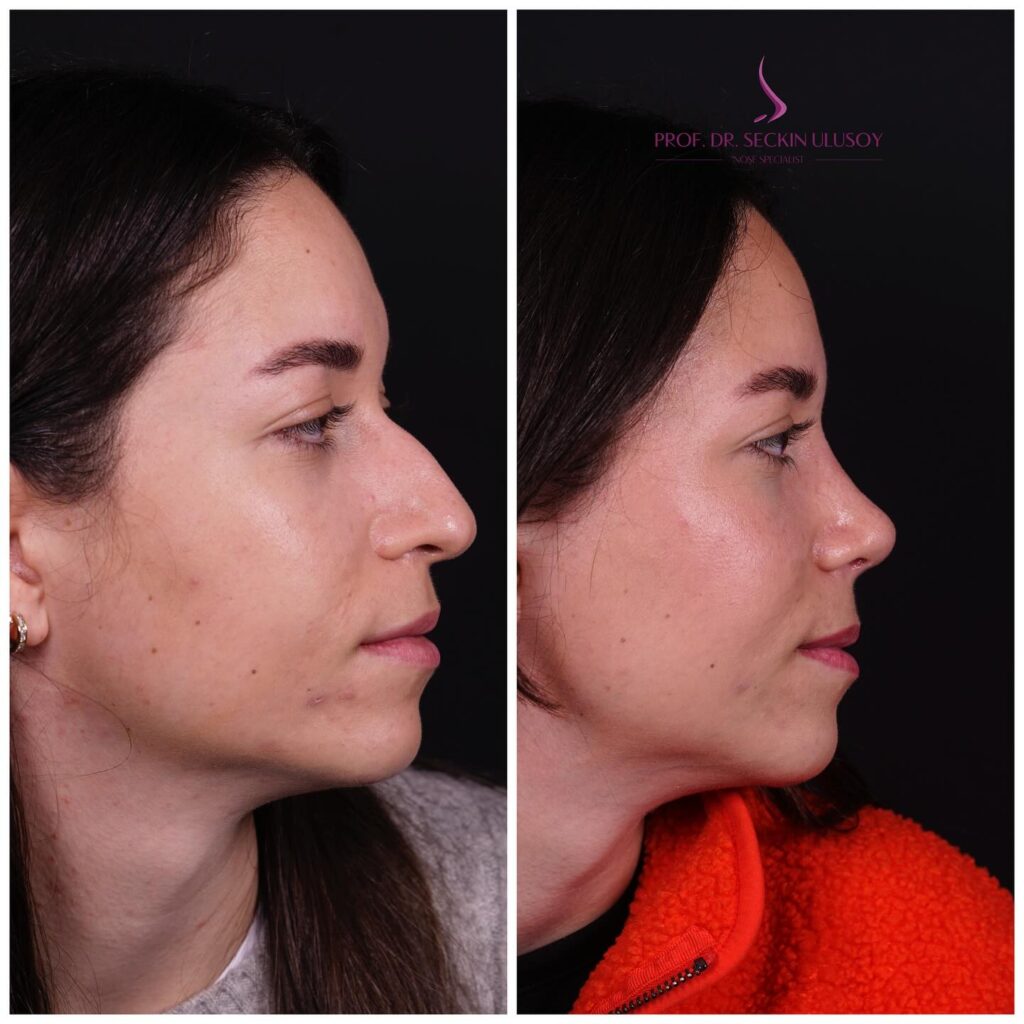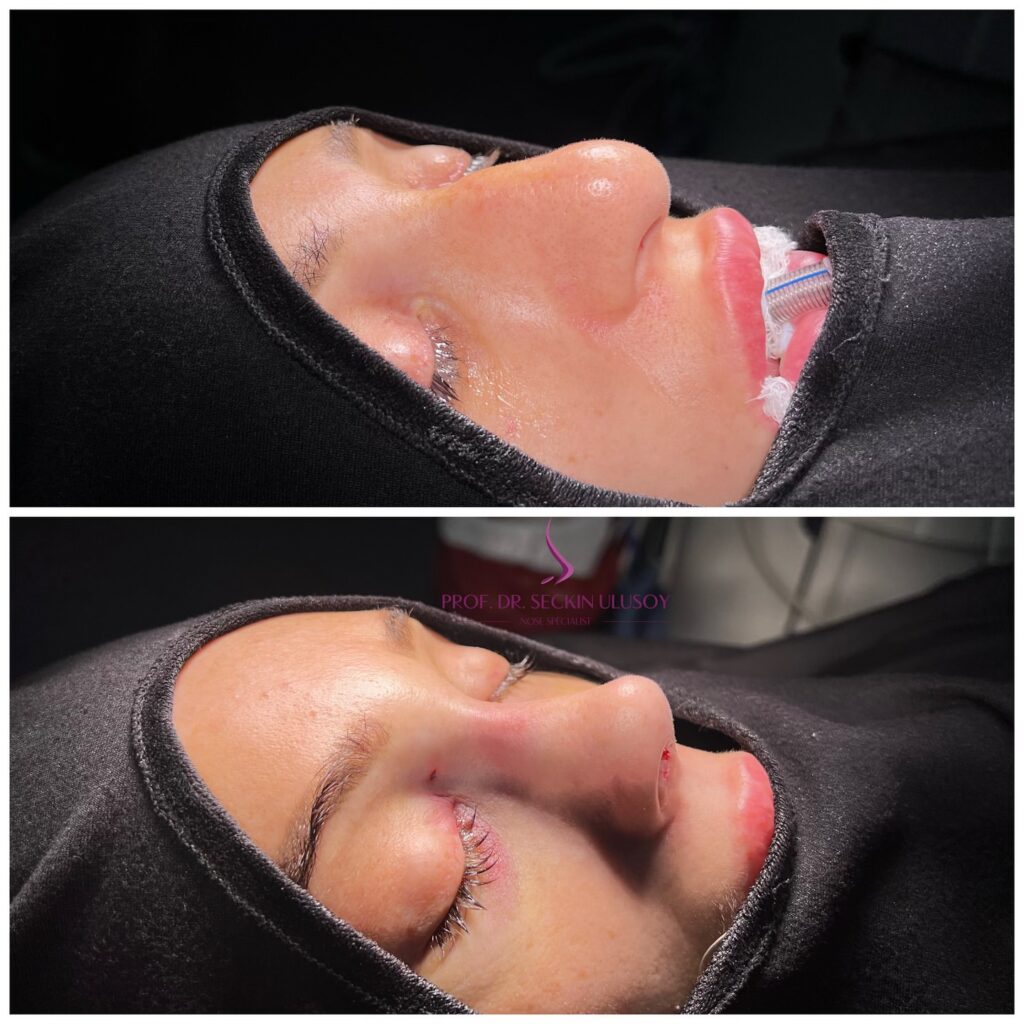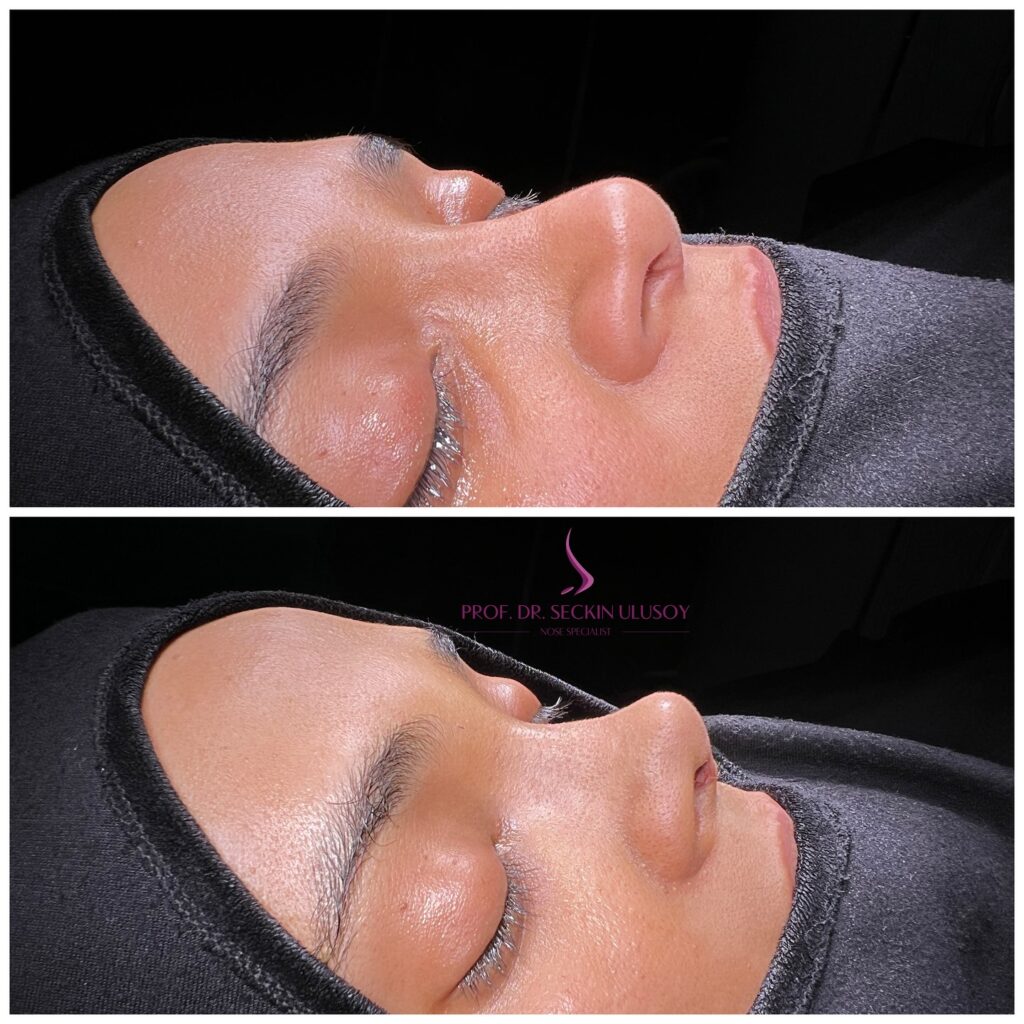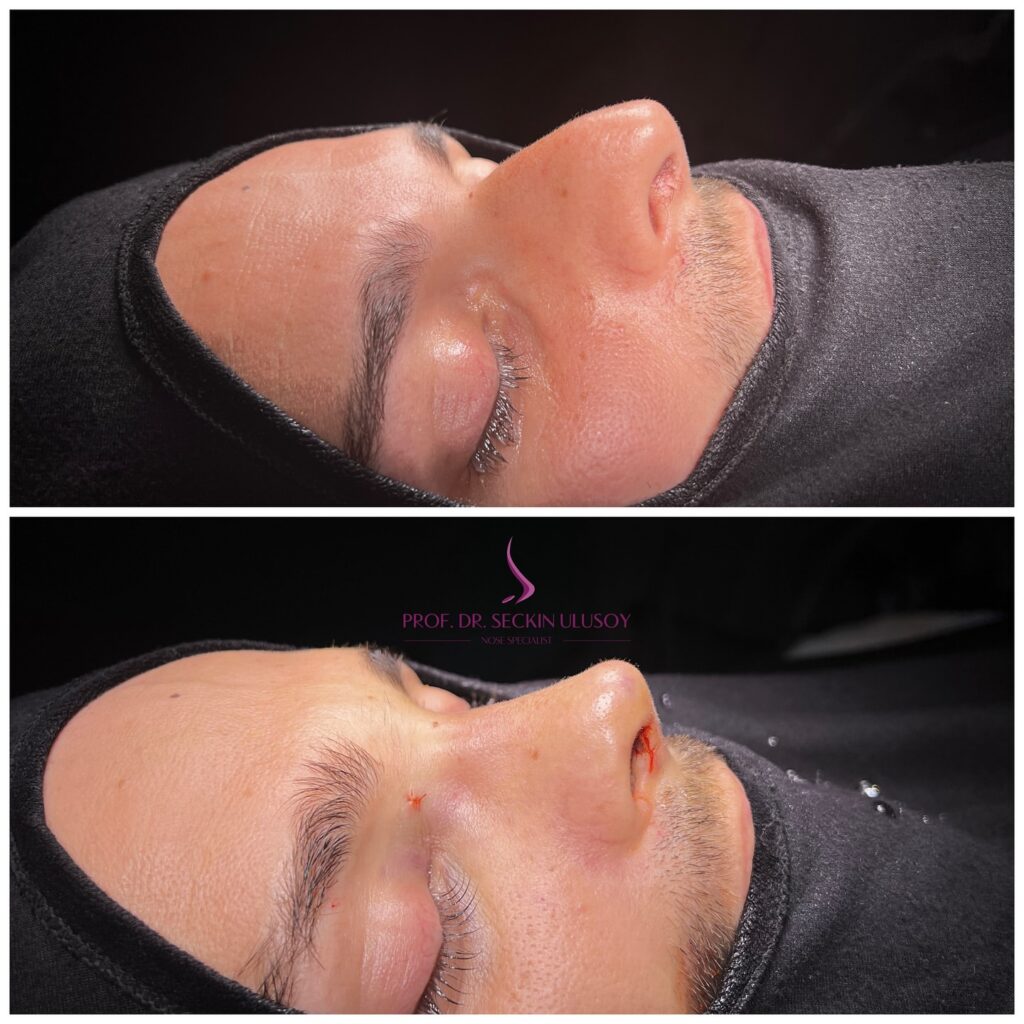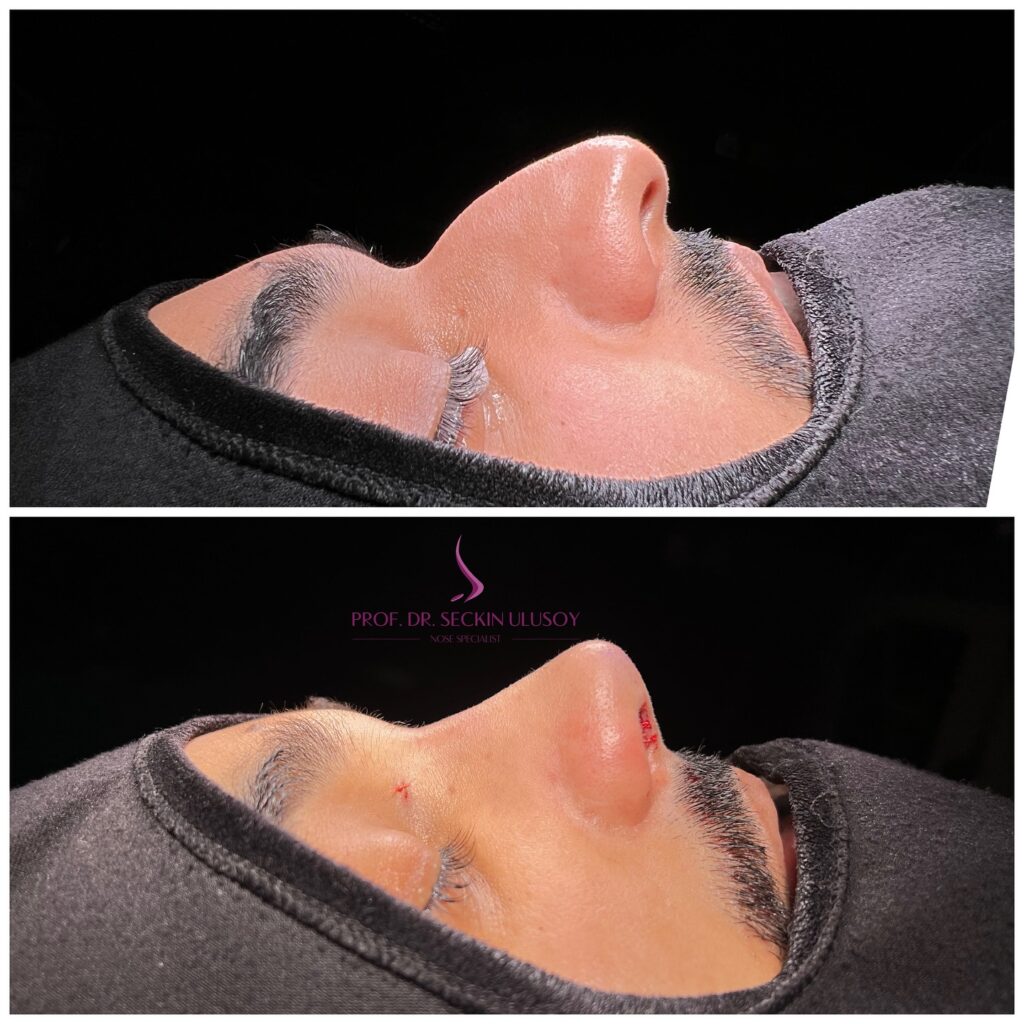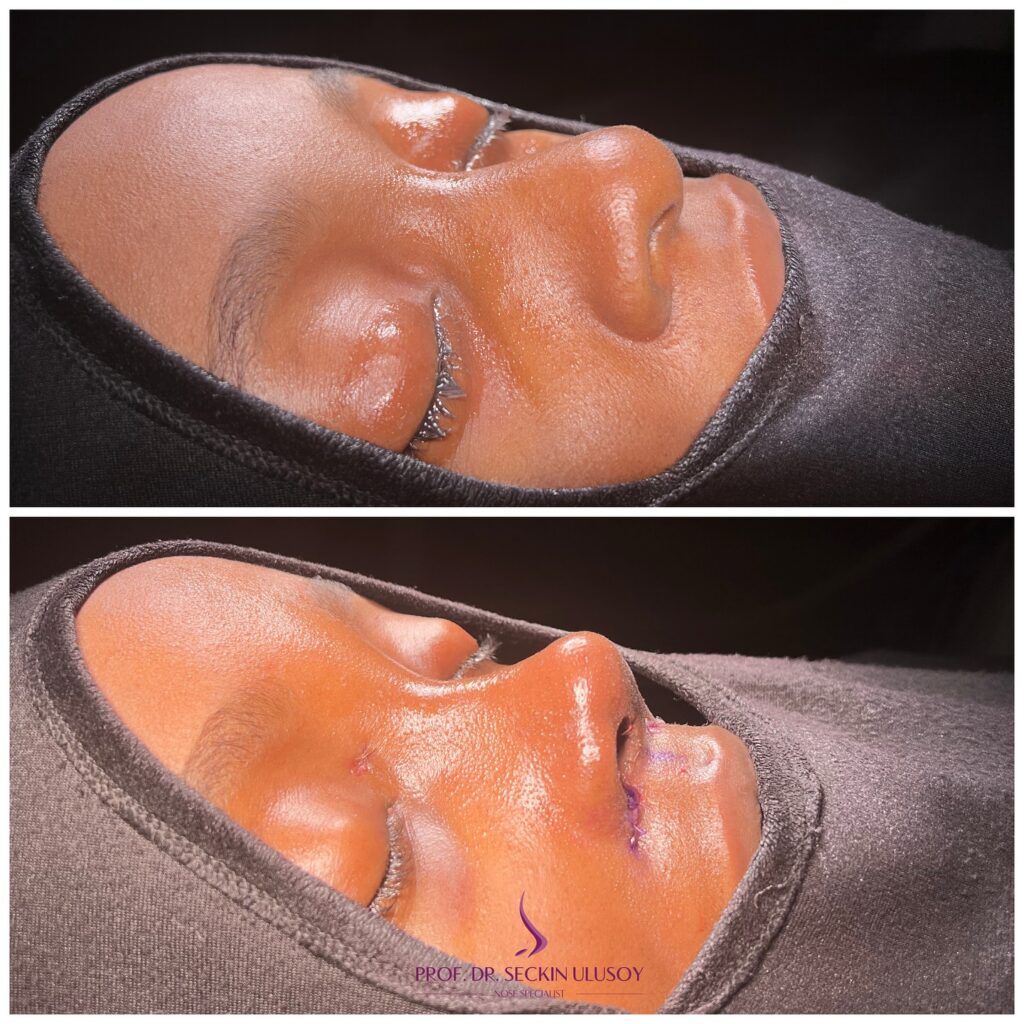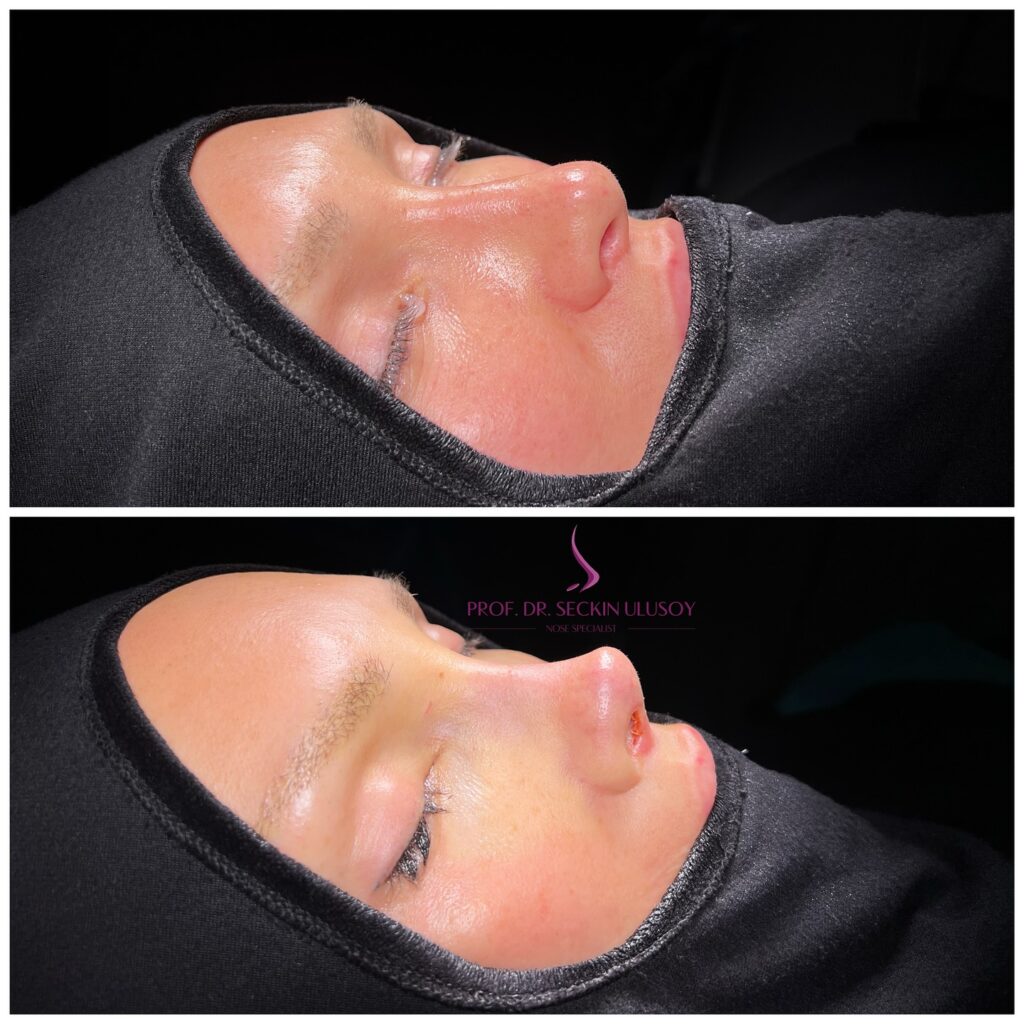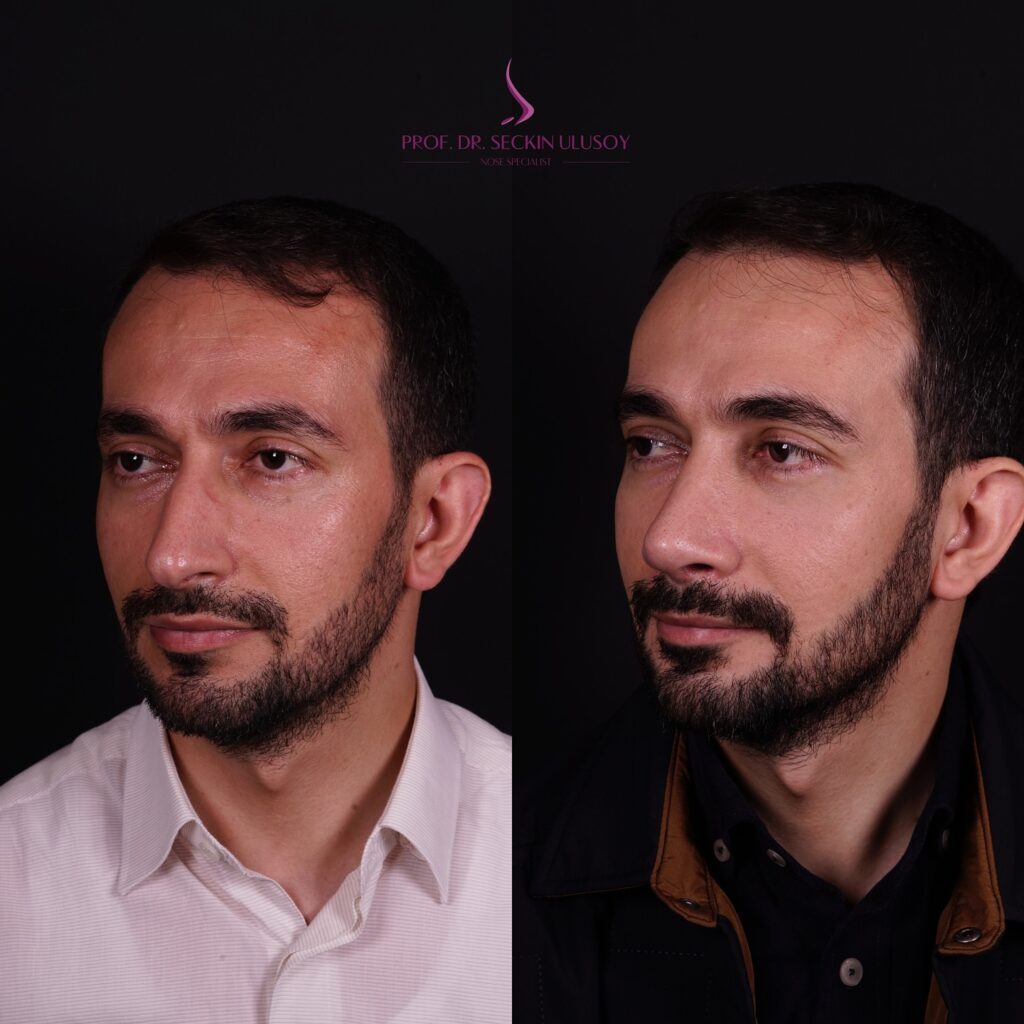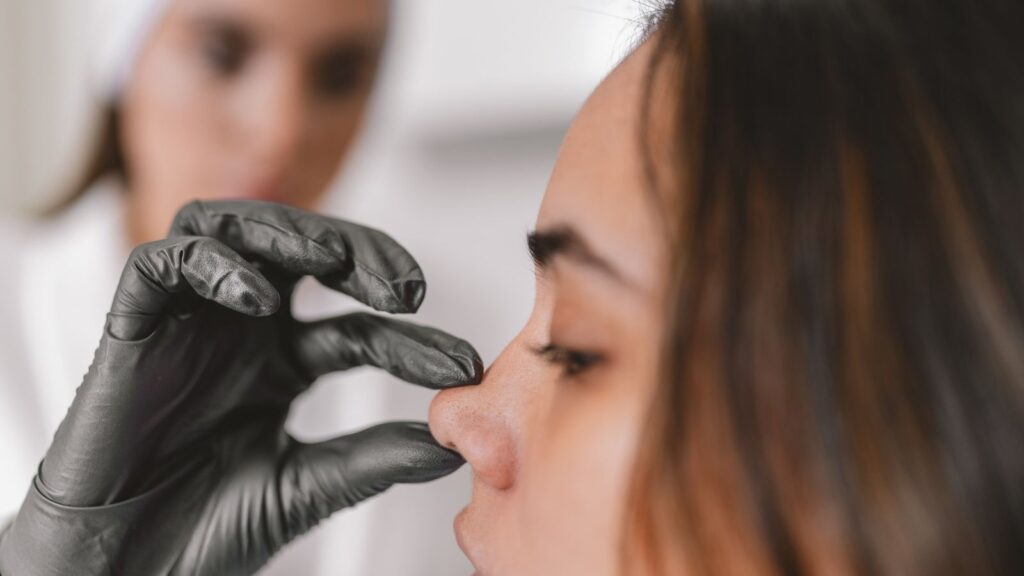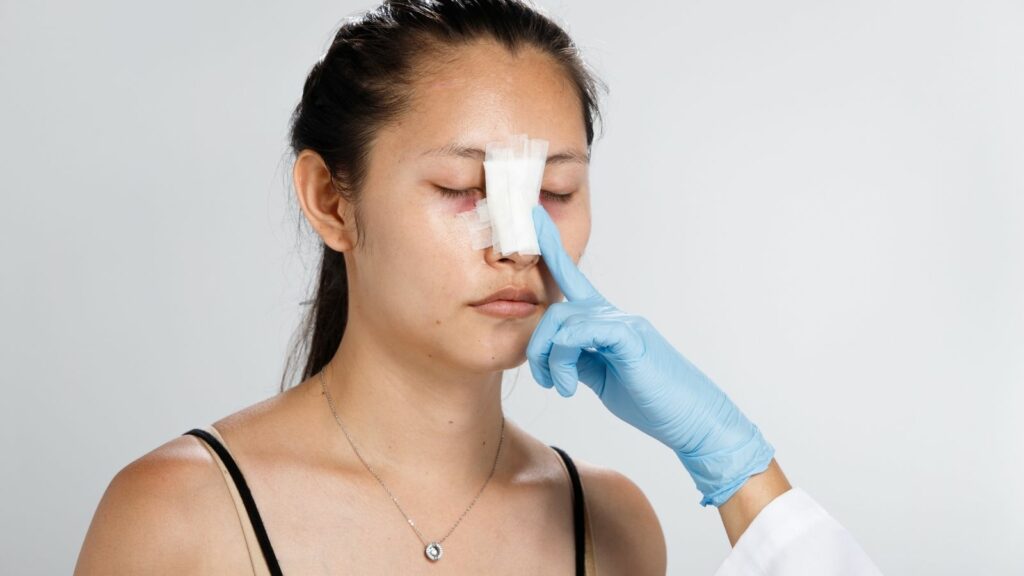
The pain process after rhinoplasty is generally mild, and most patients can tolerate it. It is normal to experience a feeling of pressure around the nose, swelling, and mild pain during the first few days. These complaints decrease over time.
Pain is generally more noticeable during the first 48 hours after surgery. It can be controlled with simple painkillers. If severe and prolonged pain occurs, evaluation by the surgeon is required.
Factors affecting the level of pain include the patient’s skin structure, the surgical technique, and tissue sensitivity. Pain may last slightly longer in extensive surgeries, but it rarely reaches a serious level.
The pain process after rhinoplasty generally decreases and ends within a few days. Regular medication use, keeping the head elevated, and applying cold compresses accelerate recovery.
How Much Pain Is There Really After Rhinoplasty?
This is one of the questions we encounter most frequently when speaking with patients. The answer surprises many people: What is felt after rhinoplasty is generally not a sharp or stabbing pain. When we look at the experiences of thousands of people who have undergone surgery, almost all of them describe this condition more as a feeling of “pressure” or “fullness.” Think of it this way: It is very similar to the feeling of heaviness and pressure you experience in your face and nose when you have severe flu or sinusitis.
So, what is the source of this feeling? The main cause of this sensation of pressure is not the surgery itself, but the swelling (edema) that naturally occurs in the tissues after the operation. Since this swelling also occurs inside the nose, it causes a feeling of congestion. This swelling and congestion are the main reasons for what patients describe as “discomfort.” When we understand this connection, it becomes clear that the most effective way to manage pain is actually to manage swelling. This is also the reasoning behind surgeons being so insistent on recommendations such as keeping the head elevated or applying cold compresses. Of course, the level of discomfort experienced may vary slightly depending on the extent of the procedure and the person’s pain threshold. However, ultimately, this is a manageable process that can be fully controlled with modern painkillers.
How Long Does the Recovery Process Take After Rhinoplasty?
Although recovery is a personal journey in which every body progresses at its own pace, it generally follows a specific timeline. Knowing these stages helps you understand what to expect at every step of the process and feel more secure.
The first 2-3 days are the most challenging but fastest-passing part of the process. This is the period when swelling and bruising are most noticeable and the feeling of pressure is most intense. During this period, the painkillers prescribed to you will be sufficient to maintain your comfort. Bruising and swelling around the eyes generally begin to resolve rapidly after the third day. The best thing to do during these first days is to rest with several pillows placed under your head.
By the end of the first week, you will feel significant relief. The sensation of pain almost completely disappears, and most people then use only simple painkillers when needed. At the end of this week, the plastic splint on the nose is generally removed. This is the moment when you see the first appearance of your new nose and your morale improves. Of course, the nose will still be quite swollen, but its general contours will begin to become visible.
From the second week onward, the return to social life begins. Most of the swelling and bruising on the face will have disappeared, which helps you feel better. Although swelling in the nose continues, it is not very obvious from the outside that you have undergone surgery. Breathing through the nose also begins to improve gradually. By the end of the first month, a large part of the recovery, approximately 70-80%, will be complete. The contours of the nose become more defined, and sensitivity to touch decreases.
How Should Home Care Be Performed to Reduce Pain After Surgery?
A comfortable recovery process depends not only on the surgeon’s success during the operation but also on the care you provide at home. This is a team effort. There are several important points you should pay attention to at home to accelerate recovery and minimize discomfort. When you follow them, you will even notice that your need for medication decreases. The basic steps that will help you during the home care process are as follows:
- Keeping the head elevated continuously
- Applying cold compresses to the cheeks and around the eyes
- Avoiding strenuous activities during the first week
- Not lifting heavy objects or bending forward
- Drinking plenty of fluids
- Eating foods with low salt content
- Using the nasal sprays recommended by the doctor regularly
- Avoiding smoking and alcohol
How Does the Surgical Technique Affect Pain and Recovery After Rhinoplasty?
Yes, it definitely does. In fact, the most important factor that has made rhinoplasty a much more comfortable experience today is the revolution in surgical techniques. “Atraumatic Surgery,” meaning approaches that respect the tissue and work with minimal damage, has fundamentally changed the recovery process.
One of the leading approaches is Ultrasonic (Piezo) Rhinoplasty. In this technique, traditional tools such as hammers and chisels are not used to break the nasal bones. Instead, a precise device that works with sound waves and affects only bone tissue is used. This device delicately shapes the bones like a sculptor without damaging the surrounding soft tissues such as blood vessels, nerves, and cartilage. The main advantages that the Piezo technique offers patients are as follows:
- Much less bruising
- Significantly less swelling
- Minimal pain after surgery
- A faster return to social life
- Preservation of the valuable soft tissues of the nose
Another modern approach is the philosophy of Preservation Rhinoplasty. In this technique, the aim is to preserve the natural anatomical structures and supporting ligaments of the nose as much as possible. For example, instead of cutting and removing the nasal hump, the cartilage and bone structures beneath it are reshaped, and the entire nasal dorsum is lowered as a whole. Less tissue destruction automatically means a faster and more comfortable recovery.
One of the best results of these modern techniques is that they make Rhinoplasty Without Nasal Packing possible. Nasal packs, which were previously used to control bleeding and were one of patients’ greatest fears, are now almost never used. Thanks to delicate and bloodless surgery, there is no need for nasal packing. The benefits of surgery without nasal packing are invaluable in terms of patient comfort:
- Being able to breathe through the nose immediately after surgery
- No painful nasal packing removal procedure
- Better-quality sleep
- Less anxiety and a reduced sensation of suffocation
- Faster overall recovery
For Which Symptoms Should the Doctor Be Contacted After Rhinoplasty?
It is normal for certain changes to occur in your body during the recovery process. Mild leakage, swelling, bruising, and a sensation of pressure are expected conditions. However, certain symptoms may indicate a problem and require you to be careful. The basic rule is that your condition should improve, not worsen, over time. If you experience any of the following conditions, you should contact your doctor without delay:
- Severe pain that does not respond to medication and continues to increase
- Persistent active bleeding that is bright red in color and occurs in drops
- Fever rising above 38 degrees
- Foul-smelling green or yellow discharge from the nose
- Sudden, excessive, and generally unilateral swelling
- Blurred vision or sudden changes in vision
- Severe and persistent nausea or vomiting
- Shortness of breath or chest pain
What Is Experienced During the Psychological Recovery Process After Rhinoplasty?
Rhinoplasty is not only a physical process but also an intense emotional journey. During the first week after surgery, it is entirely human and normal to feel demoralized, impatient, or anxious when you look in the mirror and see swelling and bruising on your face. This “up-and-down” emotional state is a natural part of the recovery process.
At this point, your most important guide will be patience. Remember that the face you see when the splint is removed is not your final result. That appearance is only an intermediate stop on your recovery journey. It will take months for your nose to assume its final shape and for all the edema to disappear. Beginning this journey with an understanding of the process prevents unnecessary disappointment. As your swelling decreases and the new form of your nose becomes more apparent, you will see that your morale also improves rapidly. Trusting yourself and your surgeon is the most important psychological medicine during this process. Equipped with this knowledge, you are now ready to begin this aesthetic journey not with anxiety but with informed confidence.