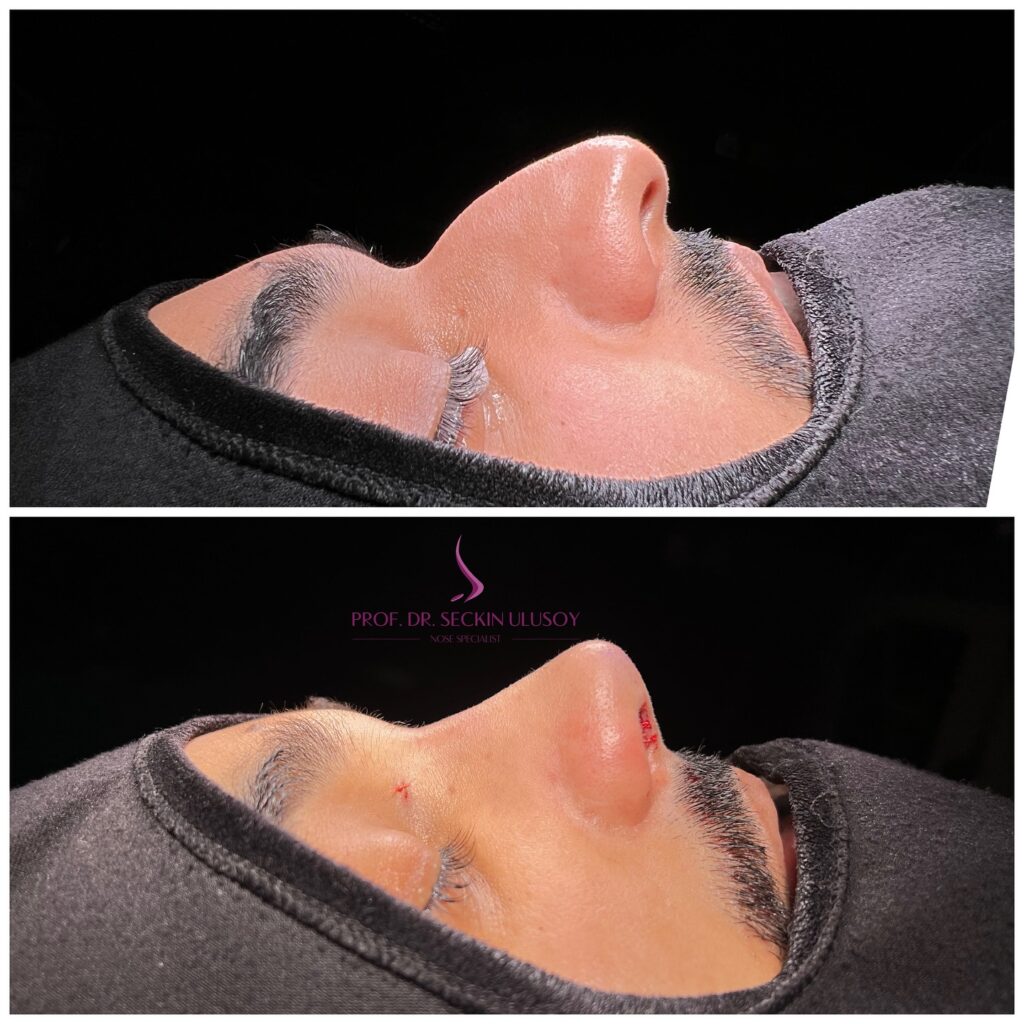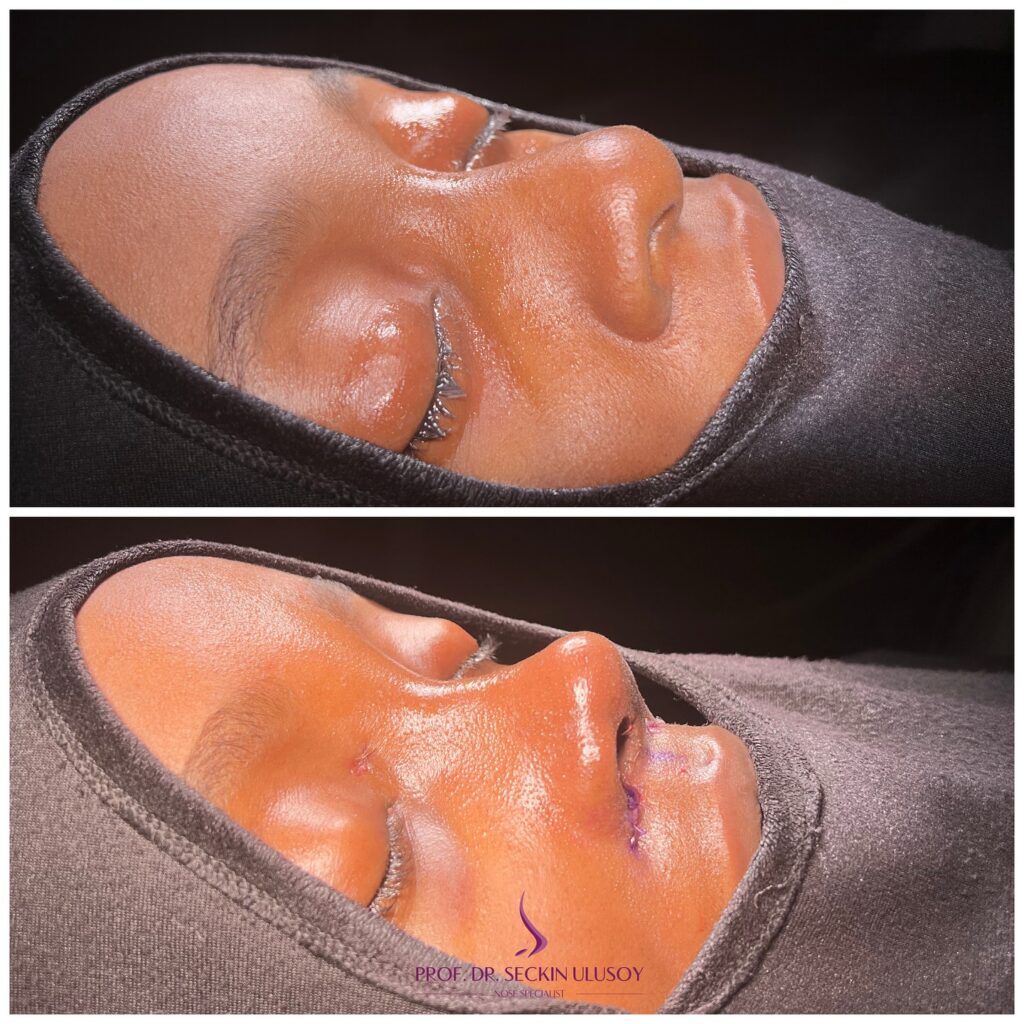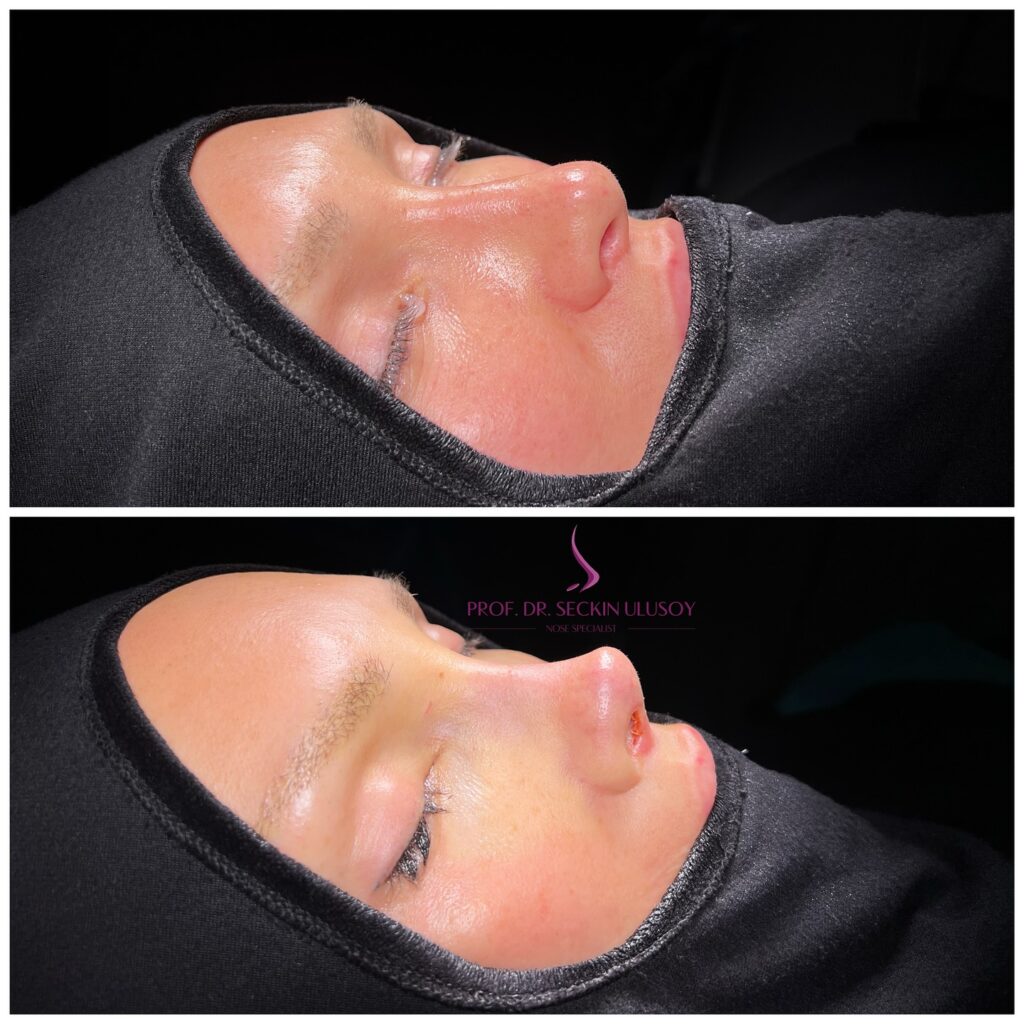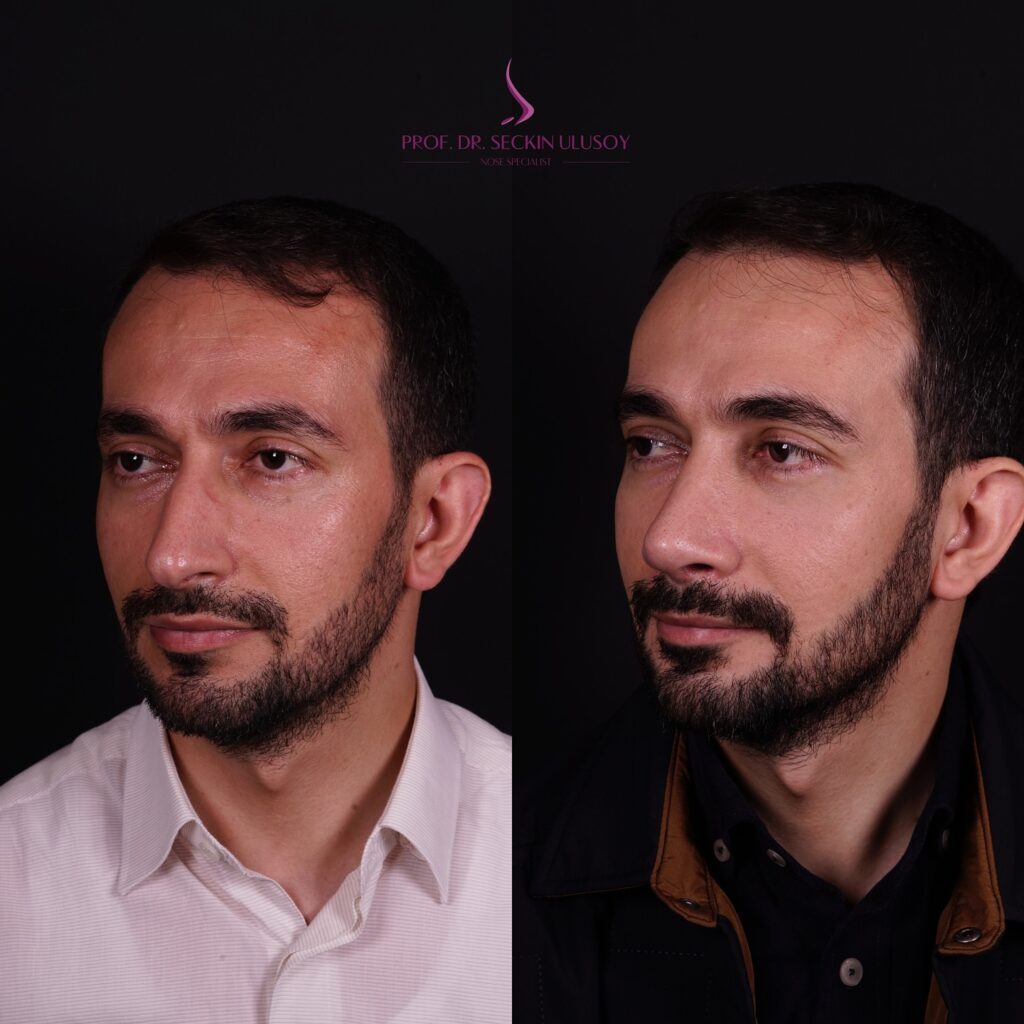
| Week / Period | Recovery Process and Points to Consider |
| Week 1 | Swelling, bruising, presence of packing, nasal sensitivity; sleep with the head elevated and avoid strenuous activities |
| Week 2 | Packing is removed, bruising decreases, swelling may continue; light walks may be taken |
| Week 3 | Bruising largely resolves, the shape of the nose begins to become more defined; sun protection is very important |
| Week 4 | Swelling decreases, breathing becomes easier; a gradual return to daily life is possible |
| Weeks 5–6 | The nose begins to look natural; exercise may be resumed except for strenuous sports |
| Weeks 7–8 | The nasal tip becomes more defined, swelling decreases considerably; wearing glasses is still not recommended |
| Month 3 | The nasal shape is more defined, remaining swelling is minimal; suitable for a full return to social life |
| Month 6 | Breathing returns completely to normal, the nasal structure settles; most patients can wear glasses |
| Month 12 | The final result is achieved; all swelling has resolved, and the final follow-up examination is performed |
How long does complete recovery take after rhinoplasty, and what should I expect during this process?
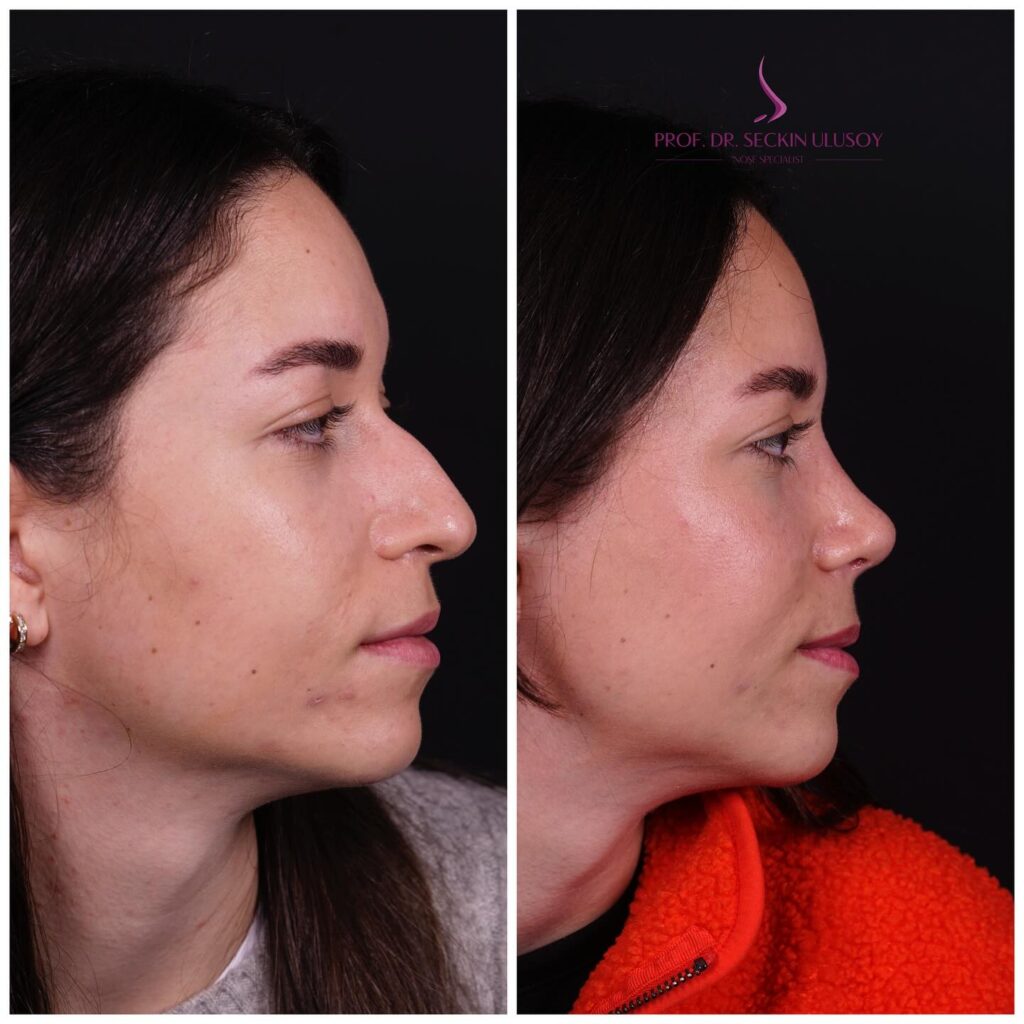
One of the questions our patients ask most frequently is, “When will I be completely healed?” The answer to this question actually has two stages. Feeling physically well and returning to social life usually takes a few weeks. However, for the nose to fully settle aesthetically and take its final shape, meaning for the swelling to disappear completely and the skin to fully adapt to the new skeletal structure, it takes an average of one year. In fact, in people with thick skin or those who have previously undergone surgery (revision), this process may take up to 18 months.
We can compare this process to creating a sculpture. The surgeon forms the main contours and shape of the sculpture during surgery. However, it takes time for the sculpture to dry, for its fine details to become visible, and for it to reach its final form. What you see during the first months is a work that has not yet fully dried and appears somewhat different from its final form due to swelling. Therefore, dividing the recovery process into different stages and knowing what to expect at each stage allows you to go through this journey more peacefully. Recovery consists of four main phases: the most intense first week (acute period), the first month that signals a return to social life (early recovery), the period between 1 and 6 months when the character of the nose settles (intermediate period), and the period between 6 and 12 months and beyond when the final touches become apparent (late period).
What difficulties may I encounter within the first 72 hours after rhinoplasty?
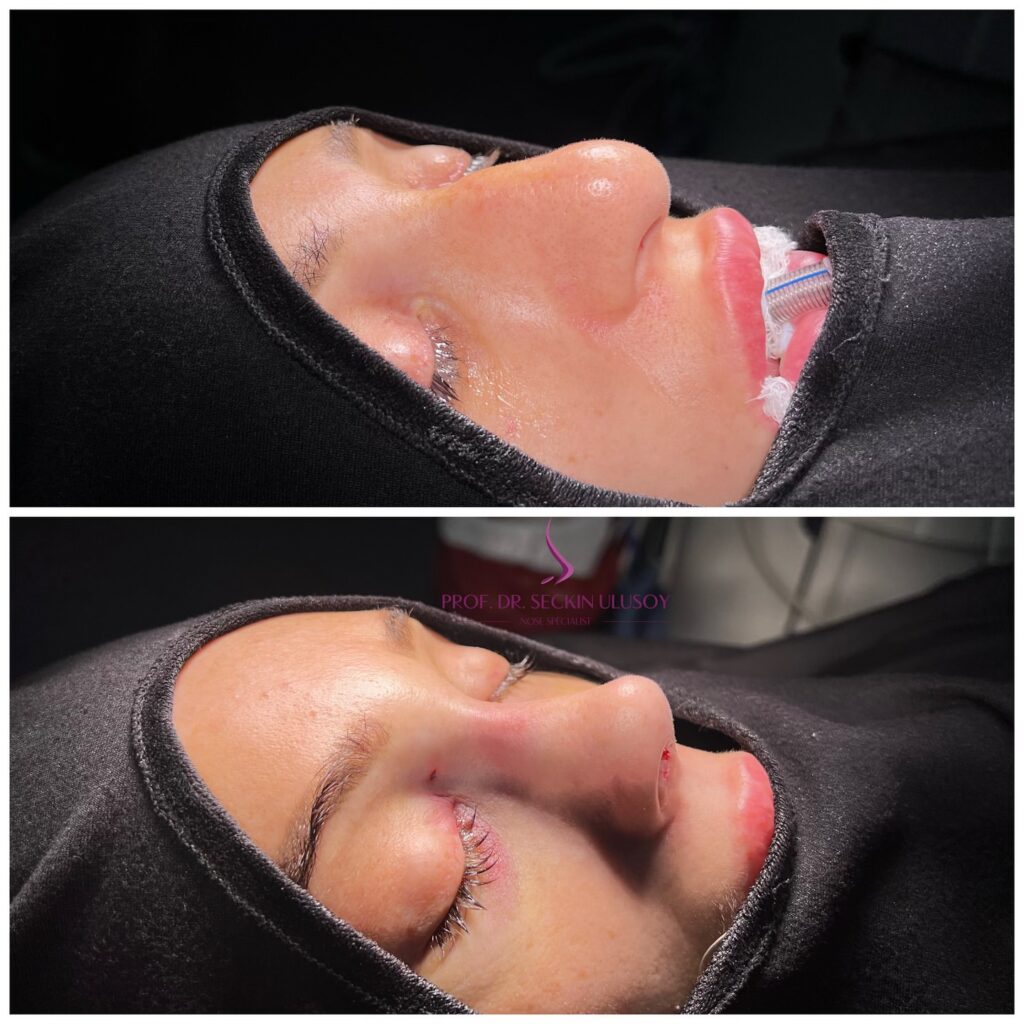
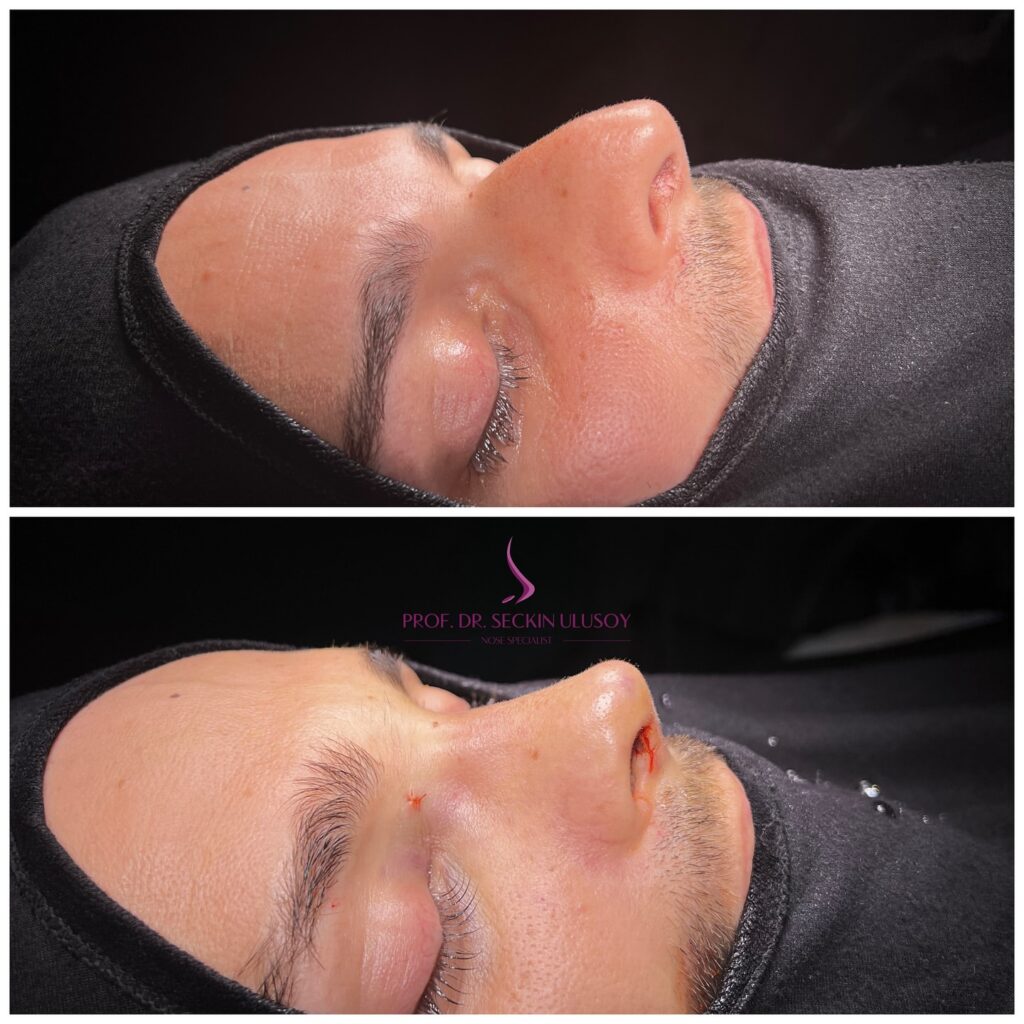
The first three days after surgery are the most intense phase of recovery and require the most patience. During this period, your body gives a natural response to surgery. You should know that swelling and bruising do not usually reach their highest level immediately after surgery, but on the second and third days. This is completely expected, and there is no need to worry. You may feel as though you have a severe flu; the nose is blocked, and there may be a feeling of pressure in the face. Pain is generally not severe and can easily be controlled with the painkillers prescribed to you. Your most important task during this period is to rest. Keeping your head elevated above heart level by supporting it with several pillows helps the swelling disperse more quickly with the assistance of gravity. The splint on your nose acts like a shield that protects its new shape and makes you feel secure. Mild bloody drainage from the tip of the nose is normal, and the small gauze placed for this purpose (mustache dressing) can be changed regularly.
What will I look like when the splint is removed at the end of the first week and when one month has passed after nose surgery?
The end of the first week is an important milestone in the recovery process. Usually between days 7 and 10, the splint on the nose and any silicone splints inside it are removed during your follow-up appointment. This is the moment when you see your new nose in the mirror for the first time. Although this moment is exciting, it is very important to remember that what you see is not the final result. The nose will still be quite swollen; it is normal for it to have a puffy, almost “dough-like” appearance. This swelling still conceals the true contours and refinement of the nose.
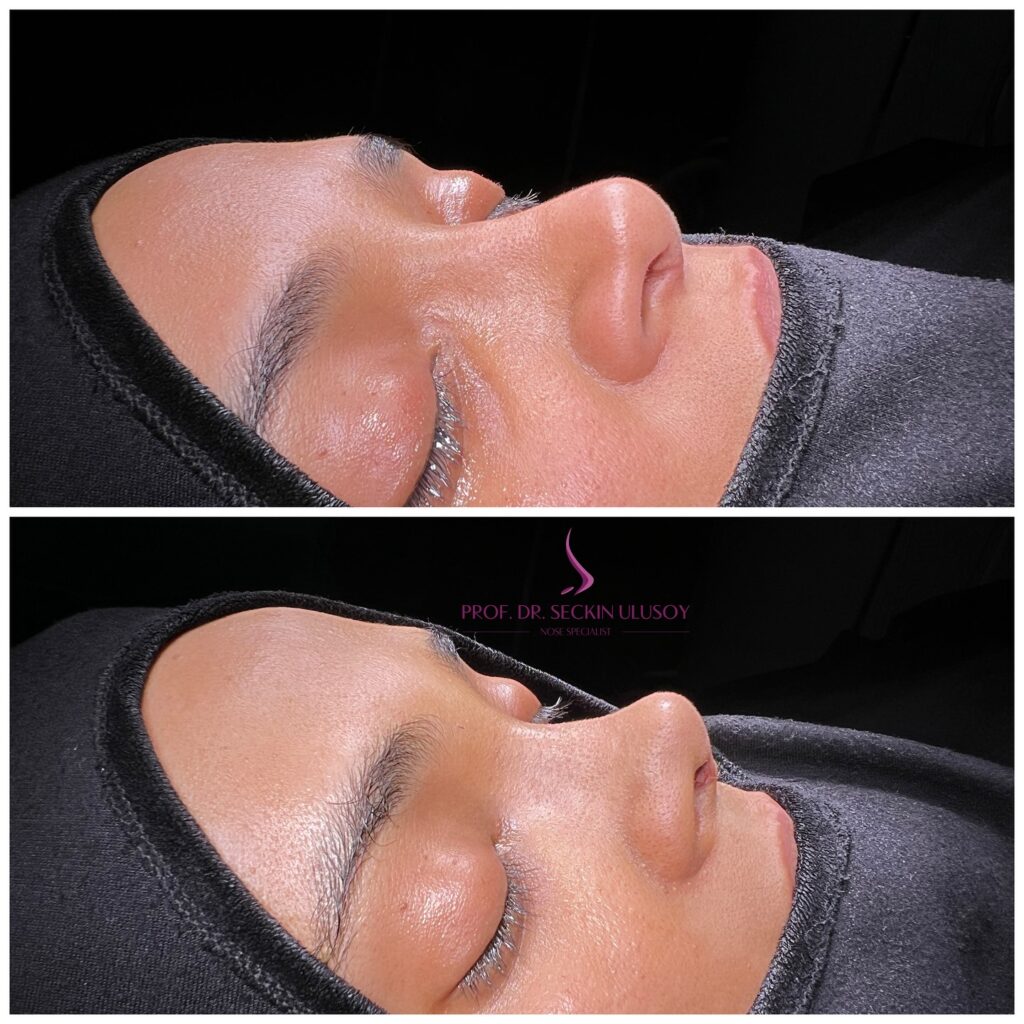
By the end of the first month after nose surgery, the picture is very different. The bruising around the eyes has almost completely resolved, and approximately 70-80% of the swelling has subsided. It is no longer very obvious that you have had surgery, and most patients can comfortably return to desk work or social life during this period. The nose is still swollen, and especially when you touch it, you may feel firmness and a noticeable fullness at the nasal tip. However, the general contours are now much more defined, and the new character of your nose gradually begins to emerge.
What changes occur in the shape and sensation of my nose during the period after the third month of rhinoplasty?
The period from the first to the third month is the “definition” phase in which the new form of the nose becomes more apparent. Recovery continues rapidly during this period. By the period after the third month of rhinoplasty, approximately 90% of the total swelling has resolved. This means that especially the nasal bridge and side profiles become quite defined. Since the bone structure has largely stabilized, you can usually begin wearing glasses after this period with your doctor’s approval. The numbness or tingling sensation felt at the nasal tip and sometimes the upper lip during the first months also gradually begins to decrease during this period. However, even at this stage, it is important to remember that the nasal tip heals more slowly than the other areas. While the nasal bridge may have become considerably slimmer, the nasal tip may still appear somewhat full and swollen. This is part of the natural course of healing.
So, when does the nose become smaller and take its final shape after rhinoplasty?
This is the question our patients are most curious about and ask most frequently: “When does the nose become smaller after rhinoplasty?” The clearest answer to this question emerges during the period after the sixth month. The period from the third to the sixth month is the “refinement” phase, when patience is tested the most. Large and rapid changes now give way to slow but steady slimming. The nasal tip, which is almost the final stronghold of recovery, shows its most noticeable change during this period. As the persistent swelling at the nasal tip gradually resolves, the definition of the tip increases, giving it a more elegant and natural appearance.
The period from the sixth to the twelfth month is the “final result” phase. Although your nose looks aesthetically very good at this stage, healing and fine adjustments continue at the microscopic level. The final 10% of swelling that disappears makes an important difference in the most delicate contours of the nose and in the interplay of light and shadow. The skin fully adapts to the new cartilage and bone structure underneath. At the end of the one-year period, the result is now considered largely permanent, and your nose achieves its final shape in complete harmony with your face.
Is rhinoplasty recovery considered completely finished at the end of one year?
For most patients, yes, the one-year milestone is the gold standard for evaluating rhinoplasty results. At this point, nearly all swelling has resolved, the tissues have settled, and the nose has taken its permanent shape. However, each individual’s recovery process is unique. Especially in patients with thick, oily skin, it may take longer for the skin to adapt to the new framework and for the swelling to resolve completely. Similarly, the recovery process may be more complex and prolonged in revision rhinoplasty patients who have previously undergone one or more nose surgeries. In these special cases, the final result may take 18 months or sometimes even 2 years to appear.
What can I do at home to minimize postoperative swelling and bruising?
It is within your control to make the recovery process more comfortable and faster. Following the simple but effective recommendations we provide helps swelling and bruising resolve much more quickly. There are several key steps you can take during this process:
- Keeping your head elevated
- Applying a cold compress during the first 48-72 hours (to the cheeks, not directly to the nose)
- Limiting salt intake
- Avoiding processed foods
- Drinking plenty of water and herbal teas
- Getting complete rest during the first week
- Avoiding activities that increase blood pressure
How should pain and sleep patterns be managed after rhinoplasty?
Rhinoplasty is generally not a very painful procedure. Most patients mention nasal congestion and a feeling of pressure rather than pain. This discomfort is most intense during the first few days and can easily be managed with the simple painkillers prescribed. One of the most important rules during the recovery process is sleeping position. During the first few weeks, especially in the initial period after the splint is removed, you must sleep on your back with your head elevated and supported by 2-3 pillows. This position both prevents fluid accumulation in the face throughout the night, allowing you to wake up with less swelling in the morning, and eliminates the risk of accidentally hitting or applying pressure to your nose during sleep.
Why are intranasal cleaning and nutrition so important during the recovery process?
Proper nasal care reduces the risk of infection, increases comfort, and accelerates healing. Moisturizing the inside of the nose with seawater sprays as recommended by your doctor and gently applying dressings with solutions or ointments prepared as instructed by your doctor prevent crusting inside and make breathing easier. Nutrition also plays a critical role in this process. Your body is undergoing a repair process and needs the right fuel. Especially during the first days, since chewing may be uncomfortable, some easy-to-digest and nutritious food options will make your life easier:
- Warm soups (unsalted or low-salt)
- Yogurt and kefir
- Oatmeal
- Fruit purées and smoothies
- Boiled vegetables
- Pineapple and papaya (help reduce swelling)
- Protein sources (necessary for healing)
In addition, consuming fiber-rich foods and drinking plenty of water to prevent constipation, a possible side effect of painkillers, is important to avoid placing pressure on the nose through straining.
When can I safely begin exercising and participating in sports after rhinoplasty?
Returning to activity should be gradual and controlled. The main reason for this is to keep blood pressure under control. Exercise may increase blood pressure and cause more swelling in the surgical area. Therefore, not beginning strenuous activities without your doctor’s approval is vital for achieving the best aesthetic result. The general timeline for returning to activities is as follows.
First Week:
- Only light walking inside the home
Weeks 2-4:
- Light-paced walks outdoors
- Stretching exercises
Weeks 4-6:
- Light cardio (stationary bicycle, elliptical trainer)
- After Week 6 (With Doctor’s Approval):
- Weight training (starting very lightly and increasing gradually)
- Running
Activities Prohibited for 3-6 Months:
- All contact sports (football, basketball, volleyball)
- Diving and swimming (with doctor’s approval after the first month)
- Heavy weightlifting
When can I return to work and start wearing glasses after rhinoplasty?
The timing of returning to work depends on the nature of your job. If you have a job that does not require physical exertion, such as desk work, you can usually return comfortably within 10-14 days. However, if you have a physically demanding job that requires heavy lifting or frequent bending and standing, it is recommended to wait at least 3-4 weeks to avoid increasing blood pressure. Wearing glasses is a sensitive matter. The nasal bones that are healing after surgery are very delicate. The weight of glasses may cause permanent depressions or deformities on the nasal bridge. Therefore, glasses should not be placed directly on the nose for at least 4-6 weeks. Contact lenses are a good alternative during this period.
Other Factors Affecting Recovery
How do open and closed rhinoplasty techniques affect the recovery process and outcome?
The surgeon’s choice of an open or closed technique is a strategic decision made according to the patient’s nasal structure and the targeted result. In open rhinoplasty, a small incision is made in the strip of skin called the “columella,” which separates the two nostrils. This incision allows the surgeon to view the nasal framework as if opening the hood of a car and perform much more precise and predictable shaping. It is especially ideal for complex nasal tip aesthetics, severe deviations, or revision surgeries. This more comprehensive approach naturally leads to slightly more swelling and a somewhat longer recovery period. In closed rhinoplasty, all incisions are made inside the nostrils, which ensures that there is no visible external scar. It is generally associated with less swelling and faster recovery and is usually suitable for simpler modifications, such as correcting a hump on the nasal bridge.
What is the effect of skin thickness on the speed of rhinoplasty recovery?
Your skin type is one of the most important factors directly affecting the rhinoplasty result and recovery process. Patients with thick and oily skin tend to retain swelling for longer. This skin structure may somewhat “camouflage” the fine details of the underlying cartilage structure, which may result in softer contours. In patients with thin skin, swelling subsides more quickly, and the results become apparent earlier. However, thin skin has the potential to reveal even the slightest irregularity in the underlying framework, so the surgeon must create a much smoother surface.
Functional Recovery and Final Result
When does healthy breathing function return after rhinoplasty?
During the first few weeks after surgery, it is completely normal to have difficulty breathing due to swelling in the tissues inside the nose. A noticeable improvement in breathing usually begins to be felt after the second week. As the internal swelling decreases, the airway opens. Functional recovery, meaning stabilization of comfortable breathing, may generally take 3 to 6 months. Most of the time, experiencing improvement in breathing long before the aesthetic result has fully settled is a great source of encouragement for our patients.
Which signs of complications after nose surgery require urgent intervention?
While some conditions are considered normal during the recovery process, others may indicate a problem requiring urgent medical intervention. If you experience any of the following symptoms, it is vitally important to contact your surgeon without delay:
- Severe and progressively increasing pain that does not respond to painkillers
- Bright red and uncontrollable bleeding beyond mild drainage
- Fever above 38°C
- Increasing redness, warmth, and foul-smelling yellow-green discharge in the surgical area
- Swelling that continues to increase after the first few days when it should be decreasing, or marked one-sided swelling
- Sudden and severe difficulty breathing beyond the expected congestion
- Pain, tenderness, redness, and swelling in the leg (may be a sign of a blood clot)