Before understanding which physician to see for dizziness, we must first understand this condition. Before deciding which physician to consult for dizziness, it is important to understand exactly what it is and what it is not. This short informational blog post aims to provide general information about dizziness, also popularly known as “Vertigo,” and to guide patients to the appropriate physician. First of all, we need to understand what some concepts mean:
What is dizziness or vertigo? Are they the same thing?
The word “Vertigo,” whose origin is based on Latin and which is translated into Turkish as “dizziness,” is a very common symptom that concerns many medical specialties. This condition has even been described by some as the worst sensation a person can experience. This feeling is actually a symptom (that is, the patient’s complaint) and is not a disease by itself. This means that it can occur in many different diseases and requires clarification of the underlying disease.
Which physician should I consult because of dizziness?
Our balance system mainly consists of the semicircular canals in the inner ear, the eyes, the joints, the brain, and the cerebellum. Causes related to the brain and cerebellum are called central vertigo causes, and these fall within the field of Neurology. Patients describe this condition as feeling like the ground is slipping beneath their feet, feeling as if they are floating, swaying while standing on a boat, or as if their head is spinning around them. In other words, they describe a sensation that everything is spinning, which is called central (Central) type dizziness. Most other types of dizziness are peripheral (that is, originating from the peripheral system), and in these cases, the sensation of the surroundings spinning is more prominent. Patients describe this as everything spinning rapidly around them. The main peripheral causes originate from the inner ear. This type of dizziness begins suddenly and dramatically, is usually severe, and is often accompanied by nausea and vomiting. Especially in those originating from the inner ear, hearing loss or tinnitus may sometimes accompany the condition.
In general, balance system disorders fall within the scope of many medical specialties and often require collaborative management. When balance disorders first begin, patients usually present to the emergency medicine department. After that, deciding between Neurology and Ear, Nose, and Throat (ENT) depends on the symptoms: If the surroundings are spinning, the symptoms started suddenly and severely, and hearing loss or tinnitus is present, ENT should be the first specialty consulted. However, if the complaints started more gradually, are milder (more like a feeling of lightheadedness), and the feeling that your head is spinning or that you are floating is more prominent, it is appropriate to consult Neurology.
Can we call a mildly felt imbalance vertigo?
Unlike the vertigo mentioned above, patients sometimes present with what we call “Dizziness,” which can be translated into Turkish as “imbalance.” This is a condition frequently encountered after a boat or bus journey or the day after alcohol consumption. What happens here is the feeling that the ground beneath our feet is slipping away. Patients also describe it as feeling as though they have stood up on a small boat and the vessel is rocking with the waves. Here, there is no true vertigo; instead, there is a mild sensation of imbalance, as if floating. In addition, there is a condition we call “Orthostatic hypotension,” defined as “position-related low blood pressure,” which is often confused with true vertigo. This condition is generally seen in women. It involves low blood pressure accompanied by temporary vision darkening and mild imbalance during sudden movements against gravity. Patients with this condition are advised to avoid sudden standing up or sitting down movements.
What is the frequently heard dizziness caused by inner ear crystals, and what do you do about it?
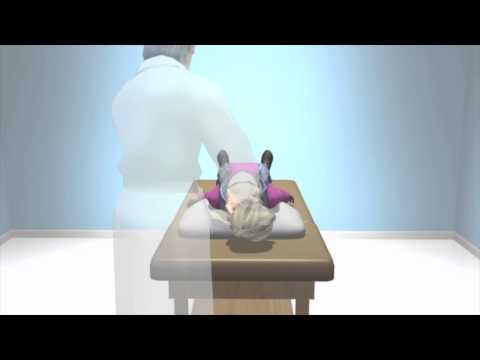
Positional dizziness is the most common cause of vertigo. Here, it is typical for dizziness to occur with movement of the head to one side. Patients often describe this as feeling as if the floor and ceiling suddenly switched places when they turned their head while getting out of bed in the morning. This is generally caused by the accumulation of crystals in the semicircular canals of the inner ear. For diagnosis, maneuvers called Dix-Hallpike and Semont (which are simple examination methods performed on the examination table) are used. Immediately after confirming the diagnosis, the crystals can be repositioned using repositioning maneuvers called the Epley and Barbecue maneuvers. Usually, the sensation of vertigo resolves completely with these maneuvers. However, patients who continue to experience a slight spinning sensation may also be advised to perform Brandt-Daroff and Cawthorne-Cooksey exercises at home. These home exercises are a method that allows patients to treat positional dizziness by themselves at home, provided there is no other underlying cause.
Does every case of vertigo mean that the crystals have moved?
Our answer to this question is definitely “NO,” because, as emphasized above, dizziness is a condition that can be felt due to many different underlying causes. Although it is most commonly caused by displaced (actually accumulated) inner ear crystals, the other common diseases that cause vertigo listed below should also be kept in mind.
The main other common causes of dizziness include vestibular neuritis (inflammation of the balance nerve), Meniere’s disease (inner ear pressure), psychological dizziness, and vertebrobasilar insufficiency (narrowing of the arteries passing through the neck due to various causes).
To briefly explain these, vestibular neuritis usually occurs after upper respiratory tract infections and is characterized by continuous dizziness accompanied by nausea and vomiting for several weeks. The dizziness is quite disturbing, and these patients may sometimes need to be hospitalized for a few days.
Another common condition we encounter is Meniere’s disease, which is caused by increased pressure of the inner ear fluid. Fluctuating hearing loss and a feeling of fullness in the ear are typical findings. The attacks are very severe, and although hearing returns to normal after attacks in the early stages, hearing loss gradually becomes permanent as the frequency of attacks increases. We apply different treatment methods for both the treatment and prevention of Meniere’s disease. For prevention, we mainly use salt restriction and diuretics that reduce inner ear pressure. During attacks, because the dizziness is severe, we hospitalize patients and administer medications intravenously for one or two days. I can also say that we have been quite successful by administering antibiotics (gentamicin) or corticosteroids into the ear for this disease.
Another common condition we see, which actually falls within the field of Neurology, is vertebrobasilar insufficiency. This condition is caused by blockage of the arteries that carry blood from the heart to the cerebellum and brain and is often associated with cervical disc herniation and cervical degeneration. It is more common, especially in people over the age of 60. These cases are accurately diagnosed with Doppler ultrasonography and improve significantly with medication or treatment of any accompanying cervical disc herniation or degeneration.
Note: This blog is for informational purposes only, and only nose surgeries are performed at our clinic.
Frequently Asked Questions About Dizziness:
Is vertigo a disease?
No, vertigo is not a disease by itself but a symptom, that is, a patient complaint, that can occur in many different diseases.
What are the examination findings and diagnostic methods for diagnosing vertigo?
During the diagnosis of dizziness, the ENT physician may detect certain findings through a general examination. If your physician considers it appropriate, blood tests and CT, MRI, and cervical color Doppler ultrasonography may be requested for differential diagnosis. If all these tests are normal but vertigo persists, more advanced tests such as VNG and Posturography can be performed in vestibular system (balance system) laboratories.
Which doctor treats dizziness?
For complaints of dizziness, it is appropriate to first consult the ENT department. If deemed necessary, you will be referred to other departments, primarily a Neurology specialist. These other departments are most commonly Physical Therapy and Rehabilitation (PTR) and Psychiatry. However, the ENT department should always evaluate the patient first.
Are there any exercises I can do at home for the crystals instead of seeing a doctor?
If there is no other underlying cause of the dizziness and it is positional, home exercises can be very beneficial. You can find these by searching YouTube for “Brandt Daroff”.
What is rehabilitation with VR glasses for vertigo?
In recent years, with the development of technological systems and VR glasses, there are companies producing programs for vertigo and dizziness. However, today this is a rehabilitation program that is applied in sessions at centers specializing in this field. It is anticipated that, in the very near future, algorithms that individuals can use by themselves at home will become available.